






Caviar for a new generation

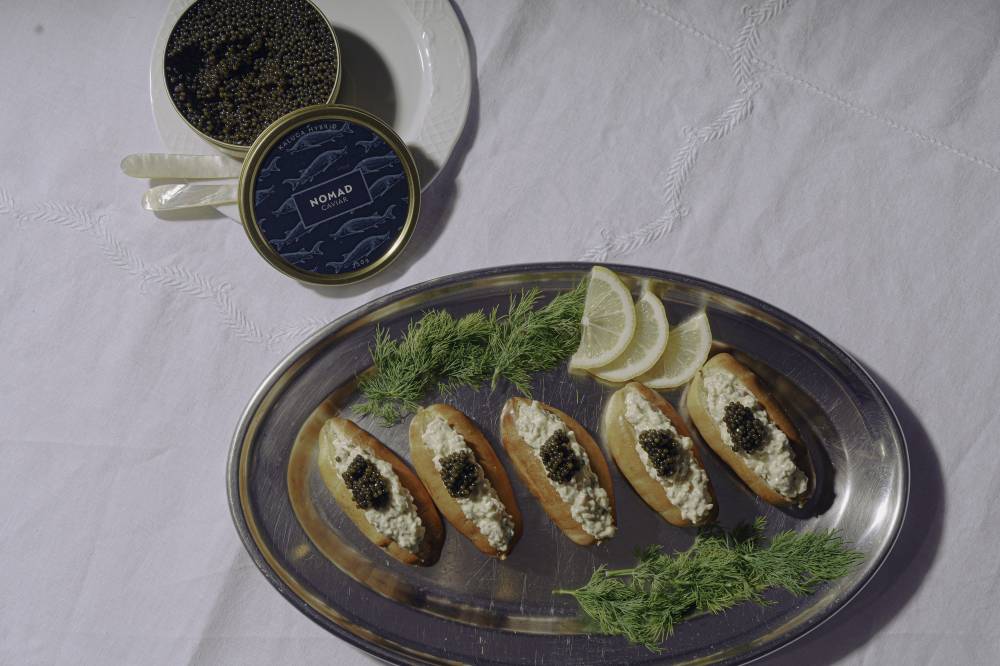
There are luxuries that demand an occasion, and there are luxuries that create one. Caviar belongs to the latter—a delicacy so storied and so elemental that a single mother of pearl spoonful can turn an ordinary evening into something memorable. And yet, the world of caviar remains wrapped in mystery for many: its origins, its varieties, its traditions, even the rituals that surround its gleaming pearls.
Today, brands like Nomad Caviar are reshaping the way we think about sturgeon roe, making it accessible, modern, and delightfully unfussy, allowing caviar to be enjoyed exactly as it was meant to be: joyous, generous, and savored, whether shared with friends or indulged quietly, just for yourself.
What is caviar?
Caviar is fish roe (eggs). True caviar comes only from sturgeon. All other fish roe, no matter how tasty, are technically not caviar, just as sparkling wine cannot be called Champagne if it does not come from the Champagne region of France.
Its taste is unmistakable: briny but buttery, delicate yet rich, a soft pop that melts into an almost creamy finish. No two caviars are identical—their flavor depends on species, water, feed, age, and the craftsmanship of curing.
A glimpse into its history
Long before it was served in crystal bowls at grand hotels, caviar was enjoyed by ancient Persians, who believed it gave strength and vitality. Later, Russian aristocrats elevated it into a symbol of opulence—Tsars famously served it by the ladle. By the 19th century, caviar made its way to Europe and America, gaining a reputation as the ultimate culinary luxury.
Ironically, in the early 1900s, America had so much sturgeon that saloons gave caviar away for free as a salty bar snack. Overfishing, scarcity, and growing global demand eventually transformed this once-abundant delicacy into one of the world’s most valuable foods.
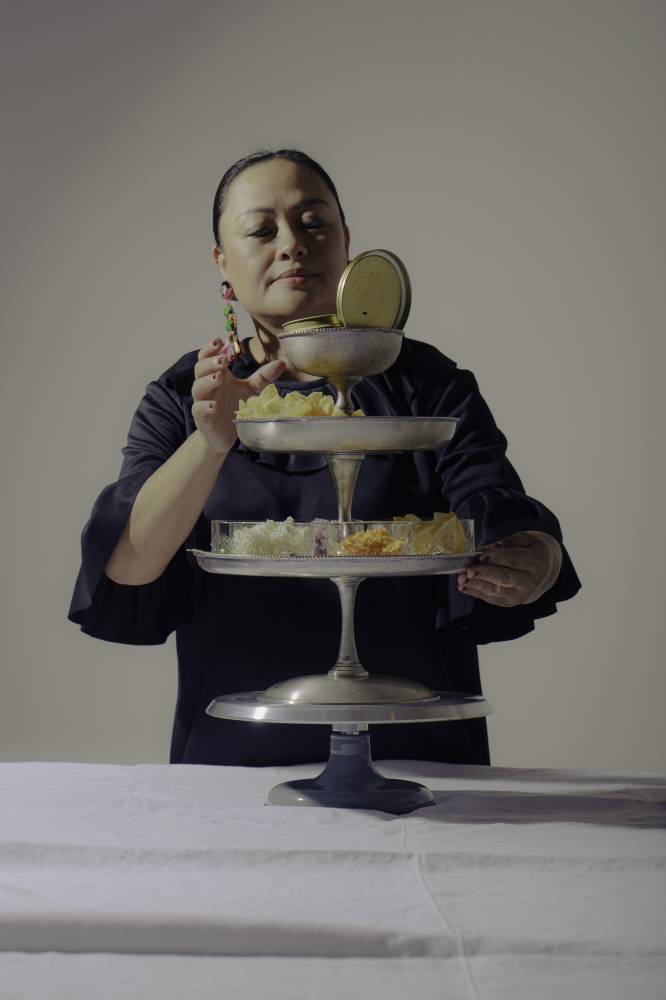
Quick guide on the types of caviar
Sturgeon species determine flavor, texture, and price. Among the most coveted:
• Beluga – The most famous (and traditionally the most expensive). Large, pale gray pearls with a soft, luxurious texture. Due to strict regulations and endangered status, it’s extremely rare today.
• Kaluga – Often compared to Beluga for its buttery richness and large pearls. Sustainably farmed, making it a popular modern luxury.
• Osetra – Medium-sized pearls with a nutty, golden sheen. Complex and refined.
• Siberian/Baerii – Smaller, darker pearls with a clean, briny flavor. Versatile and great for everyday indulgence.
• Sevruga – Smaller pearls, sharp and elegant with minerality.
Russia and Iran are traditionally considered the top producers of caviar, particularly wild Caspian Sea varieties like Beluga and Osetra, which are highly prized for their quality and flavor. While these two countries remain synonymous with high-end caviar, other countries like China, Italy, and France have also become major global players due to advancements in sustainable farming and aquaculture.
The most expensive caviar in the world
Historically, Beluga, specifically “Almas” Beluga (from older albino sturgeon), has been the most expensive—often sold in 24-karat gold tins. Today, due to limited availability, rare Kaluga and certain boutique farmed Osetra can also command extraordinary prices.
But luxury is no longer defined by extravagance alone—quality, sustainability, and approachability matter just as much. This is where Nomad stands out, providing the market with a high quality caviar at a much more reasonable price.
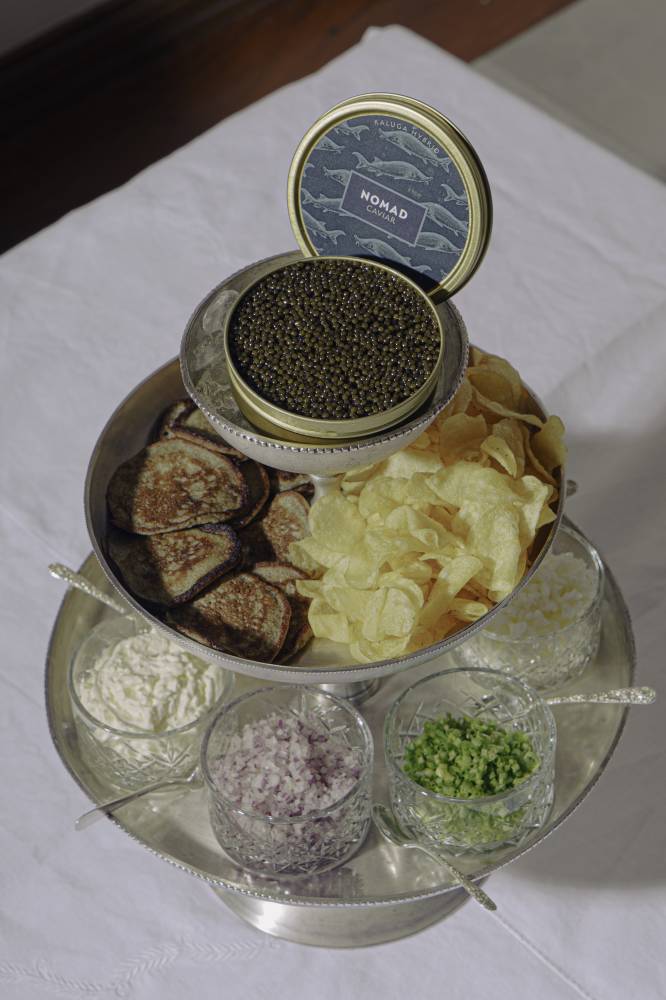
The classic caviar service
Caviar may be luxurious, but serving it well is surprisingly simple. Like most beautiful things, it thrives on restraint.
Before you open the tin
- Keep it chilled (never frozen).
- Store at the coldest part of the fridge (1–2°C).
- Take the tin out of the refrigerator 5 to 10 minutes before serving to release the aroma.
When ready, open the tin using a caviar key or the edge of a spoon. The moment the seal breaks and the pearls glisten is its own small celebration.
What you need
- A bowl of crushed ice, to nest the tin.
- Mother-of-pearl, bone, or gold-plated spoons—metal can affect the flavor.
- Condiments (optional but classic): blinis, crème fraîche (or sour cream), chives, finely chopped egg white and yolk (in separate bowls), artisanal potato chips, Champagne, brown bread like rye or round melba toast, cucumber rounds for a carb-light bite
The goal is to complement the caviar, never overpower it.
What to drink with caviar
Pairings should brighten, cleanse, or celebrate the brininess.
- Champagne or quality sparkling wine like cava or prosecco—dry, crisp, celebratory
- Vodka — ice-cold, neutral, classic
- Dry white wine — Chablis, Sancerre, Albariño
- Non-alcoholic: sparkling water with lemon twist or iced green tea
Caviar loves bubbles and acidity—anything too sweet or heavy will steal its spotlight.
Health benefits
Surprisingly nutrient-rich, especially when enjoyed in moderation. Caviar is rich in Omega-3 fatty acids, protein, Vitamins A, D, B12, and minerals like selenium and iron.

Making it your own
Tradition is a beautiful starting point, but the modern caviar moment is refreshingly creative. Try the following:
- Caviar on warm roasted potatoes
- On buttered sourdough
- On sushi rice (the caviar “nigiri”)
- A spoonful on smoked salmon
- A late-night caviar bump with friends in the kitchen
- On crispy chicken nuggets
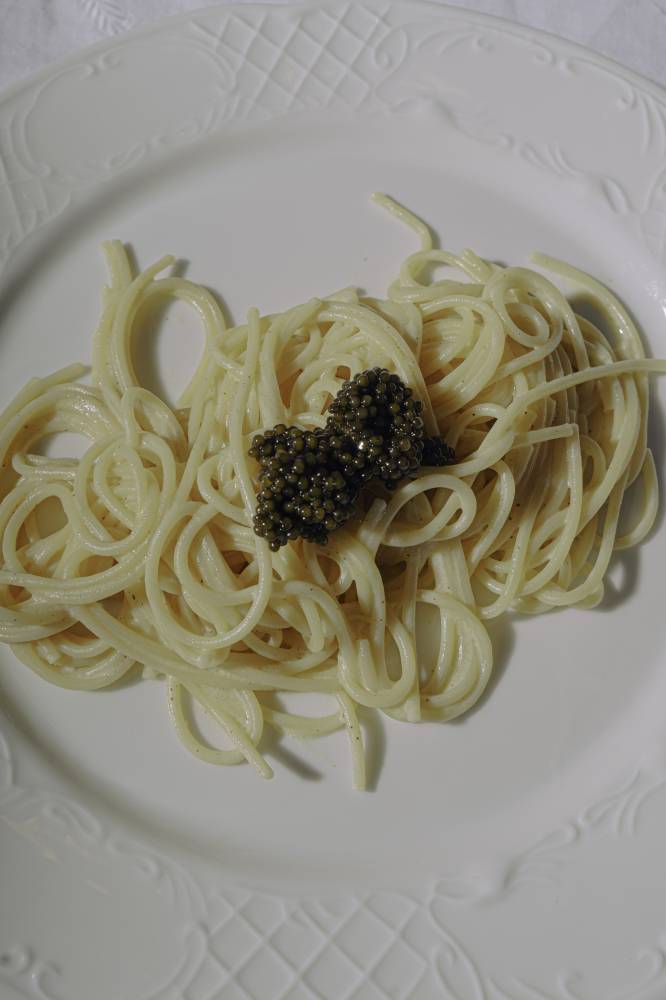
- On capellini pasta with brown butter, lemon and crème fraîche
In the end, caviar is meant to be enjoyed, not overthought.
Nomad Caviar brings the luxury of sturgeon roe back to where it feels most natural: around the table, with good company and the people you love. Folded into moments that feel genuine, effortless, and like a new kind of luxury your guests will never forget.
Curate your caviar service
1. Nomad Caviar – 0917-1442126
2. Mother of pearl spoon – Kultura
3. Blinis – use Bob’s Red Mill Buckwheat Flour from Healthy Options
4. Surgiva Sparkling Water – Terry’s Epicerie
5. Crème fraîche – Santis Delicatessen
6. Artisanal potato chips (Patatas Fritas) – Terry’s Bistro or Argente from S&R
7. Champagne – Dry Rosé, Brut, Blanc de Noirs