








The traditional pagtawas as a therapeutic tool

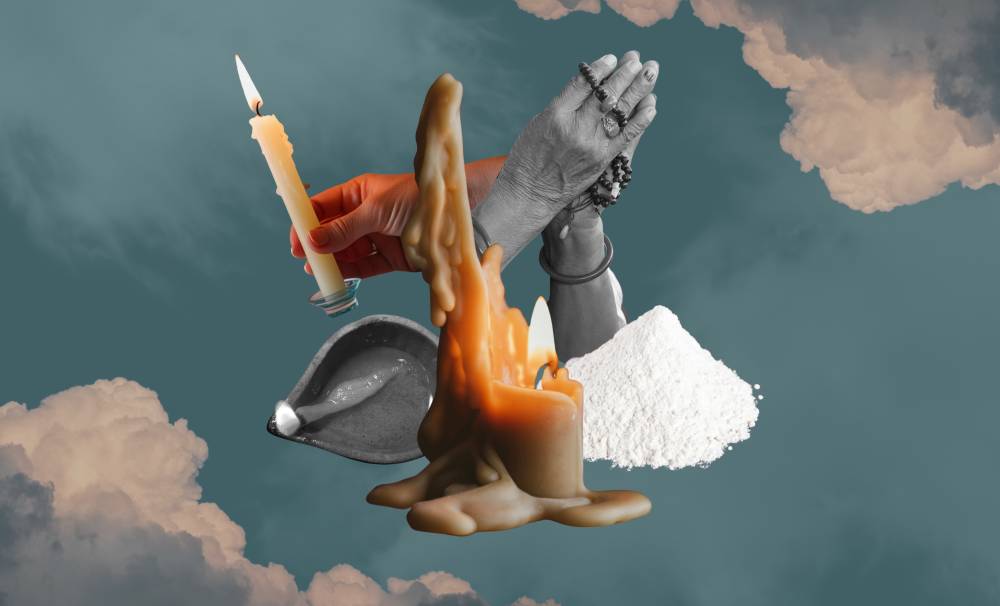
Pagtawas, or pagtatawas, is a divinatory practice used by folk healers across the country. Traditionally, healers use tawas (also known as “alum”), a white rock that has antimicrobial properties. They would melt the rock into a basin and interpret whatever image comes out. These days, candles are also used as an alternative.
There are many ways to do tawas, but the most popular one is to drip melted candle wax into a bowl of water while whispering prayer spells (known as bulong or orasyon). You also see this in the graphic novel (now TV series) “Trese,” where the titular character uses it to commune with the dead.
I have been quietly obsessed about this practice for months now. Not for its occult uses, but for its possible use in psychological therapy. I even did a workshop on it a few months ago for artists and mental health practitioners, in collaboration with The Arts and Health Institute and Magis Creative Spaces.
I am excited to have seen some renewed interest in this topic because a group from the Angeles University Foundation just presented their own research on this practice during the recent Sikolohiyang Pilipino conference. I hope we get more research on this practice—not just on why people do it but also how to do it properly, and how it can actually help us today.
When I read the melted wax of the pagtawas, I read it from the lens of my own understanding—shaped by my training in psychotherapy, my research and immersion in folklore, and my experience providing therapy. I do not claim to be an albularyo or babaylan. I do not claim to call on spirits. But like the folk healer, I also work with unseen forces. These forces are mental. They are internal tensions, social pressures, family expectations, moral dilemmas, and so on.
Pagtawas, I think, is an incredibly useful way to interact with these difficult things in an indirect way. Someone who approaches me might not be ready to admit that they have betrayed someone they love—and so, when I drip the wax in the water and show them that it looks like someone is angry, maybe that will give them permission to admit that they might be at fault. And then we can move on to saying, “So, what do you think we can do to reach forgiveness?”

Folklore has a psychological intuition that we cannot just set aside. It is shaped by human experience with their social and physical environments. We pass it on through stories, customs, and helpful metaphors. When we set aside something as common as the pagtawas practice, just because we are afraid that it might be “demonic” or “unscientific,” we are also revealing how little we actually know about it. And, unfortunately, we are also revealing how unwilling we are to study our own culture.
There are so many therapeutic practices that we participate in today that are actually rooted in spiritual traditions: yoga, meditation, dream interpretation, guided imagery, and so on. We have learned that all of these have value for our physical and mental health… precisely because we actually studied them.