




Time to regenerate

Food is universal. It holds memories, it heals, and it can also change food systems. It is the most tangible connection we have to the land and to each other. But beyond the plate, the choices we make about what we eat become a powerful way to reshape our environmental and cultural story.
This spirit permeated the Daloy: The Green UnConference held on Nov. 14 and 15 at Kai Farms in Silang, Cavite, where it not only marked the 10th year of co-conveners Karla Delgado and Amena Bal, who have championed and served organic food since their first gathering in 2015, but it also launched Kai Farms Earth Kitchen, introducing everyone to food we are passionate about—nutrient-dense, biodiverse, and heals both people and planet.
As the creative chef of Kai Farms, my role was to translate this theme into an experience where regeneration was not just discussed, but also consumed. My core question as an agricultural systems student, is practical: “How can our plates contribute to healing the land and its people?”
Regenerative agriculture is one of the answers—a practice that goes beyond sustaining a plot of land to actively improving it, leaving the soil richer, the ecosystem more vibrant, and the community stronger. For Daloy, I wanted this philosophy to be tangible. The food we consume, guides what farmers continue to grow due to the demand. By intentionally sourcing from regenerative farms, we cast a vote for a system that nourishes the soil, protects biodiversity, and strengthens community resilience. It is saying to farmers like us, “I see what you are doing, and I support your mission.”
Creating the menu was my act of practicing this belief. It was a celebration of the land’s seasonal abundance, a curation to showcase the full spectrum of a regenerative farm. I wanted to feature everything—from seed to fruit, leaf to root, even the meat from animals that play a crucial role in tilling the soil and fertilizing the land, down to the mushrooms that bring second life to felled trees, and create networks of nutrition sharing for crops and trees.
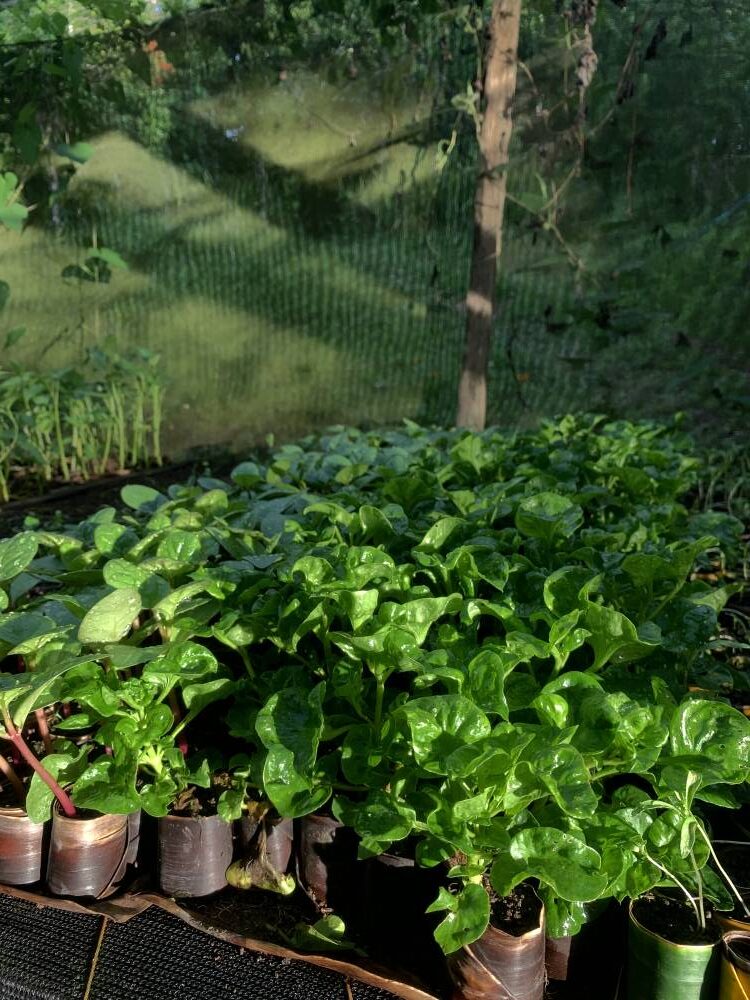
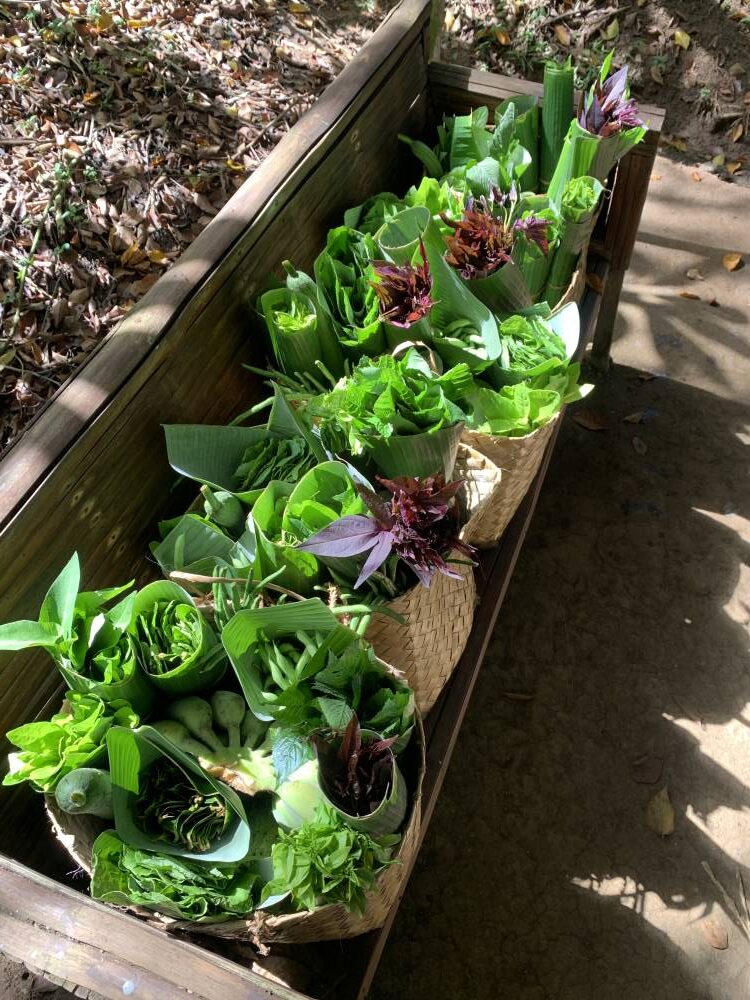
The abundance of a regenerative farm through Southeast Asian-inspired cuisine
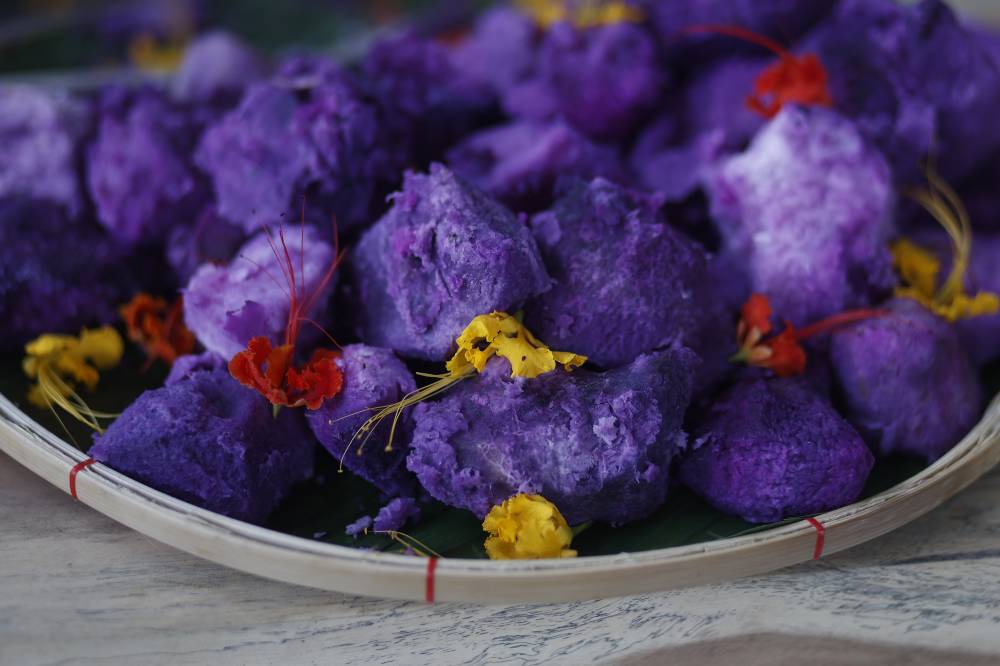
Breakfast was one of the highlights of the first day, featuring a warm and grounding bowl of roasted coconut milk with ube rice balls, all naturally flavored with pandan leaves and galangal root.
For lunch, I used a vegetable green curry as a vessel to showcase Kai Farms’ resilient native greens and vegetables that included green papaya, lagikway, lemongrass, Sawtooth coriander, holy basil, and kaffir lime leaves, among others.
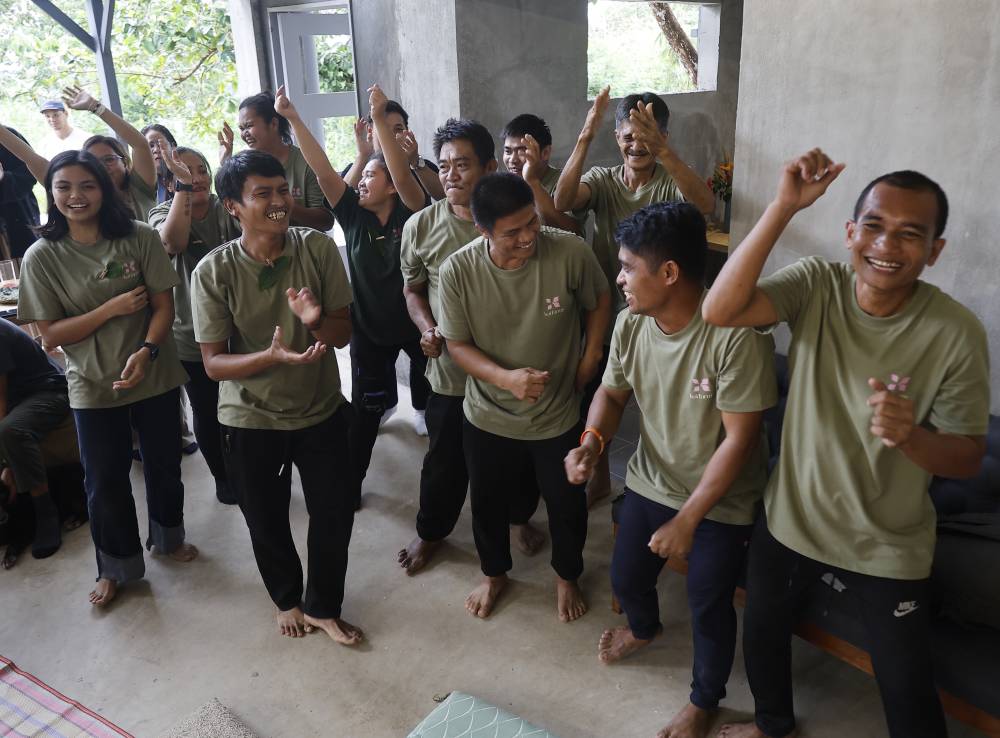
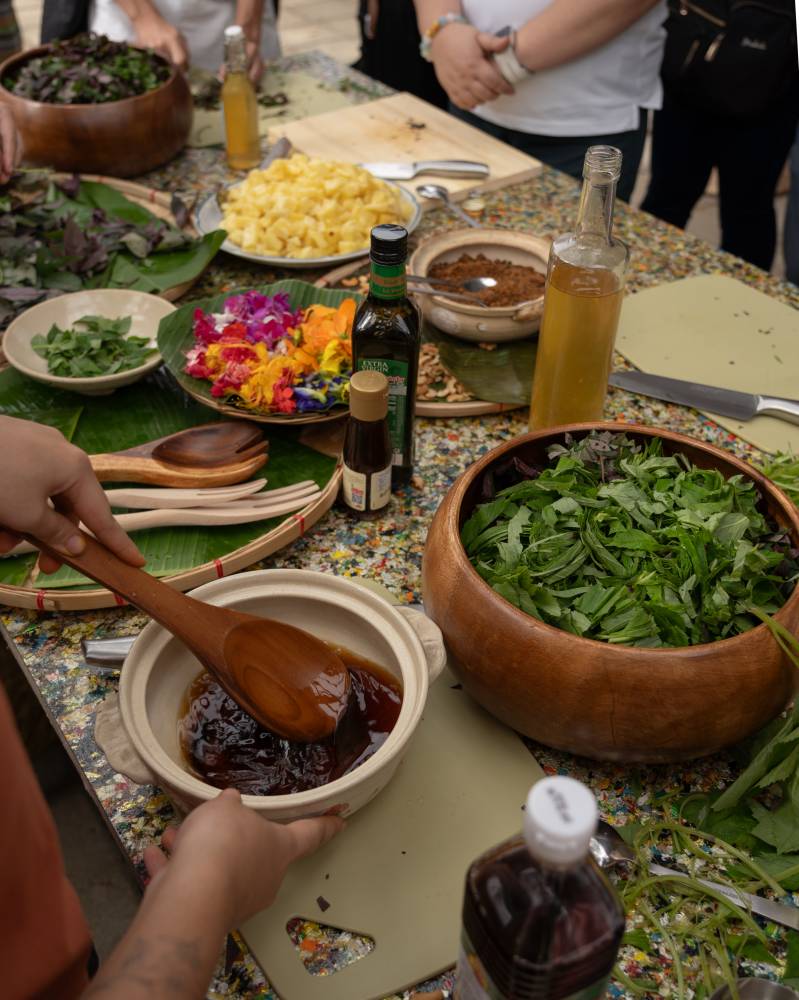
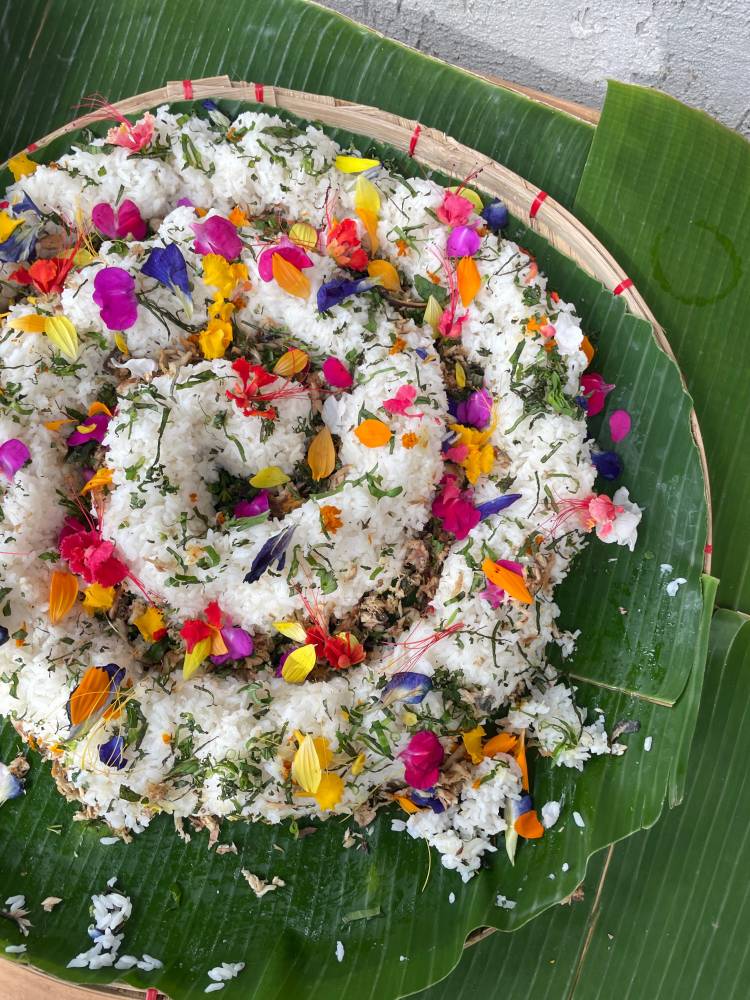
Even our Community Kitchen Dish, inspired by Sabrina Artadi of Sabrina’s Kitchen celebrated hyper-locality through a salad made with purple talbos ng kamote (sweet potato tops) leaves, parachute plant (a wild green that tastes like the skin of Indian mangoes), and spearmint—all tossed with fresh pineapple, cashews, edible flowers, and a dressing made out of the Kai Farms’ Balimbing Living Vinegar, muscovado sugar, patis, olive oil, and sesame oil.
When you are deeply connected with your food, knowing its origins, the farmers, the microorganisms, fungi, pollinators, and all who contribute to nurturing the produce, the story deepens. There is so much more of an appreciation for how it came together and not only tastes good but heals our bodies.
At Daloy, over 90 percent of what we used was sourced directly either from our farm or our network of local farmers, such as Nicolo Aberasturi’s Banhaw Agriculture where we sourced the Black Heritage Kurobuta pork, which is raised both biodynamically and regeneratively. Even the charcoal was sourced from Eco-uling by Project Lily, a social enterprise employing women and out-of-school youth to transform coconut waste into sustainable charcoal briquettes.

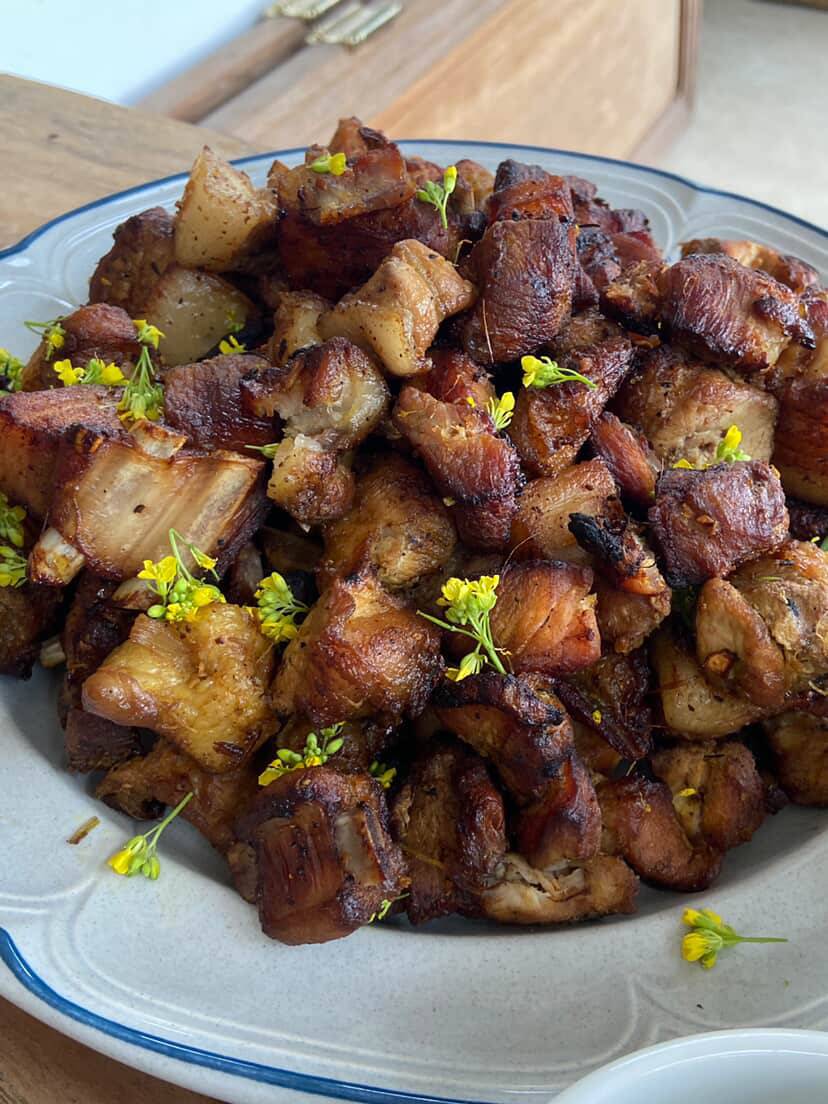
Celebrating Filipino food and culture
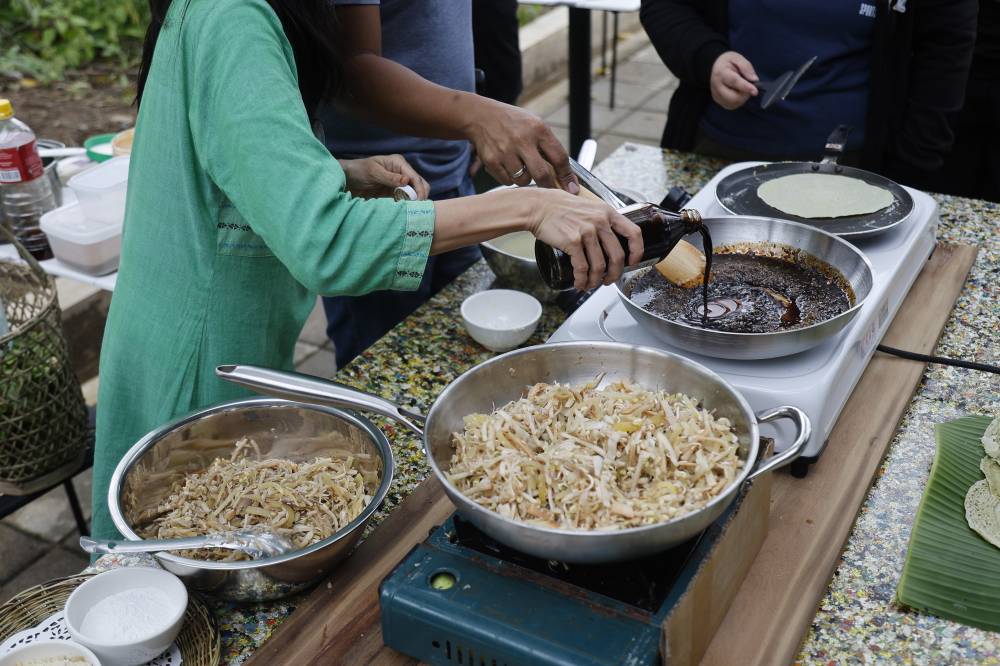
The second day brought things back home with the intent of celebrating Filipino cuisine and culture. After a beautiful breakfast of talinum-scrambled eggs pandesal, steamed ube, healing teas, and hot cocoa, Asha Peri of Subli Farms and Ecology of Food taught the community kitchen how to make fresh spring roll wraps using monggo (mung beans) and brown rice for the hearty and nutrient-dense filling of ubod ny niyog (heart of coconut palm), green papaya, and sprouted monggo.
We then reimagined Filipino classics, transforming pancit with an array of garden greens and using puso ng saging (banana blossom) as a plant-based alternative in pastil, showcasing how a regenerative diet can be both accessible and deeply satisfying.
So, the next time you sit down and prepare a meal, pause. Trace the journey of each ingredient and ask yourself: Did this food leave the land better than you found it? Was it grown in a way that protected our waterways, nurtured pollinators, and empowered our farmers?
Because it is through these intentional bites that we participate in a larger story, one that heals our bodies, celebrates our culture, and regenerates our world.