







Paoay Church: Witness to revolutions, past and present

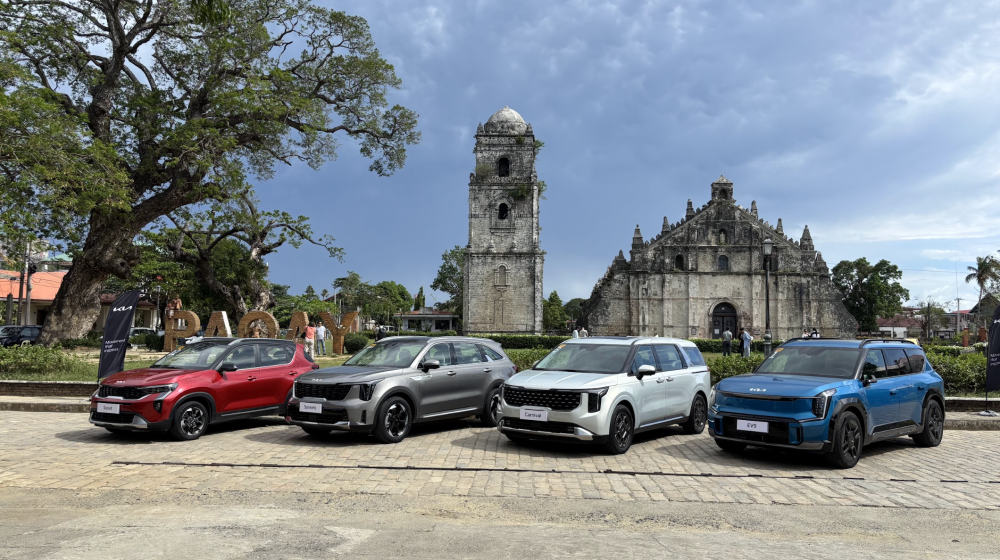
Among the stopovers during our three-day media drive with Kia Philippines this month was the historic Saint Augustine Parish Church in Paoay, Ilocos Norte.
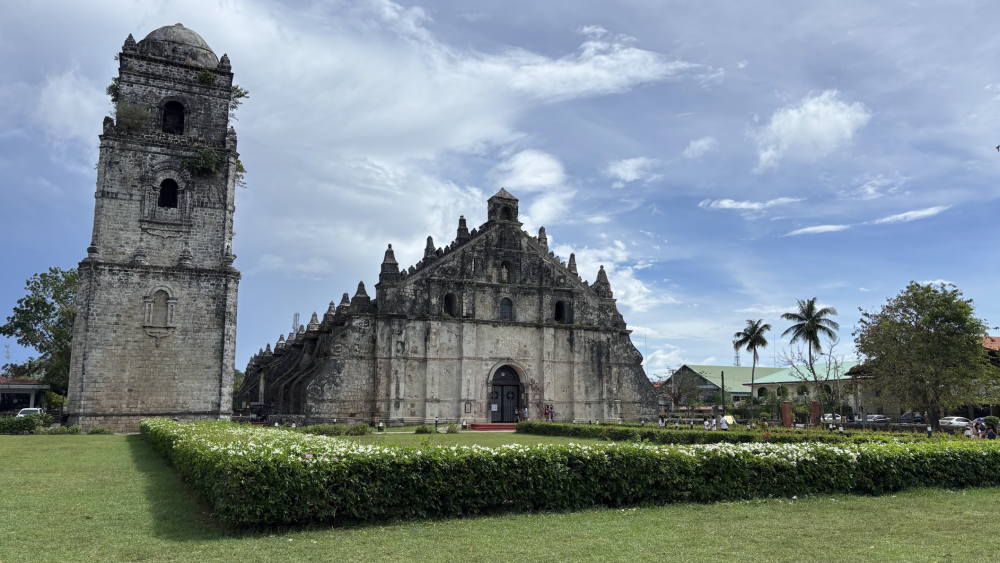
In contrast to the hustle and bustle of the towns that we drove past, this impressive structure stands in its own patch of serenity – complete with perfectly manicured grass, properly trimmed bushes and towering trees. At 110 meters long and 40 meters wide, Paoay Church (as it is better known) was built to withstand earthquakes.
And it has largely survived not only Mother Nature’s tectonic movements, but also the sociopolitical tremors of three centuries of Philippine history.
Europe a la Philippines
After colonizing the Philippines in 1565, the Spanish used various means to subjugate the supposedly unsophisticated and godless populace.
To borrow from French Marxist philosopher Louis Althusser, there were the repressive state apparatuses like the Spanish monarchy and the military. These worked hand-in-hand with the ideological state apparatuses like schools and Roman Catholicism (remember the “charming” prayles in Jose Rizal’s Noli Me Tangere?) to keep us indios in check.
It is from the latter that parishes emerged throughout the Philippines (named after Spain’s King Philip II). Roger Gasper wrote in a 1996 Philippine Real Estate Magazine article that Paoay Church’s construction began under Augustinian priest Antonio Estavillo in 1694 and was completed in 1710.
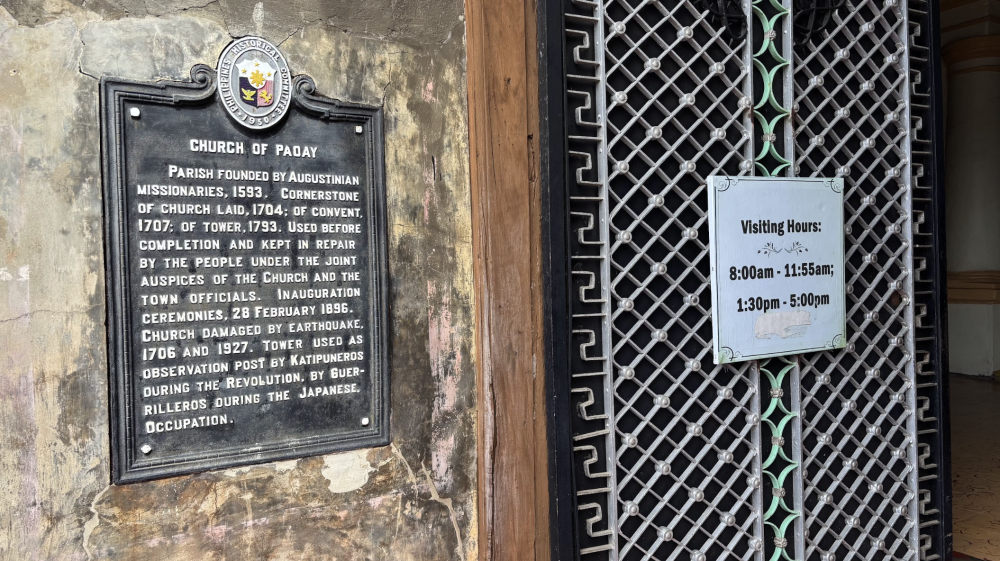
It is dedicated to Saint Augustine of Hippo, one of the most influential thinkers in the Roman Catholic faith. Paoay Church is also one of the four Baroque Churches of the Philippines designated in 1993 as a World Heritage Site by the United Nations Educational, Scientific and Cultural Organization (UNESCO).
UNESCO said these structures “represent the fusion of European church design and construction using local materials and decorative motifs to form a new church-building tradition.” This is most apparent in Paoay Church’s 24 step buttresses that stand over 1.6 meters tall – besides their intricate design, these were meant to keep the church standing amid earthquakes.
Light of a dozen prayers
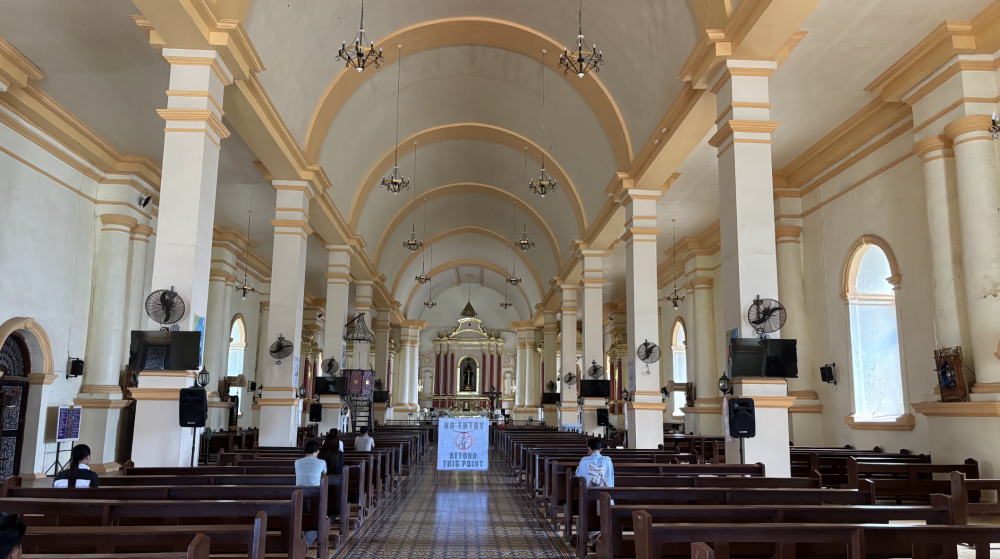
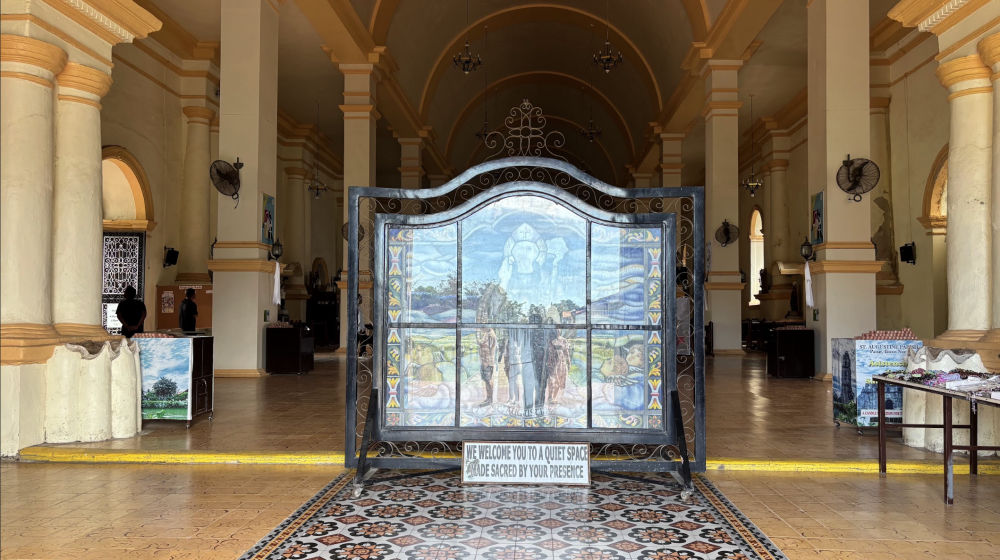
As you enter, a colored-glass image of Saint Augustine greets you, complementing the stained-glass window above the main door.
Cream and gold are the dominant hues of the still-functioning church, where masses are still regularly held. When I went inside shortly after lunchtime on a weekday, there was no service, but the spacious interior was lit by the midday sun and the flames of numerous candles just a few steps from the entrance.
Simply drop P20 into the large donation box, take a candle and recite a variety of prayers printed on tarpaulins right beside the statue of Saint Augustine – everything from prayers to the sick to prayers of forgiveness.
Standing against invaders
Another prominent feature of Paoay Church is the three-storey bell tower, constructed from durable coral stone and bricks, located a few meters away from the main structure.
Despite being born out of 333 years of Spanish colonization, the tower was ironically repurposed into an observation post by the Katipuneros as we rose to repel the European colonizers in 1898. It served the same role just decades later, this time against the Japanese invaders and their doomed ambitions to conquer Southeast Asia.
Besides its UNESCO designation, Paoay Church was named a National Culture Treasure in August 1973 by the late dictator Ferdinand Marcos through Presidential Decree No. 260 – the father of incumbent President Ferdinand Marcos Jr. likewise hailed from Ilocos Norte.
After decades of decay, the church underwent extensive renovation in 2019, with the National Historical Commission of the Philippines completing the work by June 2020. Paoay Church was reopened to the public five months later.
Enduring new movements
Nowadays, Paoay Church is a majestic tourist destination that, happily, continues to serve as a venue for worship and reflection.
But during our trip, it witnessed a new kind of revolution – no, it wasn’t a wave of colonizers nor was it the political maelstrom that the current administration (who all hail from the region) is weathering.
The battery-electric EV9 three-row crossover, the hybrid-electric Sorento three-row crossover and the hybrid-electric Carnival multi-purpose vehicle all form part of Kia Philippines’ entries into the country’s electrified era, where Filipinos are steadily accepting the unparalleled performance and energy efficiency of new-energy vehicles.
And in a sense, Paoay Church served as a witness to Kia Philippines’ own revolution – a resurgent automotive brand offering a vast array of mobility options. Here’s hoping that the historic site will get to see the next big thing from Kia.