






DPWH budget ‘fat’ trimmed; other lapses flagged by COA

The Department of Public Works and Highways (DPWH), “ground zero” of the ongoing scandal in corruption-ridden flood control projects, is feeling the heat from the extra scrutiny it’s getting from various quarters.
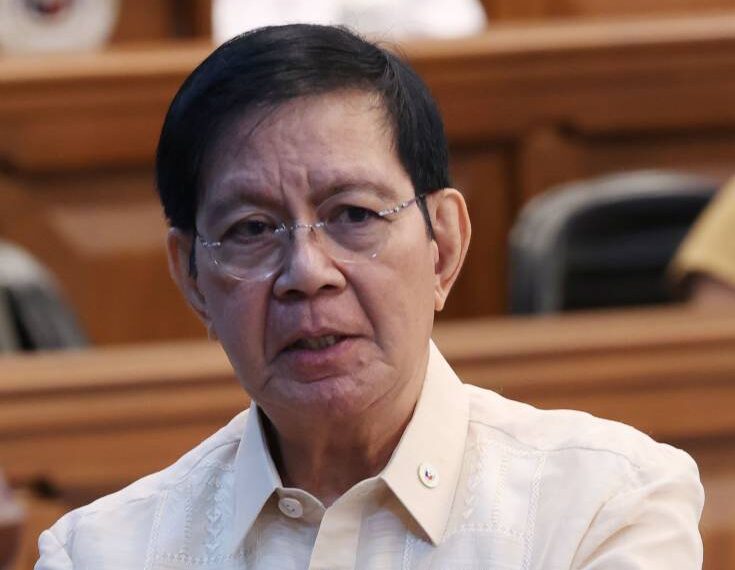
At the Senate, Senate President Pro Tempore Panfilo Lacson has removed more fat from the agency’s 2026 budget by cutting P2 billion in appropriations for right-of-way (ROW) payments.
To further curb potential corruption, Lacson also moved to have the DPWH’s design manuals for key infrastructure updated and consultative, and to have a roadmap for digital planning, design, construction, maintenance, and management.
The Senate leader deducted P1 billion from the Various Completed Projects for the Payments of ROW for Nationwide/Central Office and another P1 billion from the Various Ongoing Projects for the Payments of ROW, similarly under Nationwide/Central Office, calling them “redundant” since “the funds are already allocated regionally.”
Lacson instead moved that the deducted amount be used for his proposed budgetary amendments for various sectors including education, the judiciary, and transportation.
Additional funding
Among Lacson’s additional funding proposals were the transfer of P2.7277 billion from Tulong Dunong to the Tertiary Education Subsidy program; additional P30 million for the UP NCPAG Governance Reform, Innovation and Transformation Collaboratory (GRIT Labs); increase of P90.991 million for the Anti-Red Tape Authority; increase of P400 million for the Department of Transportation Cordillera regional office; P243,789,671 for the Supreme Court’s Judicial Integrity Office; increase of P223,664,000 for the Court of Appeals, whose original proposed budget of P8.472 billion was cut to P5.788 billion in the National Expenditure Program; and increase of P28.5 million for the Development Academy of the Philippines’ Graduate School of Public and Development Management.
Meanwhile, to fund more scholarships, Lacson also pushed for extra funds for the Tertiary Education Subsidy (TES) in the 2026 budget, and to redirect the budget for the “resurrected” Tulong Dunong Program from the budget of the Commission on Higher Education to TES.
Noncompliance
The Commission on Audit (COA), on the other hand, flagged the DPWH for its noncompliance with procurement laws, non-imposition of damages, and delayed submission of contracts.
In its annual audit report on the agency, the COA called out the DPWH for its non-imposition of liquidated damages to contractors and suppliers who had delays ranging from one to 1,075 days in completing projects, and delivery of goods amounting to more than P5 billion.
State auditors also said liquidated damages worth P474,743.76, collected in 13 projects of two DPWH offices, were found to be lower by P1.8 million than the COA-evaluated amount of P2.292 million.
COA records showed that the 137 infrastructure projects and 21 goods procured from various contractors and suppliers had a total cost of P5 billion and were “completed and delivered beyond the stipulated target completion and scheduled delivery dates.”
Regions that had infrastructure assets with no imposed liquidated damages include the Cordillera Administrative Region, Cagayan Valley, Central Luzon, Mimaropa, Bicol, Central Visayas, Eastern Visayas, Zamboanga Peninsula, and Davao Region.
Significant delays
The audit revealed that liquidated damages for the contractors and suppliers of these projects and goods were neither imposed nor deducted from contractor payments, “nor were they collected from retention money or other posted securities.”

This, state auditors said, was contrary to government procurement laws.
“The Department exhibited inadequate monitoring and validation of infrastructure projects, coupled with inaccurate reporting and lenient enforcement of contractual penalties,” it stressed. “These shortcomings have contributed to ongoing contractor performance issues and significant delays in project execution.”
The lack of collection and non-imposition of liquidated damages also “deprived” the government of the right to be indemnified for the damages “it has suffered due to defaulting contractors and suppliers in the timely delivery of the projects and goods procured.”
‘Not fully compliant’
Another point raised by the COA was how the DPWH was “not fully compliant” with Republic Act No. 9184, or the Government Procurement Reform Act, and its revised implementing rules and regulations.
According to the COA, this prevented the agency from exhibiting transparency, competitiveness, equity, efficiency, and economy in the procurement process, as well as during the implementation of various infrastructure projects.
State auditors also noted that the submission of 722 contracts amounting to P43 billion lacked the required supporting documents.