





Let it be a tale

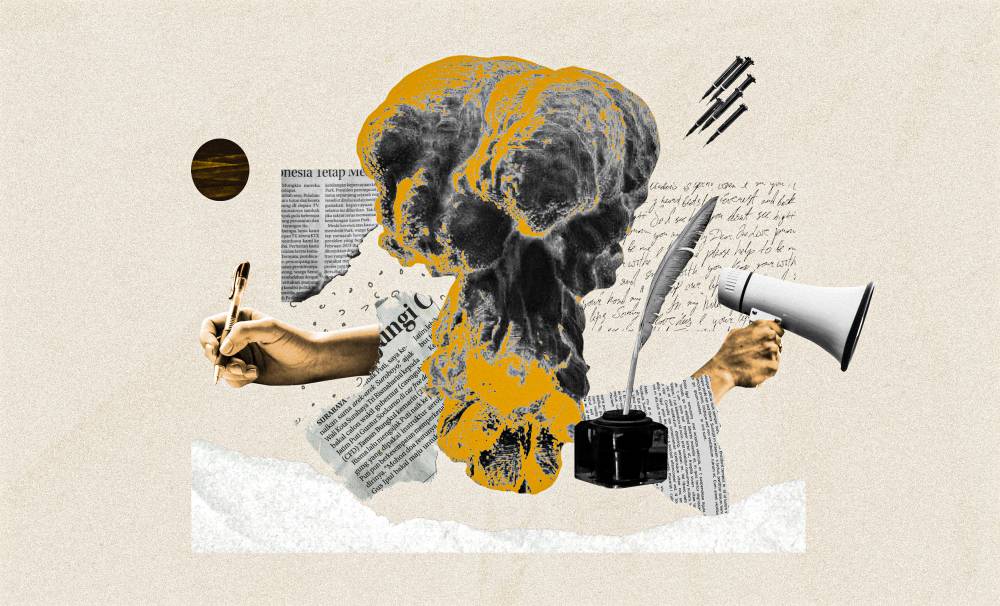
Early on in the ongoing genocide of Palestinians in Gaza by Israel, the writer, poet, and academic Refaat Alareer quipped during a live interview, “I’m an academic. Probably the toughest thing I have at home is an Expo marker. But if the Israelis invade… I’m going to use that marker to throw it at the Israeli soldiers, even if that is the last thing that I would be able to do.”
Not even three months later, on Dec. 6, 2023, he was found dead, along with members of his family—killed by a US-made Israeli missile that specifically targeted his sister’s home, where he had been sheltering. The attack left him little time to reach for his marker.
Yet Alareer spoke a fundamental truth we as writers and journalists know: Our arsenal is meager yet our words carry a power that outlives bullets and bombs.
In times of turmoil
Whether we live in times of turmoil or times of debatable peace, there is always some form of injustice affecting communities somewhere in the world.
It could be a mad tyrant masquerading as a democratically elected president, threatening to invade a sovereign country and seize its oil. Or congressmen salting away billions in taxpayer money to fund their Gulfstreams and Christian Dior shopping sprees while failing to deliver basic services to their constituents. Or a multinational corporation dumping toxic waste into rivers and seas, poisoning the water we drink and the soil we till.
There are injustices that come to light when disaster strikes and an entire town is washed away; when we are unwittingly spied upon by the very tech we rely on in our daily lives to do our banking, book our travel, manage our workday; when we are excluded from spaces that we have every right to be in because of our color, our creed, or our class.
In the absence of munitions or money, or even access to the powers-that-be, what other weapon do we have except words?
Fighting words with words
Writing is resistance. It is the act, not just of putting pen to paper—or fingers on the keyboard, as the case may be—to record, report, and relate, but of making ourselves look with a critical eye and a curious, engaged mind, no matter how horrifying, no matter how distasteful, no matter how seemingly inane. For it is often within the banalities that truths are hidden.
In more unscrupulous hands, however, words have been and continue to be deliberately weaponized, bought and paid for even, slickly repackaged as propaganda to concoct a narrative that suits an agenda focused on concentrating and maintaining power and control.

And yet the only way we—or at least I—can resist is through writing. For we are a stubborn lot, us writers. Even when others try to silence us, we persist with our words.
But in order for the truth to resonate, our words must be published. Newspapers and media outlets must have the courage to stand on the side of truth, to publish and disseminate the words we are brave enough to write.
Words, once published, take on a life that hopefully will endure, outlasting untruths and impunity as well as attempts at erasure, spin, and decontextualization. Our words are testimonies of what we dared—and cared—to look at and let the world know about.
As Alareer wrote in his most famous poem: “If I must die / let it bring hope / let it be a tale.”


