










Philippine art seeks to build a broader, more sustainable ecosystem

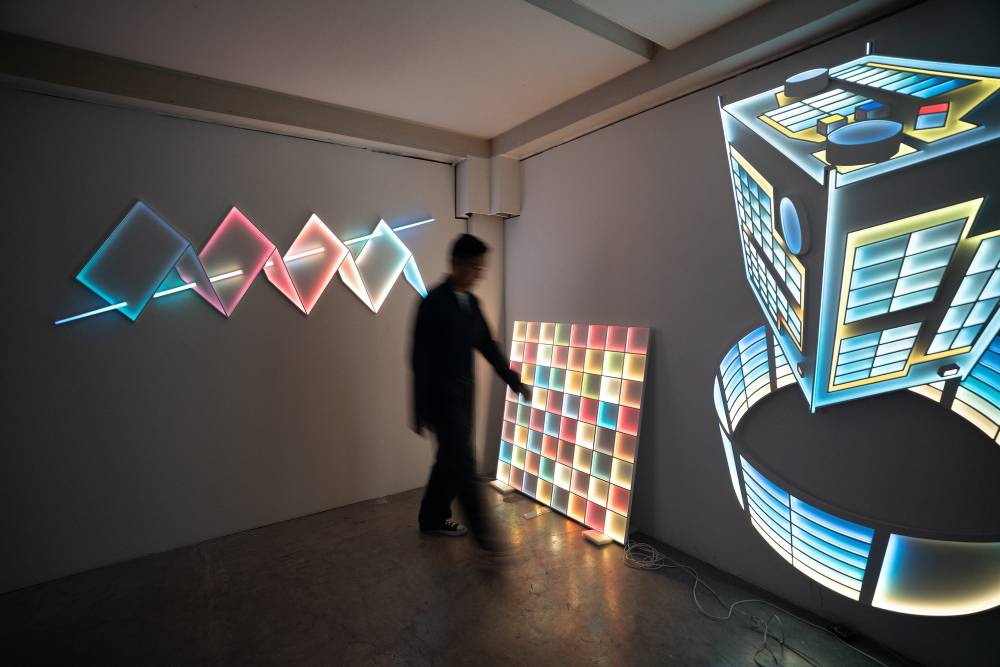
I’m massively optimistic about the Philippine art scene. Some may sense a slowdown in acquisitions, but the scene today is far stronger than it was before March 2020, just before the pandemic,” declares Jay Amante, longtime collector, founder of Blanc Gallery, and co-founder of ALT Philippines.
Indeed, the Philippine art scene in 2025 is robust, forward-looking, and energetically multigenerational, even as it continues to seek stronger, more sustainable institutional and governmental support. It has sprinted through dizzying periods of growth and slammed on the brakes during what felt like abrupt slowdowns; gained regional and international recognition through milestones like the Philippine Art Awards—formerly the Philip Morris Philippine Art Awards—and part of the ASEAN Art Awards established in 1994; delivered strong showings at global fairs such as Art Basel Hong Kong; and secured growing visibility at the Venice Biennale.
Meanwhile, grassroots activity has flourished, with emerging art communities across Luzon, Visayas, and Mindanao—demonstrated by Bacolod’s Orange Project; spaces like Gravity Art Space in Quezon City; and Tarzeer Pictures, which supports and showcases lens-based artists.
Today, the multigenerational scene thrives on the energy of baby boomer artists and gallerists, Gen X curators and thinkers, millennial artists, and Gen Z collectors.
Across independent and artist-run spaces, social media platforms, and cross-disciplinary collaborations, Philippine art is reaching wider audiences and reshaping how contemporary work is experienced and consumed. Abroad, it is shedding the label of “exotic curiosity” and increasingly entering the broader global conversation.
In this conversation, four generations of movers—Soler Santos, Patrick Flores, Benjie Cabangis, Bjorn Calleja, Stephanie Frondoso, Julio “Wax” Martinez, and Jay Amante—reflect on the scene’s growth, its persistent challenges, and the collective effort to build a broader, more sustainable ecosystem that balances momentum with stability while nurturing talent and cultural dialogue.
What can you say about the growth of the Philippine art scene? Could you share notable highlights, developments, or milestones that reflect the growth of the country’s art ecosystem?
Patrick Flores (PF): The growth has always been lively in different places within the country and outside, in Manila and all over the archipelago. Some of the markers are obvious: an active exhibition cycle, a steady stream of fine arts graduates, competitions and grants, art fairs and auctions. But there are other markers to consider: responsive curatorship and writing; peer-to-peer engagements; art that is not easily captured by image or meaning; art that is thoughtful, performative, inspiring.
Benjie Cabangis (BC): Independent and artist-run spaces, along with university galleries and other exhibition venues, have become important sites for dialogue and discovery. At the same time, more Filipino artists are entering international exhibitions, showing that our local ecosystem is maturing in both depth and reach. What excites me most is how younger artists are exploring new approaches and forms, expanding conversations and making the landscape more dynamic and inclusive than ever.
Stephanie Frondoso (SF): The most important milestone is that we don’t simply follow trends or standards in the West. We place importance on our own points of view, our own place in history, our own contributions to culture. Institutions in the West are interested in expanding research to include our stories and perspectives in understanding world history and contemporary society.
Jay Amante (JA): During the early 2000s, the international art scene started to recognize the promise of Philippine contemporary art. More foreign galleries and curators took an interest in Filipino artists. I believe it was around this time that works by female artists like Geraldine Javier, Nona Garcia, and Yasmin Ching were getting much-deserved attention globally. It was a much-needed push. Maybe that’s one of the reasons that unlocked the feeling of, “Hey, magaling pala talaga tayo—hindi siya guni-guni.”
What is your forecast for the trajectory of the Philippine art scene in the next five to ten years?
Soler Santos (SS): I still believe it will continue to grow in the next five to 10 years despite the slowdown in the current art market. Real collectors will still buy, while speculators will likely slow down. I hope collectors will continue to support Filipino artists, regardless of the market’s slower movement recently.
BC: I see the Philippine art scene continuing to expand through stronger regional networks, a more active role for university and independent spaces, and deeper engagement with contemporary issues. Filipino artists will likely gain even greater visibility in Southeast Asia and beyond, as more collaborations, residencies, and cross-border platforms open up. Overall, the trajectory points toward a more connected, resilient, and internationally engaged ecosystem.
Bjorn Calleja (BJC): The interest coming from artists, collectors, students, and younger audiences makes me believe the ecosystem can stay alive and engaged. Nothing is guaranteed, pero sana the art market doesn’t fade—mas maganda if it matures into deeper support, long-term thinking, and genuine commitment to culture.
I’m also hoping that the trajectory of Philippine art continues upward. The progress I imagine isn’t dramatic; it’s grounded and persistent, built from consistency, community engagement, and small but meaningful improvements across the scene. Hindi ko inaasahan na big breakthroughs agad, but I can picture a gradual strengthening of the structures, relationships, and practices that already make our art community vibrant today.
SF: My optimism really comes from the people who continue to show up—artists experimenting, audiences paying attention, communities building around art. If that spirit stays strong, the next decade won’t just sustain the scene; it can quietly deepen it.
Julia “Wax” Martinez (WM): I hope for the Philippine art scene to be more accessible to the Filipino people. Internationally, art is all over public spaces for the consumption of everyone. In the Philippines, we lack spaces that uphold and advocate for public art. Art should be enjoyed and appreciated by all.
What else can be done to address the challenges within the Philippine art scene?
SS: I really hope for more visible and meaningful government support, such as grants for deserving artists and the establishment of more contemporary museums focusing on Filipino art, so that a wider audience can be reached. And I wish established artists would help support young and promising artists, encouraging the growth of the community.
PF: More investment in enhancing curatorial and discursive support; more platforms for practitioners to be in conversation; less silos in the art scene; a more decisively developmental framework from galleries; a more exciting vision from State institutions; a more active third sector (not State, not market); more research and publications on Philippine art history as broadly conceived; more interaction between practitioners across spaces; more ambitious development of modular spaces for exhibitions and related activities; more exposure to a translocal environment within and beyond the country; less ideological and formalist prejudice; a more experimental curatorial and writing style; a national annual exhibition; and a confident travelling survey exhibition of Philippine art nationally and globally.

BC: Addressing the challenges in the Philippine art scene means strengthening the support systems around artists—through grants, residencies, mentorship, and stronger art patronage.
We also need stronger art education, one that not only teaches skills but helps artists become more informed and engaged in the wider conversations of contemporary practice. More art criticism and critical writing can also deepen the discourse. Building more platforms beyond Metro Manila would bring more artists and audiences into the picture. Clearer professional standards can also make art careers more fair and sustainable.
BJC: Kailangan natin ng mas malinaw na professional standards, mas matibay na institutions at museums, better documentation and criticism, at healthier na working relationships between artists, galleries, and collectors. Importante rin ’yung long-term support para sa artists, mas transparent na sistema, at tuluy-tuloy na pag-support sa artist-run spaces at independent initiatives. Ito ’yung mga bagay na kayang buuin ng community unti-unti, through consistency and shared effort.
SF: Compared to other countries like Korea and many European nations, our arts ecosystem doesn’t receive much government support and funding. Many practicing artists elsewhere have sustainable careers because of their common or regular access to grants. Perhaps there is a lack of understanding of just how important art is in our society.
WM: Support the younger generation of advocates of the art scene—artists, collectors, gallerists, and everything in between. A challenge in the Philippine art scene remains the high barrier of entry for the younger generation. Personally, I believe there are two layers to this barrier to entry—the hypothetical and actual.
Hypothetically, for the younger generation, there is this preconceived idea that art is only for the prestigious—the bigwigs of Manila. For the actual barrier of entry for the younger generation, this, quite literally, is the financial aspect of art. For young artists, there is the hurdle of sustaining one’s self, inside and outside of art. Young collectors face the obstacle of keeping up with deep-pocketed collectors who have established their ties with galleries, hence making it virtually impossible to even get a foot in the door to get the pieces they want.
However, many fail to realize that these barriers of entry are all but an illusion. The Philippine art scene is welcoming; sometimes, one just needs to find the right set of people to guide one’s appreciation for art.
JA: I don’t think the Philippine art ecosystem lacks anything. On the contrary, more than ever, there are countless platforms for artists. The artist-gallery ratio has drastically improved. It’s really about finding the right match between artists, collectors, and institutions. Parang mag-jowa lang ’yan, meron talaga ’yung na-aangkop sa iyo.