










The death of the signature bag

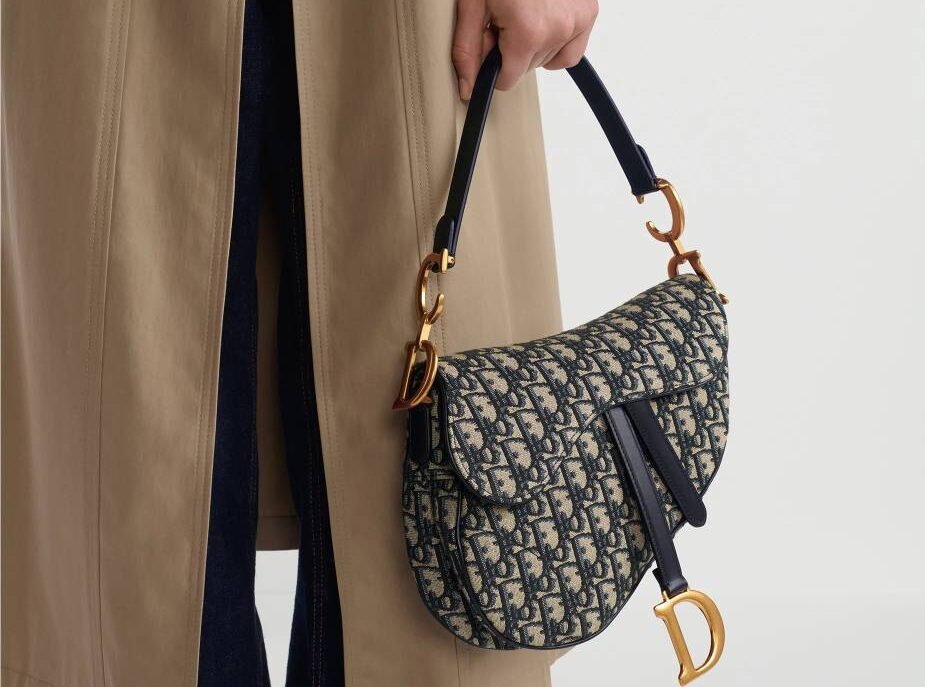
There was a time when a woman’s handbag was her identity. The Birkin signaled status, the Dior Saddle signaled trend awareness, the Chanel Flap signaled “I have arrived.” For decades, the fashion world treated the “signature bag” as a personality trait—the thing you carried every day, the anchor of your wardrobe, the investment piece meant to outlive the trends.
But in 2025? The idea of having one bag that defines you feels almost vintage. Nobody has a signature bag anymore– they have a rotation. And that shift did not happen quietly; it happened culturally.
A choreographic shift
Social media changed the relationship between identity and consistency. Instagram rewards novelty, TikTok rewards transformation, and the algorithm rewards constant reinvention. The girl who carries the same bag every day does not get reposted. The girl who carries a Saddle on Monday, a Loewe Squeeze on Wednesday, and an archival Celine tote on Friday? She is a moodboard. The culture no longer wants permanence—it wants variety. Bags become less like long-term partners and more like micro-eras: a version of yourself, but for 48 hours.
This shift is not chaos; it is choreography. We live in a time where personal style changes every few weeks. One day you are quiet luxury, the next you are indie sleaze, the next you are wearing a calculated version of “I just threw this on.” Our outfits adapt instantly, and our bags follow even faster. A single handbag simply cannot keep up with how fast identity moves now.
Luxury houses saw this coming before anyone said it out loud. They stopped trying to create the “It-bag of the decade” and started dropping families of silhouettes instead. Loewe pushed five hits at once. Bottega decided every season needed three new icons. Dior silently multiplied their bag lineup to nearly 50.
The message was clear: do not pledge loyalty to one bag—build a rotation. Fashion did not kill the signature bag. The brands did, intentionally.
From forever to fleeting
Then the resale economy made sure it stayed dead. In the past, buying a luxury bag was a commitment; now it is a trial run. The RealReal, Vestiaire Collective, Depop—these platforms normalized buying, loving, reselling, rebuying. A bag is no longer a forever piece; it is a three-month situationship! And that is not a failure of taste—it is a reflection of how consumers shop now. We do not want one perfect thing; We want many meaningful things.
Even the icons could not escape the rotation era. The signature bag used to define you. Now you define how the bag fits into your week.
There was once a cultural fantasy around stability—the idea that the right bag could summarize a woman. Today, that feels limiting. Identity is fluid, aesthetic is seasonal, and the idea of “the one bag that does it all” feels suspiciously like a marketing myth. People want pieces that align with how they actually live: chaotic, adaptive, multi-dimensional.
The girl with the rotation is not indecisive. She is smart. She is edited. She is self-aware. She knows that different moods demand different silhouettes. A giant tore for work mode. A nylon crossbody for errands. A structured mini for dinner. A vintage Celine Cabas when she wants to be taken seriously. She is not performing exclusivity; she is performing reality.

Goodbye, main character energy
So yes—the signature bag is gone. Or at least, it has been demoted. The Birkin is not dead. The Chanel Flap is not irrelevant. They are simply “one of,” not “the one.” The rotation era is not about you breaking up with the classics; it is about refusing to let them define you.
Fashion has stopped asking, “What is your signature?”
Now it asks, “What version of yourself are you today?”
And maybe that is the real story of 2025: The signature bag did not die—it just became a supporting character in a much bigger, more interesting cast.