





Corruption, catastrophe, awakening the spirit of dialogue at Davos


“From the ruins of natural disasters to the floods now sweeping across South and Southeast Asia, the most vulnerable bear the heaviest burden—of both catastrophe and systemic corruption. Dialogue is no longer optional; it is a lifeline.”
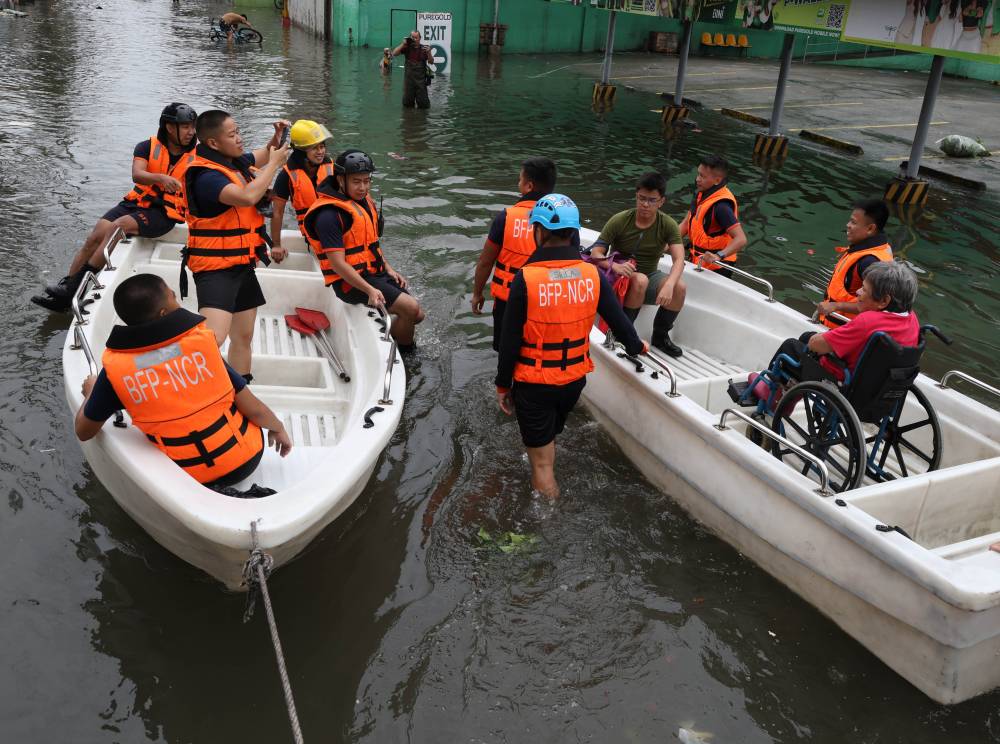
The floods in Sri Lanka, Thailand, Vietnam, Indonesia, Philippines and Malaysia do more than drown homes—they expose the fragility of lives, economies and governments.
Across South and Southeast Asia, survival is no longer solitary.
A Spirit of Dialogue is not a virtue; it is a necessity. To live another day, nations must confront shared threats with honesty, synergies and purpose—not ceremony.
In recent days alone, Sri Lanka has mourned more than 150 deaths from the cyclone; the Philippines, 85; and across Southeast Asia—Indonesia and Thailand—a combined toll exceeding 460 lives. These are not isolated tragedies but symptoms of a region living on the edge of catastrophe.
In Sri Lanka, I entered government administration shortly after the Asian tsunami in 2004 devastated the country, claiming 35,000 lives and reducing fishery harbors to rubble. My first task was to oversee the reconstruction of 10 of the 13 damaged harbors, funded by grants from the United States Agency for International Development, Japan, China and several smaller donors.
It was a Herculean undertaking of collective effort, locally and globally. Yet in that struggle, I witnessed something enduring: the quiet resilience of our people, determined to rebuild their lives.
Communities came together, forging new synergies and against all odds, the reconstruction was completed in record time—a testament not only to planning, but to the human spirit’s stubborn insistence on life.
Sri Lanka knows fragility intimately. Its economy, bruised by the collapse of 2022 and held together only by the thread of an International Monetary Fund (IMF) program, now bends under torrents of rain and earth giving way. Stability is drawn on water; a single shock can tip the fragile balance. Across the region, floods of unprecedented scale displace millions, leaving societies at the mercy of forces beyond their control.
‘Stolen future’
The 56th World Economic Forum meets under a theme both urgent and fragile: A spirit of dialogue.
From Gen Z protesters in Jakarta and Manila to the parliament set ablaze in Nepal, one word haunts the streets—corruption. Never has economic crime stood so nakedly at the center of political life.
In the Philippines, nearly $2 billion has vanished into a labyrinth of deceit. In such shadows, the promise of growth, the dignity of investment, the hope of shared prosperity—all evaporate long before they reach the citizen.
I remember Manila in 2014, when I travelled there as a panelist for a World Economic Forum dialogue during President Aquino’s tenure. The room was still filled with hope, a belief that corruption could be named and defeated.
What followed were waves of scandals, echoing Sri Lanka’s own descent. When Sri Lankans rose in 2022, it was not merely against scarcity—it was revolt against a stolen future. The IMF’s Governance Diagnostic confirmed what citizens already knew: corruption had become structural, stitched into the very fabric of state and politics.
In September, I walked among thousands in the Philippines protesting ghost projects and flood control rackets. A young man said he no longer cared what system followed—only that the present corrupt must fall.
President Marcos himself announced that of the 16 key suspects identified, eight were already in custody, but this is only the tip of the iceberg in a much deeper machinery of flood control corruption.

War vs economic crime
Across South and Southeast Asia, the heaviest burden falls on the lowest strata—the daily wage earners whose lives drift at the mercy of political economies they never chose. Their stories map quiet suffering: migration rackets leaving only the thinnest remittances, criminal networks tightening control over communities and lending sharks stripping families of farmland that once sustained generations.

In their voices, I heard the true nature of economic crime—an invisible force that bends the vulnerable until they break. They are the first to march, the first to burn and the first to be forgotten when the slogans die. They gather under a new emblem—the “One Piece” flag—leaderless, centerless, victorious only for the brief moment before the void returns.
Behind this moral collapse lies a transnational underworld. Indonesia and Sri Lanka recently dismantled one network, yet countless others persist: online gambling syndicates across Southeast Asia, scam compounds in Myanmar imprisoning nearly 100,000 people, and drug corridors flowing from the Shan State to Afghanistan.
Crime thrives where governance fails.
Dialogue is the only lifeline. Economic crime pulls political establishments apart and shakes economies to their core. Governments wrestle with tariffs hollowing domestic industries, foreign influence quietly capturing political elites, and regional rivalry that erodes the space for honest action.
The moral question is simple: who bears the first weight of failure? Always the most vulnerable. Those whose lives are stitched to daily survival, who see their families starve while the powerful siphon wealth, who march in streets with banners that will later be forgotten. Protecting them is not charity; it is a responsibility of every system, every nation, every dialogue.
A spirit of dialogue must be more than words. It must uncover new forms of cooperation and synergies, new visions of the region as one ecosystem of risk and hope. Only then can we imagine a future that arrives not as catastrophe, but as possibility.
For the people who rebuild from rubble, who march under banners without leaders, who carry anger tempered by survival—this is the promise we owe them: that dialogue will be real, that justice will not be delayed, that society will not abandon them to the void.
(Asanga Abeyagoonasekera is a senior fellow at the Millennium Project in Washington DC who developed the Economic Crime and Geopolitics Index. He was a technical advisor to the International Monetary Fund. He is the author of Teardrop Diplomacy published by Bloomsbury. His forthcoming book, Winds of Change, will be published by World Scientific Singapore.)