


Breaking the biggest story in years—the PDAF scam


Deja vu.
Twelve years ago, the Philippine Daily Inquirer headlined how billions in taxpayer money, the Priority Assistance Development Fund (PDAF) allocations of around 120 lawmakers, were misused and plundered through the use of bogus nongovernment organizations (NGOs) created by Janet Lim Napoles, who is now serving several life sentences.
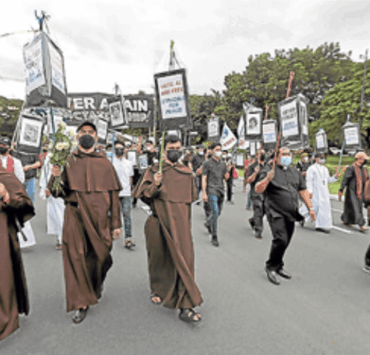
The public funds stolen in the pork barrel scam may now appear insignificant compared to the massive corruption in flood control projects being uncovered today. But as a result of the Inquirer series, civil society and church leaders led nationwide protests, including a million-strong march at Luneta.
The public outcry led to the Supreme Court declaring the pork barrel as unconstitutional in 2014.
However, to this day, lawmakers still enjoy such pork barrel perks which were merely renamed and their distribution process reworked.
Unreturned money
Three powerful lawmakers were arrested and jailed and tried for plunder in connection with the pork barrel scam—Juan Ponce Enrile, Bong Revilla and Jinggoy Estrada.
However, Revilla was acquitted of plunder in 2018 and Estrada in 2024, with the Sandiganbayan citing lack of evidence. Enrile was acquitted of plunder in 2024 and cleared of all graft charges last October.
Low-ranking government officials implicated in the scam were the ones convicted.
While Revilla was acquitted of plunder, he has yet to comply with the Sandiganbayan’s order to return to the national treasury around P120 million of his pork barrel allocation lost to the scam. Revilla’s chief of staff, Richard Cambe, was found guilty of the crime. He died in jail in 2021.
Estrada was also acquitted of plunder, but is still on trial for other graft cases related to the scam.
Before he died on Nov. 13, Enrile was cleared of any wrongdoing, while his chief of staff, lawyer Gigi Reyes, was incarcerated for nine years before being granted bail. She was also recently cleared of all charges by the Sandiganbayan.
Revilla and Estrada are again facing possible arrest after they were tagged by Public Works Undersecretary Roberto Bernardo as complicit in the flood control scandal.
In his affidavit, Bernardo said Revilla personally received more than a commission of over P100 million from him. Years back, Napoles also stated in her sworn statement that the actor-senator also personally received millions in kickbacks from her.
The modus operandi to skim off public money has not changed; it has only become bolder, the impunity more appalling.
Commissions or kickbacks, now called “commitments,” are said to range between 25 percent and 50 percent of the total project cost, paid in advance to crooked politicians.
If you were scandalized at the stories of mounds of cash dumped on the bathtub of Napoles, that pales in comparison with images of hundreds of millions of pesos on billiard tables, ready to be delivered to politicians in their big mansions and posh condominium units in upscale subdivisions.
The conspiracy is not complete without trusted drivers or aides tasked to deliver suitcases or duffel bags filled with such cash at designated drop-off locations.
Blowing the whistle
The PDAF thievery was exposed after Benhur Luy, Napoles’ nephew, blew the whistle on her and her bogus foundations, following a rescue operation mounted by the National Bureau of Investigation Special Task Force (NBI-STF) led by Assistant Director Rolando Argabioso in a condominium unit in BGC.
Luy was detained by Napoles as punishment after she suspected his nephew of having personal transactions with lawmakers.
Two months before the May 2013 midterm elections, the Inquirer got hold of documents and the 23,000 files of Luy’s daily transaction record, which contained the names of lawmakers, the amounts they received, and other details about the PDAF scam.
Initially, only three people in the newsroom knew about the story and had access to the documents — me, the late editor in chief Letty Jimenez Magsanoc, and Minerva Generalao, the head of the Inquirer research department.
Atty Raul Pangalangan, then Inquirer publisher, was briefed about the story and shown a copy of the sworn affidavits, but he was not given a copy.
LJM decided to run the story after the elections to avoid it being used by the candidates as political fodder.
Magsanoc’s decision also gave us ample time to vet Luy’s materials and other evidence gathered from other sources by the Inquirer’s research team .

Veteran journalist Fernando ‘’ Boy ‘’ Del Mundo was assigned by LJM to be on top of the story, which finally saw print on July 2013.
The six-part series pork-barrel scam series became the biggest political storm to hit the country in that decade.
Confidential meeting
Due to Napoles’ perceived strong connection with lawmakers and law enforcers, the Inquirer did not alert her about the upcoming article. The Inquirer instead excerpted from her counter-affidavit in the kidnapping case of Luy filed by the NBI before the Department of Justice, where she denied the pork barrel scam.
On the second day of the series, Napoles, through a common contact, asked for a meeting on the condition that I tell no one and there would be no photos or recording during the meeting.
As a rule, at the Inquirer, an interview with a delicate subject was done at the newspaper’s office for security and confidentiality.
Napoles wanted a flashier hotel in the business district, but eventually agreed to a small hotel in Pasong Tamo, Makati, near the Inquirer office.
Present during the meet were her staff and son, Christopher. I was with Inquirer driver Al, with instructions from LJM that he had to contact the office if he didn’t hear from me after an hour.
With no photos and tape recording allowed, Napoles flatly denied Luy’s statements that she masterminded the pork barrel scam.
However, after the series came out, many more leads about Napoles had started to pour into the newsroom from various sources. These leads mostly corroborated our documents and Luy’s statements.
Without letup
For months, the Inquirer bannered details of the scam without letup, disclosing details from Luy’s 23,000 files as well as from official documents and anecdotes shared by sources who were privy to the Napoles modus operandi.
But it seemed that, with the PDAF scam eventually fading from memory, the stigma attached to looting public money was lost on voters, such that implicated lawmakers continued to win in elections.
From P10 billion in stolen PDAF funds, the thievery is now in the trillions of pesos. Which makes sense: Why would the unscrupulous stop their greed at some point when the authorities and the courts are expected to fail in pursuing justice to the end, and the people themselves will again forget, until yet another round?