





This Taclobanon lived to tell the story of ‘Yolanda’

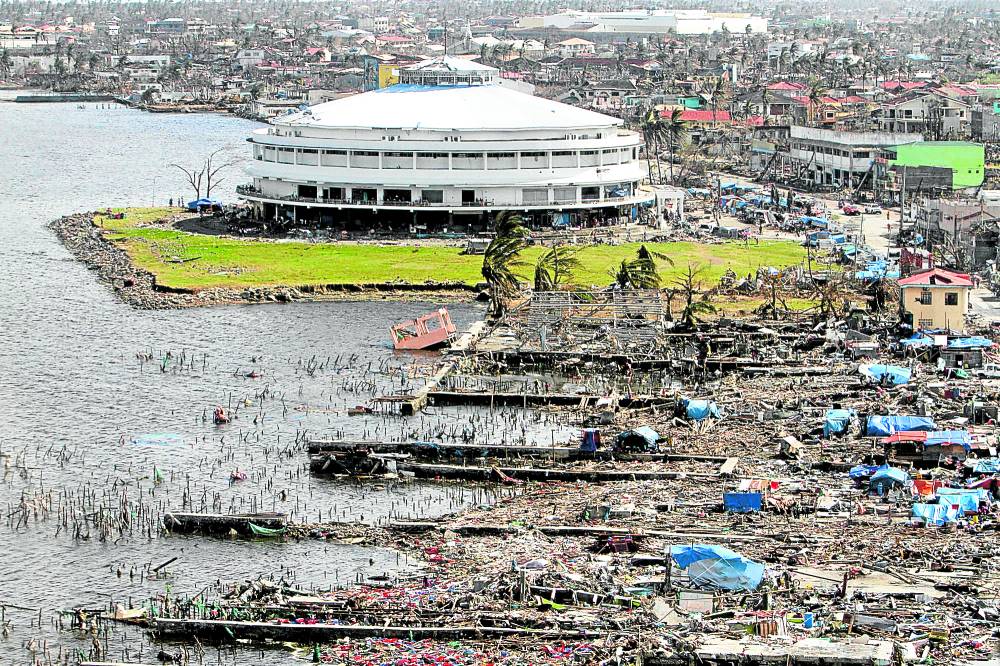
TACLOBAN CITY—There are dates that fade with time—and there are dates etched into the soul.
For us Taclobanons, Nov. 8, 2013, will never be just a day on the calendar. It is a wound, a lesson, and a memory that refuses to leave.
Around 6 in the morning, I was preparing to step out and monitor the typhoon preparations in the city. Supertyphoon “Yolanda” (international name: Haiyan) was expected to hit, and the winds and rain were already growing violent. I wanted to see what was happening outside, as my editors had asked me.
I never made it past the door.
First came a quiet seep—a streak of blue seawater slipping into our home. Then it turned brown. Then it surged.
Within seconds, water swallowed our house.
It was a storm surge. And nothing could prepare us for that moment—when the sea rose, not in gentle waves, but like a wall determined to take everything.
Near-death experience
What happened next is something I choose not to relive in detail. It was a near-death experience. But we survived.
And sometimes, survival alone feels like both a blessing and a burden.
They say journalists work through disasters—even the most devastating ones like Yolanda. But no classroom or newsroom briefing ever trained me to write while grieving, or to report when the line between storyteller and survivor disappeared.
It took four days before I returned to work as a correspondent for the Philippine Daily Inquirer. By then, Tacloban was unrecognizable.
No electricity. No communication—neither mobile nor landline.
My laptop was gone, my home in shambles. All I had was a battered mobile phone—I don’t even remember its model anymore.
But I had to work—partly to survive financially, and partly to hold on to whatever sanity was left. When the world around you looked like a war zone, sometimes work was the only thing that kept you grounded.
Daily battle
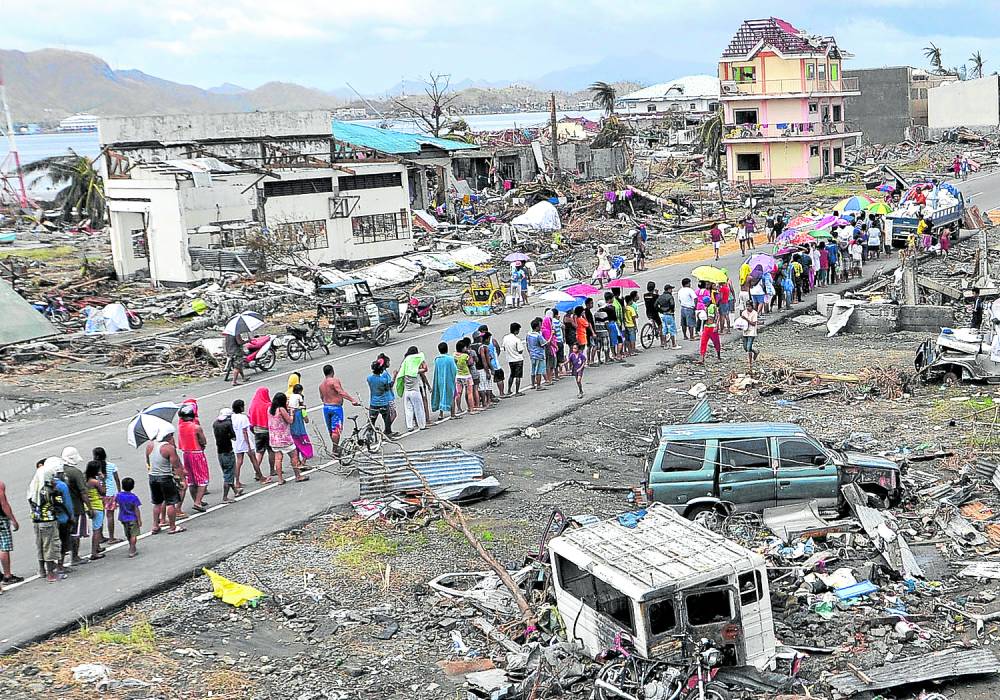
Writing was a daily battle. There were bodies on the streets—some covered with garbage bags, some with cardboard, others not covered at all.
The stench of decaying bodies mixed with the smell of seawater and mud. Trauma was everywhere—including in myself.
Interviewing survivors was not just reporting; it was reliving.
As they cried, I cried. As they spoke of lost homes, lost children, lost parents, I remembered the water rising around me.
Some stories were so heavy I could not bring myself to write them at all.
With no laptop, I wrote everything on my phone—story after story in text format, limited by character count. The internet signal barely worked; sometimes it took hours just to send one article.
But my editors—Connie Fernandez, Irene Sino Cruz, and Edra Benedicto—never gave up on me. They called or texted for clarifications, and I felt their patience holding me together on days when I barely could.
Often, I wrote four or more stories a day. Most of those days I stayed at the “command center” located at the Leyte Sports Center, where the United Nations Office for the Coordination of Humanitarian Affairs was also based, as there was a generator set.
From past 8 a.m. until almost 4 p.m., sometimes beyond 6 p.m. whenever a late-breaking story needed to be sent. And if finding people to interview was easy—because stories were everywhere—finding the strength to write them was not.
Stories left behind
Yolanda ravaged Tacloban—but the world came to our shores.
In the months and years that followed, I found myself face-to-face with people I never imagined I would meet, certainly not in a city still mourning—Justin Bieber, David Beckham, former US Vice President Al Gore, former US Secretary of State John Kerry, UN Secretary General Ban Ki-moon. Princess Maha Chakri Sirindhorn of Thailand, among others.
National and international media set up around us. The world’s eyes were suddenly on Tacloban.
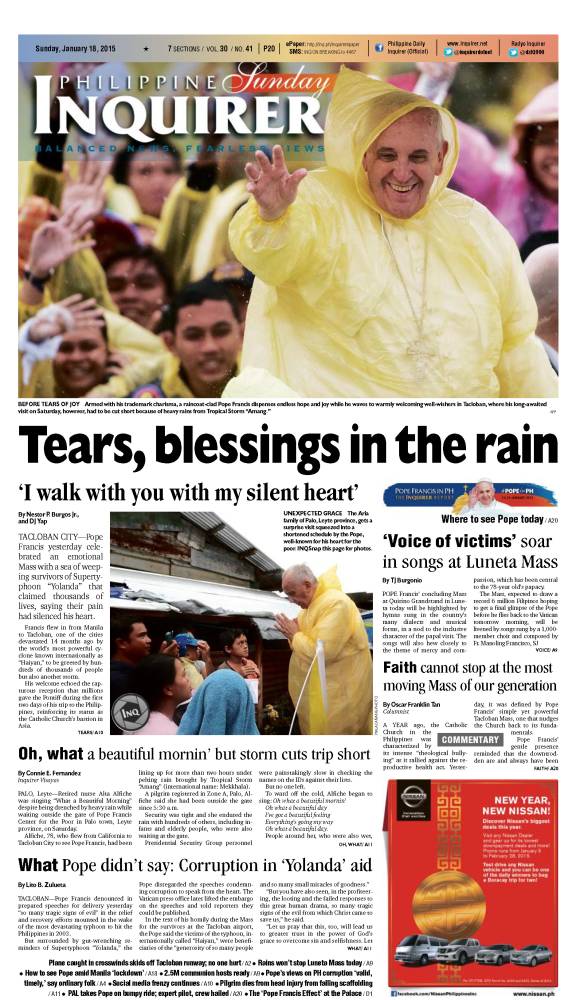
And more than a year later, the late Pontiff—Pope Francis—stood on our rain-soaked ground, speaking of faith, grief, and love.
Many of us cried that day. Some said that was when healing finally started.
Yolanda took so much from Tacloban—lives, homes, dreams, years.
But it also left behind stories—thousands of them. Painful, raw, heavy, but real.
The stories I wrote during those weeks and months will forever remain with me—not only on paper, not only in the newsroom archives, but in my heart.
Because Nov. 8, 2013, was not just the day the storm came. It was the day Tacloban rose—bruised, broken, but alive.
And I am grateful that I lived to tell our story.