




In Bocaue, illegal ’crackers put on display to warn public

BOCAUE, BULACAN—This year’s newest additions to the list of illegal firecrackers—“Discaya” and “Zaldy Co”—were not seen during Monday’s display of banned crackers.
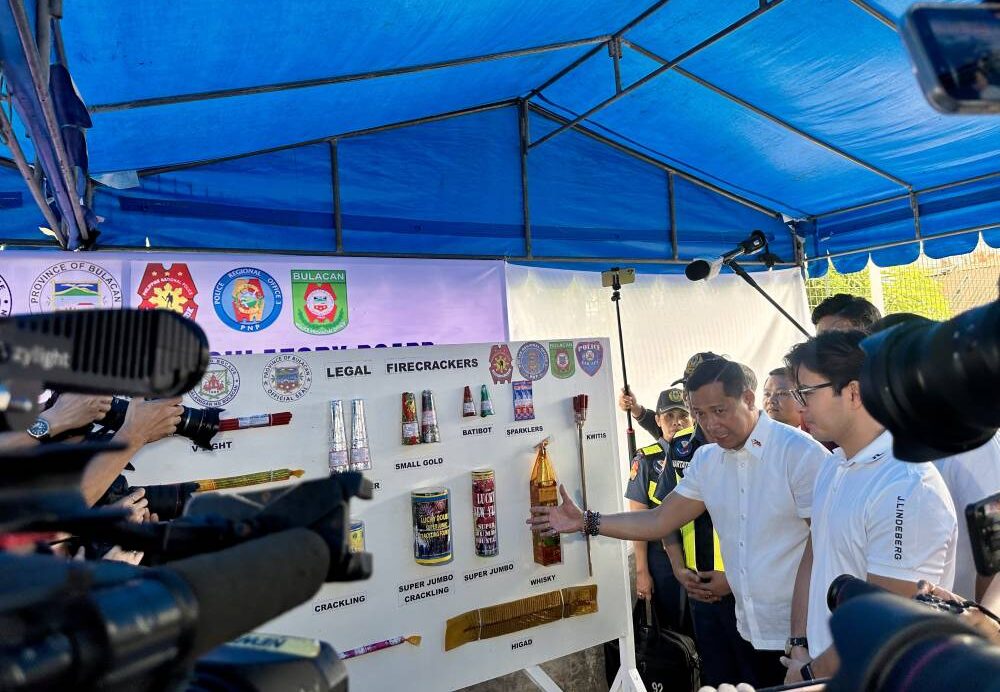
The list of illegal and legal firecrackers and pyrotechnics produced in Bocaue, the country’s so-called fireworks capital, was mounted on white boards and displayed during the inspection of firework products available in local stores led by Philippine National Police acting chief Lt. Gen. Jose Melencio Nartatez Jr. and Bulacan Gov. Daniel Fernando.
But while the two firecrackers named after detained flood control contractor Sarah Discaya and fugitive former congressman Zaldy Co had previously been identified by local authorities as among those being illegally produced here, there were no pictures to show what they looked like.
Police Col. Angel Garcillano, Bulacan’s police director, explained that while there were earlier news about the proliferation this year of the “Discaya” and “Co” firecrackers, they have yet to actually see them.
On display were photos or replicas of at least 22 banned firecrackers, including those that remained in demand, such as the 2015 typhoon series—“Crising,” “Tino” and “Uwan” and a current favorite called “Dart Bomb.”
According to Bulacan Provincial Disaster Risk Reduction and Management Office chief Manuel Lukban Jr., “Dart Bomb” is a powerful and destructive firecracker that can explode even if simply dropped on the ground.
Celso Cruz, former president of the Philippine Pyrotechnic Manufacturers and Dealers Association Inc. (PPMDAI), said all types of illegal fireworks are similar to dynamite and can destroy limbs and property. Under Republic Act No. 7183, any product containing more than 0.2 grams (about 1/3 teaspoon) of explosive ingredients is prohibited.
Other illegal firecrackers displayed during the inspection included “Bin Laden,” “Goodbye Philippines,” “Kabase,” “Kingkong,” “Goodbye Chismosa,” “Kwiton Bomb,” “Coke in Can,” “Tuna,” “Piccolo,” “Atomic Giant,” and the 2024 and previous years’ strong typhoon series “Cristine,” “Ulysses,” “Pepito” and “Yolanda.” Not presented were “Goodbye Bading,” “Super Lolo,” “Goodbye Delima” and “Hello Columbia.”
Legal ones
For the first time, the PPMDAI led by current chair Lea Alapide also displayed at least 13 legal pyrotechnics on a separate board, including kwitis, sparklers, whisky, higad, super jumbo, super jumbo crackling, tungkod, crackling, batibot, jumbo silver, small gold, mabuhay fountains and luces. Prohibited aerial shots, such as pyrotechnic and sawa firecrackers, were also not presented.
Nartatez said the annual decrease in firecracker-related casualties and injuries is a clear indication of the police’s commitment to ensuring a safe and secure Filipino tradition of welcoming the New Year with fireworks.

He emphasized that strict compliance with RA 7183 and Executive Order No. 28 will help ensure the safe use of firecrackers during the holidays.
“We look forward to every fireworks manufacturer, big or small, becoming ISO (International Organization for Standardization)-certified to prove that Philippine pyrotechnics meet world-class standards in both quality and safety,” Nartatez said shortly before the inspection.
He also thanked Fernando, stakeholders, PPMDAI and the Philippine Fireworks Association for supporting legal operations and products, while combating unlicensed manufacturers.
Fernando urged the fireworks industry to stop producing illegal, destructive products and advised buyers not to patronize them.
“We in the government support your industry, which is why there are laws allowing you to operate. But these same laws regulate your manufacture, sale, and distribution. We should only produce legal products to ensure everyone’s safety and protect the stability of your industry,” Fernando said.