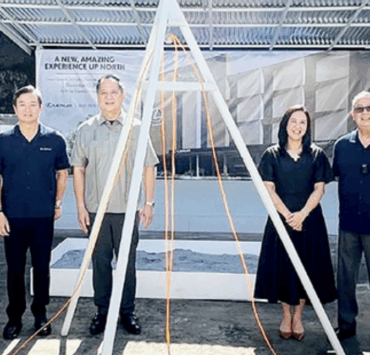





Diving deeper into mangrove advocacy, TMP Foundation begins long-term Ilocos Norte project


As we begin the final week of the year, taking stock of our blessings and making plans for the new year, let’s also pause and give some thought to the state of the planet that we call home.
For this purpose, I have consulted some of the books in my library that look at Earth from as many perspectives as possible, trying to make sense of how man-made and natural factors are constantly re-shaping a globe crisscrossed with innumerable complex ecosystems. One of my favorites is “World On The Edge” by Earth Policy Institute and World Watch Institute founder and environmental analyst Lester R. Brown. In this book, Brown makes special mention of the “swelling flow of environmental refugees,” which he says has been among the defining characteristics of our time.
Environmental refugees are people displaced by rising seas, more destructive storms, expanding deserts, water shortages, and dangerously high levels of toxic pollutants in the local environment.
Being displaced by rising seas should be most concerning for us Filipinos who live on thousands of islands. Many of us reside literally within earshot of the breaking waves of the Pacific Ocean and the seas surrounding our archipelago. My late Mom was a native of Bohol island. My Dad comes from Samar Island. Although I now live deep inland in Metro Manila, I may still consider myself an islander. In fact, whether you chill on the mountaintops of Benguet or enjoy the sunsets of Boracay, wherever you are in the Philippines, you are living the island life. You are an islander.
So, when Brown writes that, over the longer term, rising-sea refugees will likely dominate the flow of environmental refugees, this should raise the alarm bells for us 110 million islanders. He estimates that within this century, sea levels will rise up to 6 feet. That doesn’t sound much, but take into consideration that even a 3-foot rise would inundate parts of many low-lying cities, major deltas, and low-lying island countries. He warned that among the early refugees will be millions of rice-farming families from Asia’s low-lying river deltas, those who will watch their fields sink below the rising sea.
But we don’t necessarily have to look at the ocean as the creeping enemy. In another book that I repeatedly use for reference, “The Climate Change Book,” a compilation of climate-related scientific papers, marine biologist Ayana Elizabeth Johnson’s piece “Remembering the Ocean” reminds us that the ocean can be a buffer for global climate change and can be a key source of climate solutions. She stresses that the ocean has absorbed about 30 percent of all the carbon dioxide emitted by burning fossil fuels, which has resulted in our oceans becoming 30 percent more acidic since the Industrial Revolution.
But there’s only so much CO2 that our seas can take. Johnson, co-founder of the policy think tank Urban Ocean Lab, lamented that ocean ecosystems and biodiversity are getting pummeled by climate change, stressing that “one third to a half of coastal ecosystems have been lost.” She also said, “biodiversity is declining at a faster rate than at any other time in human history—around 33 percent of reef-forming corals, sharks, and marine mammals are threatened with extinction.”
So, what can we do?
Well, in a nutshell, let’s look first at what we’ve been doing to “add fuel to the fire,” so to speak. Johnson said, “Beyond (global) warming, we have changed the very chemistry of the entire, enormous ocean by burning fossil fuels.”
So, simply put, this is what we can do to help turn our oceans into key sources of climate solutions, to name a few: Renewable energy; blue carbon; shoreline protection; and marine protected areas. For our own sake, as a nation with a shoreline longer than that of the continental United States, the part where she mentions “protecting and restoring coastal ecosystems” must be extremely high in our priority list of “to-dos” in an individual and organized level.
It’s no secret that the automotive and transport industries are among the world’s top contributors of climate change-causing greenhouse gases by virtue of fossil fuels burned and the enormous amounts of resources processed and energies consumed in the creation and maintenance of vehicles and the upkeep of systems to keep these sectors moving. This makes it all the more remarkable that the industry’s global number one player, Toyota, has been undertaking serious efforts to address the problem, and become part of the solution.
Toyota Motor Philippines Foundation (TMPF) is no stranger to environmental conservation efforts, as the organization observes its 35th year in existence. In the past decade or so, TMPF has stepped up efforts to become more deeply involved in climate solutions that are backed by science and are sustainable in the long-term for their collaboration with committed local government units across the country.
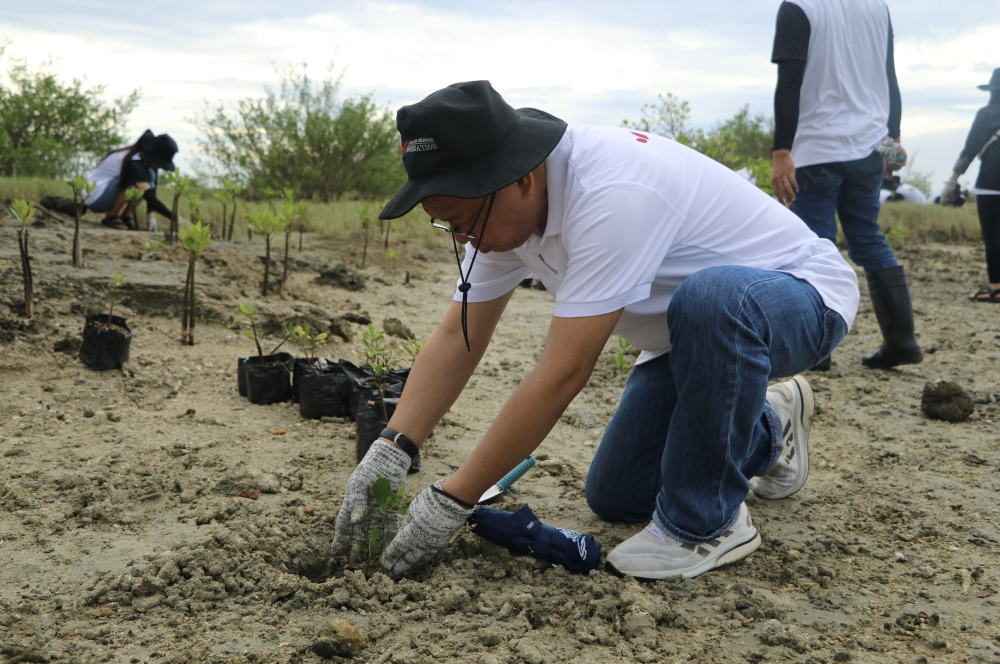
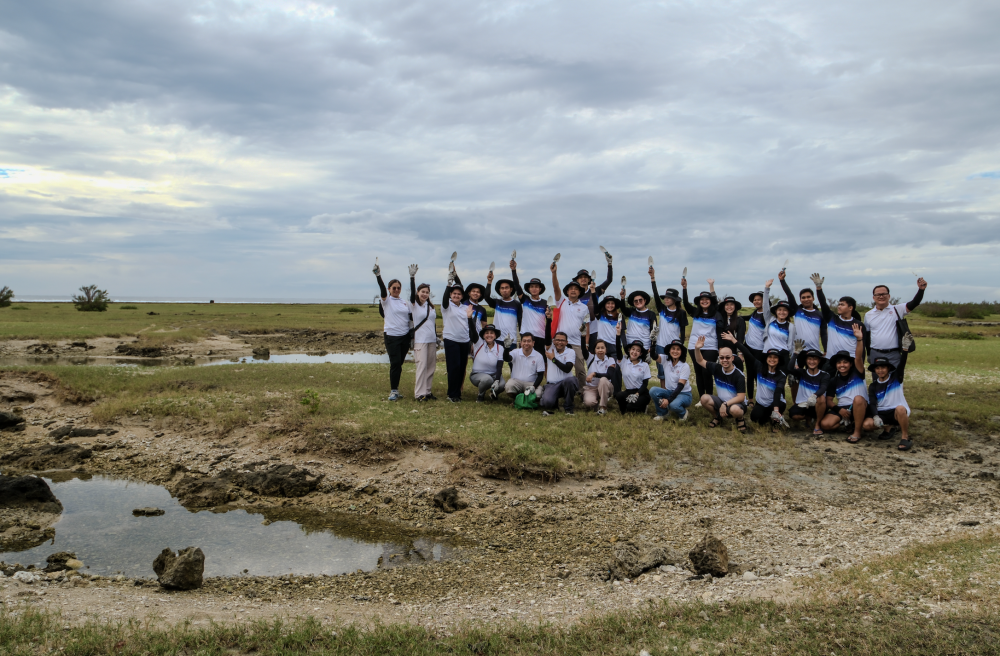
On Nov. 29, I joined TMPF when it conducted a mangrove-planting activity in Pasuquin, Ilocos Norte. A team of volunteers from TMPF, headed by its president Jose Maria Aligada, joined students and faculty of Mariano Marcos State University-College of Industrial Technology (MMSU-CIT), officers from the Department of Environment and Natural Resources (DENR) and the municipal government of Pasuquin in planting 1,750 mangrove saplings along a 2-hectare coastline.
Aligada, who acknowledged TMPF chair Alfred V. Ty, and partners from MMSU-CIT, DENR, and the Pasuquin LGU, announced that the foundation has adopted a National Greening Program (NGP) mangrove reforestation site in the coastal municipality of Pasuquin. The project aims to boost environmental stewardship among stakeholders, local livelihood, and climate mitigation.
“Today, we formally adopted the two-hectare coastal reef area in Barangay Davila as part of the NGP of the DENR. Over the next two years, we commit to planting a total of 3,500 mangrove seedlings—1,750 this year, and another 1,750 next year. This number is symbolic, as we celebrate the 35th anniversary of TMPF, an enduring milestone represented by 3,500 new hopes for the environment.”
Aligada stressed that “this environmental initiative is part of a commitment to nurture 1 million trees by 2030, as earlier announced by Toyota Motor Philippines Corp (TMP) and TMPF chair Alfred V. Ty during the foundation’s 35th anniversary celebration in July.”
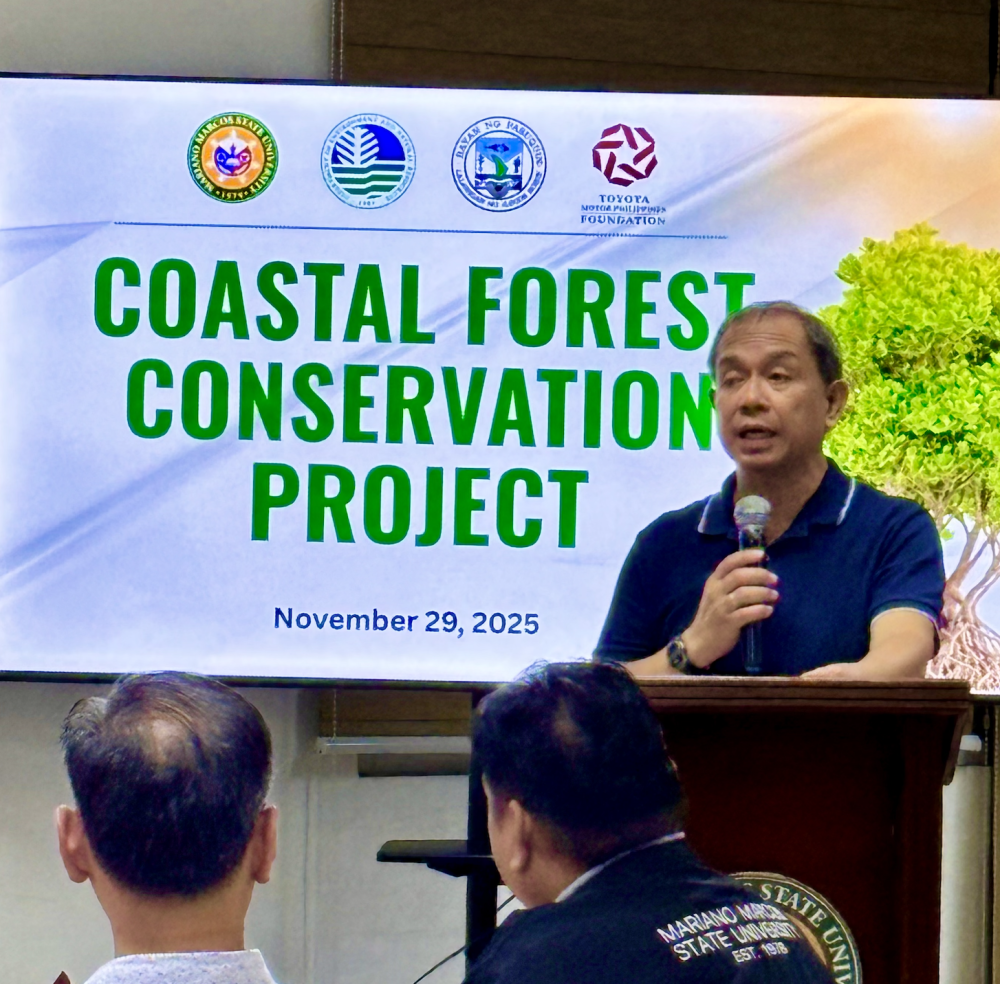
To mark the NGP site adoption, TMPF mobilized on Nov. 29 110 volunteers from the TMP network, MMSU-CIT, the DENR-Community Environment and Natural Resources Office (Cenro) Bangui, the Municipal Environment and Natural Resources Office (Menro), and members of the local community at Barangay Davila to plant a total of 1,750 mangrove seedlings.
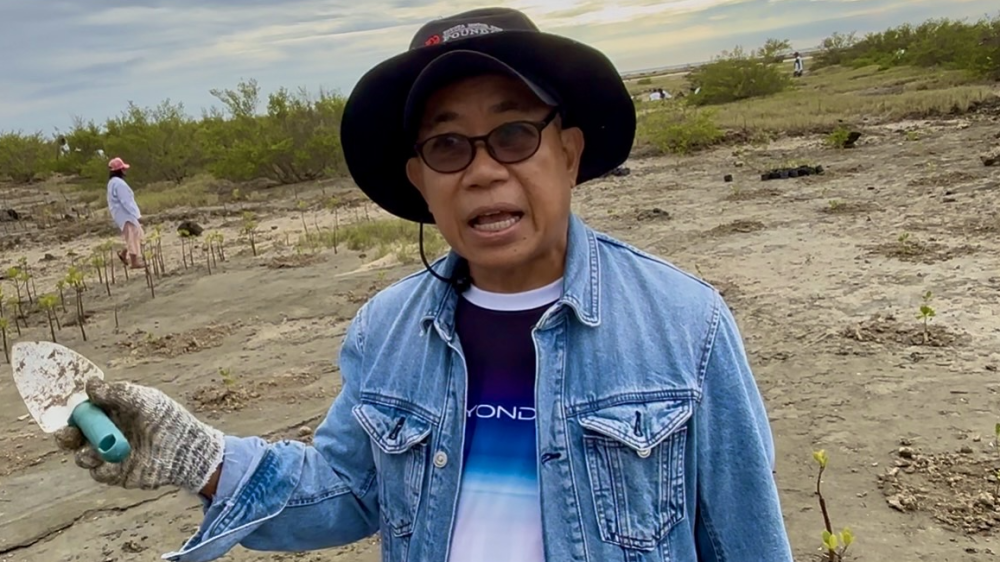
“The Davila Coastal Forest Conservation Project is both timely and relevant. As climate change, coastal erosion, and the loss of marine habitats continue to threaten our environment, today we chose action rather than hesitation,” said DENR-CENRO Bangui’s Justine Rose A. Teneza, representing CENR Officer Elmer B. Hermosa. She added that mangrove planting directly contributes to disaster risk reduction, strengthens coastal protection, and supports the growth of marine life. DENR CENRO Bangui also stressed how globally, mangrove ecosystems are known as blue carbon ecosystems—among the most powerful natural carbon sinks, which supports Johnson’s assertions that per hectare, marine ecosystems can hold up to five times more carbon than a terrestrial forest.

“While the automotive industry contributes to carbon emissions, what deserves recognition is the foundation’s effort to take responsibility and balance its footprint through this project—one that will generate carbon credits and reflects Toyota’s strong commitment to corporate social responsibility,” Teneza said, voicing Hermosa’s message.
MMSU president Dr. Virgilio Julius P. Manzano Jr thanked TMPF for the activity, saying that it complements MMSU’s aspirations to contribute to environmental development, conservation, and protection. He cited that MMSU has been ranked 89th in the World University Rankings for Innovation and that most of the criteria fall under the environment. “We are cutting across at least 5 SDGs (Sustainable Development Goals), and the university covers five of these.”
“I am happy we are advocating sustainability because this is for our future generations,” said Manzano, who regards communing with nature his de-stressor. He said he spends most of his weekends hiking or biking, and that he’s an active volunteer of a regreening program that also includes tree-planting activities.
After the mangrove-planting activity in the afternoon, all the groups involved converged at MMSU for the signing of a tripartite agreement among the Pasuquin LGU, MMSU, and TMPF. Under the memorandum of agreement (MOA), the coastal forest conservation project will be implemented over two years, with the target 3,500 seedlings of native mangrove species—Lapis-lapis and Arinaya— planted within 2 hectares of land.
“This project seeks to empower local communities, enhance stakeholder capacities, and promote shared stewardship of these coastal forests,” Aligada said during the signing ceremony.
Coastal ecosystem rehabilitation underway
With what the TMPF and its partners have started in Barangay Davila, it is hoped that the shoreline community’s natural defense against climate-related impacts would be strengthened, and that biodiversity would be enhanced while also providing additional income sources for the locals. TMPF has committed to provide monthly financial compensation to the members of a duly organized People’s Organization (PO) for mangrove monitoring and maintenance during the span of the project.
In a strengthened commitment to environmental stewardship, TMP Foundation takes the lead in expanding the impact of the All Toyota Green Wave Project outside Calabarzon (Cavite-Laguna-Batangas-Rizal-Quezon), where TMP’s network has already adopted 228 hectares of NGP sites. Under its flagship “Environment” advocacy pillar, TMP Foundation has key initiatives on environmental education and reforestation in Los Baños, Laguna, biodiversity conservation of the Tamaraw on Mindoro Island, and aquatic ecosystem conservation.
For the latter initiative, Aligada disclosed that there have been exploratory talks with UP marine scientists for a possible project to install remote sensors to monitor underwater plants in one of the globally significant marine straits in the country.
The All Toyota Green Wave Project is a global initiative launched by Toyota Motor Corp in 2015 to connect the Toyota network to the environment for the protection, restoration, and sustainable use of ecosystems. It is one of the projects under “Challenge 6: Establishing a Future Society in Harmony with Nature” of the Toyota Environmental Challenge 2050.