



Low-hanging fruit: Quick ways to generate clean, reliable power

The Philippines cannot seem to graduate from its long history of power outages. From the crippling brownouts of the 1990s to today’s recurring alerts of thin reserves, energy insecurity remains a persistent reality.
Every dry season brings the same headlines: soaring demand, unplanned shutdowns, and looming threats of rotational blackouts.
The challenge before us is twofold—meeting rapidly rising electricity demand while accelerating the shift to renewable energy. While long-term, large-scale projects are vital, there are low-hanging fruits the country can harvest right now to quickly and significantly augment supply.
Drawing on current technologies and existing infrastructure, three opportunities stand out: rooftop solar, repowering early solar farms, and agrivoltaics. Together, they can add hundreds of megawatts to the grid in the short term—without the long delays and risks of traditional power projects.
Underutilized resource
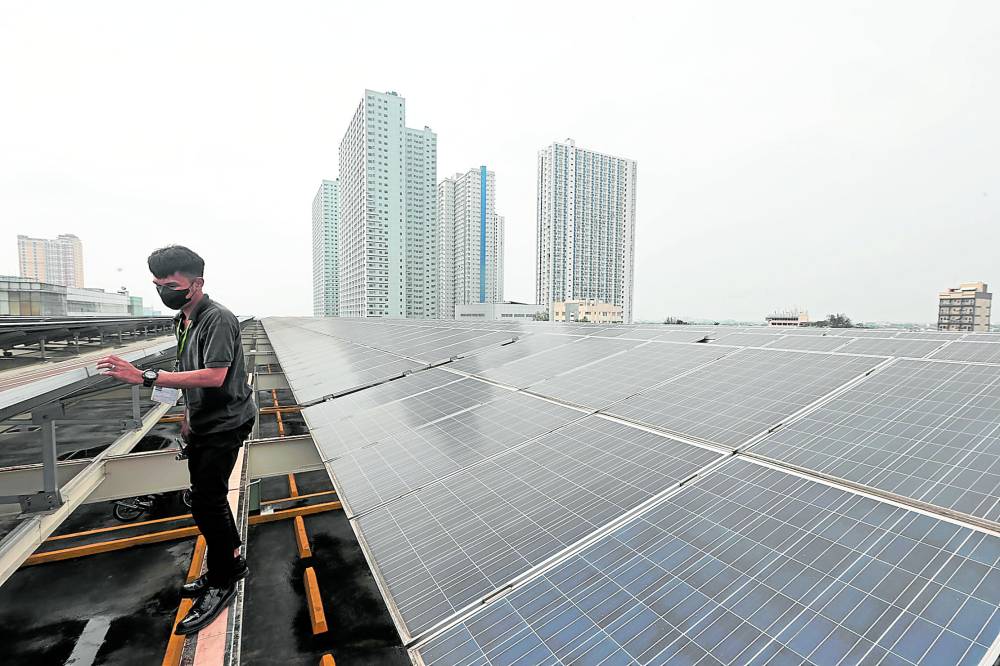
Across the Philippines, the rooftops of malls, schools, government buildings, factories, and homes represent a massive but underutilized resource.
An assessment by the Institute for Climate and Sustainable Cities (ICSC) estimates that there are more than 184,000 hectares of usable rooftops nationwide. At one megawatt per hectare, this translates to a potential 184 gigawatts of rooftop solar capacity.
Even if only a quarter of that potential were tapped, it would still yield 46 GW—more than the 30.5 GW of the country’s entire installed capacity today. Yet adoption remains below 1 percent in key urban centers, including Metro Manila.
Rooftop solar offers two clear advantages: It eases grid strain, generating power where it is consumed, reducing transmission losses, and helping stabilize the system during peak hours; and it can be deployed quickly, avoiding right-of-way disputes and lengthy permitting processes that often delay utility-scale projects.
To unlock this potential, government must streamline Net-Metering (NM) and Distributed Energy Resource (DER) approvals, provide fiscal incentives, and require solar readiness in new commercial and industrial buildings. Additionally, lowering the threshold for Contestable Customers would enable more Corporate Power Purchase Agreements.
When NM rules were introduced in 2013, rooftop solar was a luxury. Today, costs have fallen below grid parity—making it a mainstream solution that benefits not just the wealthy, but all consumers through lower overall system costs.
Vietnam’s experience shows what’s possible. In just two years, the country installed 9,500 MW of rooftop solar across 103,000 sites. By 2030, half of Vietnamese households are expected to have rooftop solar—supporting both economic growth and energy security.
The Philippines, by contrast, has barely scratched the surface.
Increased efficiencies
The solar farms built during the 2014–2016 boom, totaling around 885 MW, are now a decade old. They sit on valuable land and have secured grid connections—both scarce resources today.
In the years since, solar and inverter efficiencies have improved dramatically, meaning that older plants are producing less power per square meter than modern equivalents. Early installations needed about two hectares per megawatt; now, high-efficiency modules can deliver the same output on less than half that area.
By repowering these early solar farms—replacing old panels and inverters with next-generation technology—operators can increase output and extend project lifespans without expanding land use or building new transmission lines.
This is one of the fastest, most cost-effective ways to boost clean generation. However, clear policy guidelines from the Department of Energy (DOE) and the Energy Regulatory Commission (ERC) are needed on how upgrading affects existing Feed-in-Tariff (FIT) eligibility and revenue treatment.
Regulatory clarity can unlock a wave of reinvestment in the country’s earliest solar pioneers.
The most common bottleneck for solar expansion is land. The best sites—flat, flood-free areas—are often agricultural. Developers face conversion barriers and opposition over food security.

False choice
But this is a false choice. With the right design, solar power and agriculture can coexist and even benefit each other.
Agrivoltaics integrates solar panels into farmland, mounted high enough or spaced wide enough to allow crops or livestock to thrive underneath. The result is dual productivity: Double land use—producing both electricity and food; and better crop resilience—in some cases, partial shading from panels reduces heat stress and water loss, improving yields.
As to floating solar farms, some studies have shown higher survival rates and better growth in fish species like tilapia and milkfish in floating solar ponds compared to control ponds. Similarly, wind farms occupy only a small fraction of the land they lease or own.
Requiring that surrounding areas remain available for farming or grazing can further align energy development with rural livelihoods.
What’s within reach
Policy should no longer discourage renewables on agricultural land, but mandate or incentivize dual-use designs that benefit both the energy and food sectors.
The Philippines doesn’t need to wait for massive new power plants to solve its energy challenges. By activating rooftop solar, upgrading existing solar farms, and scaling agrivoltaics, the country can unlock quick, clean, and local capacity gains.
These practical, high-impact measures won’t just prevent blackouts—they’ll create jobs, attract private investment, and accelerate the energy transition.
The solutions are ready. The policies exist. The time to harvest these low-hanging fruits is now.
Pete Maniego is the founding chairperson of the Energy Lawyers Association of the Philippines and past chairperson of the National Renewable Energy Board, Institute of Corporate Directors, UP Engineering R&D Foundation Inc., and UP Barkada Inc. He is a longtime advocate for integrated water, energy, and climate resilience planning and good corporate governance in the Philippines.