




Electronics exports poised for 12% growth

Despite geopolitical uncertainty linked to US tariffs, the Philippines’ electronics exports are poised to post double-digit growth in 2025. This could even come near their record high of $49.09 billion.
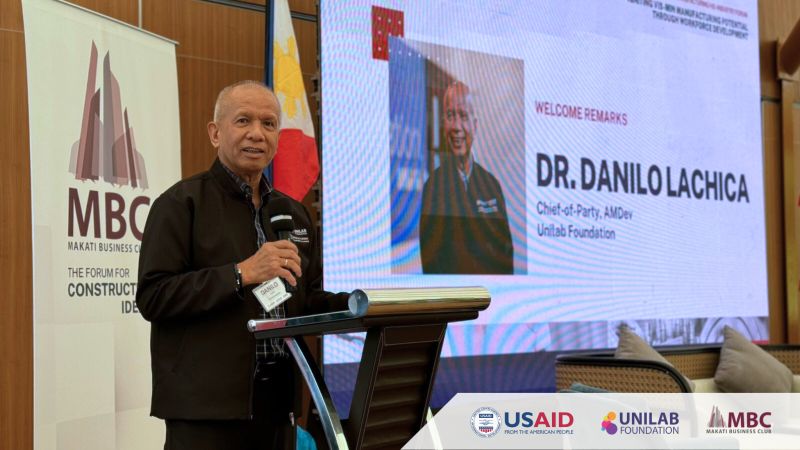
This is according to Danilo Lachica, president of the Semiconductor and Electronics Industries in the Philippines Foundation Inc. (Seipi). He said electronics exports could reach $48 billion this year based on data as of October.
If realized, such a value would represent a 12.31-percent increase from $42.74 billion in 2024. Lachica said it would also bring export levels up to those comparable with 2023, when exports totaled $45.65 billion.
The outlook also marks an upgrade from Seipi’s initial project of flat growth for 2025 and doubles the revised forecast of 5- to 7-percent growth issued in late November.
“I’m not saying it’s a slam dunk, but we’re on that trajectory,” Lachica told reporters.
Demand for advanced tech
Lachica attributed the stronger outlook to continued demand for advanced technologies, with semiconductors—which account for about 70 percent of the country’s exports—being critical components in equipment used for artificial intelligence, the internet of things and electric vehicles.
Lachica said reaching $50 billion in electronics exports in 2026 is a “possibility” if governance issues are addressed and the country avoids further shocks, such as additional reciprocal tariffs.
To sustain growth, he urged the government to resume overseas roadshows to attract investors, noting that these had been halted after the Philippines was hit with a 19-percent reciprocal tariff imposed by US President Donald Trump.
Lachica noted that uncertainty remains over Trump’s tariffs, which are still being reviewed by the US Supreme Court for potential constitutional violations. Semiconductors have been exempt from the import tax.
‘Really challenging’
He also described the domestic investment climate as “really challenging,” citing weakened business sentiment amid a widening probe into alleged graft involving multibillion-peso flood control projects.

Lachica said governance problems had clouded what could have been “much, much better” investment results for the Philippines.
“We need to get past that, because you have to restore investor confidence. You have to restore the confidence of the financial institutions,” he said.
With the Philippines set to host the Association of Southeast Asian Nations summit in 2026, Lachica hopes the agenda will include plans for the semiconductor industry.
He also expressed hopes that the Department of Trade and Industry could soon implement the semiconductor and electronics industry roadmap and help fund the construction of a semiconductor front-end wafer lab.
“What would be nice is for the investments in their respective companies to increase so that we can generate more employment and introduce new technologies,” Lachica said.