








Ice Seguerra is the sum of his identities

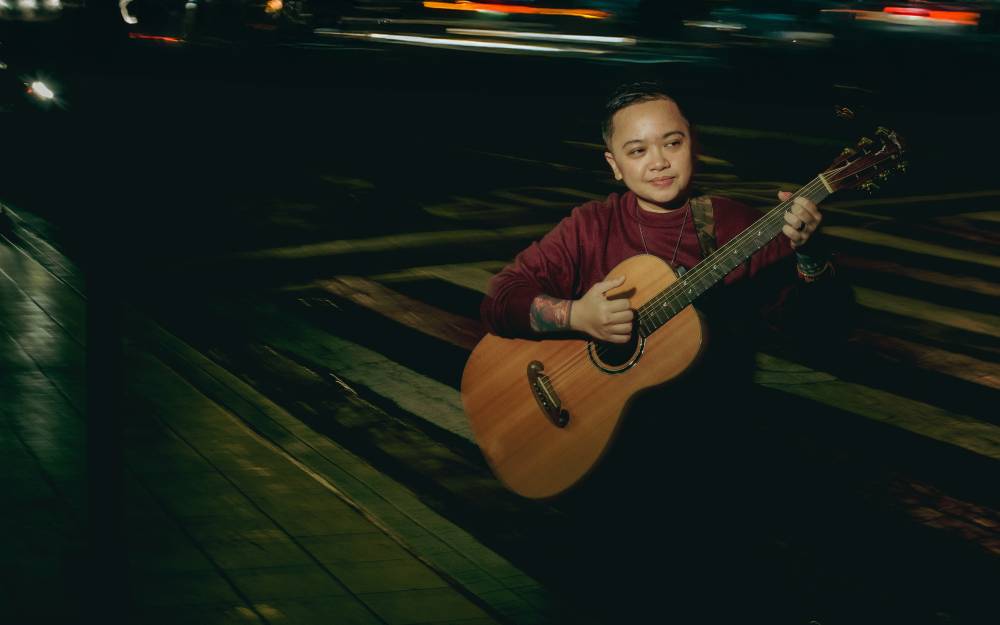
Ice Seguerra likes to view his identity as a pie chart, which, in his earlier years, was mostly split between being the artist and the provider. Together, these two slices made perfect sense: His talent in music and acting turned him into one of the most enduring performers in the country, and the career they built allowed him to support his family from the time he burst onto the scene as a charmingly precocious 3-year-old.
And for most of his life, these two facets of him worked in sync—until his authentic self arrived and demanded a slice of the pie.
When he publicly came out as a trans man in 2014, his first impulse was to take his first step toward medical transition by beginning hormone replacement therapy. As is common among trans people, Seguerra experienced gender dysphoria. Sure, he says, the people around him may have assured him that he was accepted, and that he didn’t need to change anything about himself.
But deep inside, he knew he had to. “Ikaw mismo hindi mo matanggap ang sarili mo kasi alam mong hindi ‘yun ang dapat na nakikita mo,” he tells Lifestyle Inquirer.
Caught in the balance
He was ready to take the leap, and at that point, he wasn’t thinking about anyone but himself. What could he possibly lose by living his truth? He has a supportive family and a loving partner. Yes, his voice would change, but that shouldn’t affect his singing ability, he figured.
But eventually, the question followed: Would people still listen?
Together with his wife, producer, and film advocate Liza Diño, Seguerra drew up that chart again and considered how that major decision might affect the other identities he had been so bent on protecting.
“She would have supported me all the way if that’s what I really wanted, but she also reminded me that if there’s one thing about music, it’s that it’s about preference. You can’t expect fans of Aiza’s voice to like a new sound,” he says. “That’s one thing I can’t control.”
Undergoing a medical transition would have further affirmed his identity. It wouldn’t have made him any less of an artist. But Seguerra, the provider, remained caught in the balance.
After decades in showbiz, Seguerra felt it wasn’t feasible—or at least it wasn’t practical—to start all over again, especially when his family’s security and future were on the line. “What if I lost my job? I realized that I couldn’t rush the decision kasi maraming tatamaan na importante rin sa ‘kin,” he says.
A reintroduction
Years later, the pandemic gave him a preview of those fears. His father’s prostate cancer recurred. Work dried up, and his savings were all but depleted. Unable to fulfill what he believes was one of his defining purposes, he slowly fell into a “really, really dark place.”
“For the first time sa buhay ko, wala akong maiambag,” recalls the singer-actor, who lost his father, Dick Seguerra, in 2020, and then his mother—the beloved Mommy Caring, an unfailing presence in his career—in 2025.
He would be lying, he says, if he claimed the idea of a medical transition no longer crosses his mind. Maybe he will someday—perhaps a top surgery. But the voice stays. “It’s my bread and butter,” he stresses. “If I were single and weren’t a singer, the story would have been different.”
But now, he’s content with his social transition. He’s in a good place—built on the realization that the different facets of his life don’t exist in a vacuum, and that his identity is ultimately a reconciliation of all of them.
All of those triumphs and challenges, he hopes to share through songs when he takes the stage at the New Frontier Theater on Feb. 27 for his concert, aptly titled “Being Ice.” The event also serves as a reintroduction of Seguerra as a songwriter, after years of reluctance to share his innermost thoughts, which he had been shielding from judgment and possible commercial failure.

“I was singing other people’s songs, and that’s fine. But at the end of the day, you’re telling other people’s stories,” points out Seguerra, whose latest album, also called “Being Ice,” features eight original compositions. “This time, I’m telling my own stories. It’s my music, the struggles—well, mostly the struggles!—and the inspirations,” he says.
Batang Cubao
For a show that centers on the idea of the self, it only made sense to hold it in the place where those identities were formed.
In Cubao, he grew up in a home gifted to him by the late Regal Films matriarch Mother Lily Monteverde after Seguerra scored a string of box-office hits in the late 1980s: “Wake Up, Little Susie,” “Super Inday and the Golden Bibe,” and more. On his way home from school, he would see hand-painted billboards of those films at the Edsa-Aurora Boulevard intersection, and then attend their premieres at the nearby New Frontier Theater—once considered the largest cinema in the Philippines.
It was in a live music bar in Cubao that Seguerra—then trying to break through as a singer after years of navigating the dreaded, awkward stage of being a child star—was discovered by producers who would pave the way for his monster 2001 hit, “Pagdating ng Panahon.” Love also found its way on its streets: He had his first kiss in a car outside his home, he recalls, as Diño came to pick him up.
Indeed, if his life is a pie, then Cubao was the proverbial baking dish. “Cubao is such a beautiful place for me,” Seguerra says. “It felt like a nest where life, normalcy, and my identity as an artist all came together.”
Not that he has everything figured out. Beyond being a man and his roles as an artist and provider, Seguerra still finds himself searching for answers about who he is once the spotlights are off. But maybe that’s why the concert is called “Being Ice”—for identity isn’t static, and who we are is always evolving.
“It’s a continuation of my journey,” he says.