










AFP steps up Malampaya patrols after new gas find

The Armed Forces of the Philippines is intensifying patrols around the Malampaya natural gas complex off northwestern Palawan as part of efforts to protect a critical energy source for the country following the discovery of a nearby gas field last week amid rising tension in the maritime dispute between the Philippines and China.
The AFP said in a statement on Saturday that the maritime and aerial patrols aim to ensure the facility’s continuous operation and to maintain readiness.
“The AFP continues to intensify its presence and monitoring operations in key strategic areas as part of its broader mission to defend national sovereignty, uphold maritime rights and ensure the protection of critical infrastructure essential to national development,” the statement said.
President Marcos announced the discovery of the new gas field in the Malampaya complex on Jan. 19. He noted that the new field, Malampaya East-1 (MAE-1), holds 2.6 billion cubic meters (98 billion cubic feet) of gas, enough to generate nearly 14 billion kilowatt-hours of electricity annually.
Brawner site visit
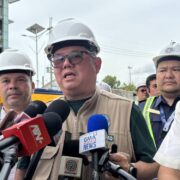
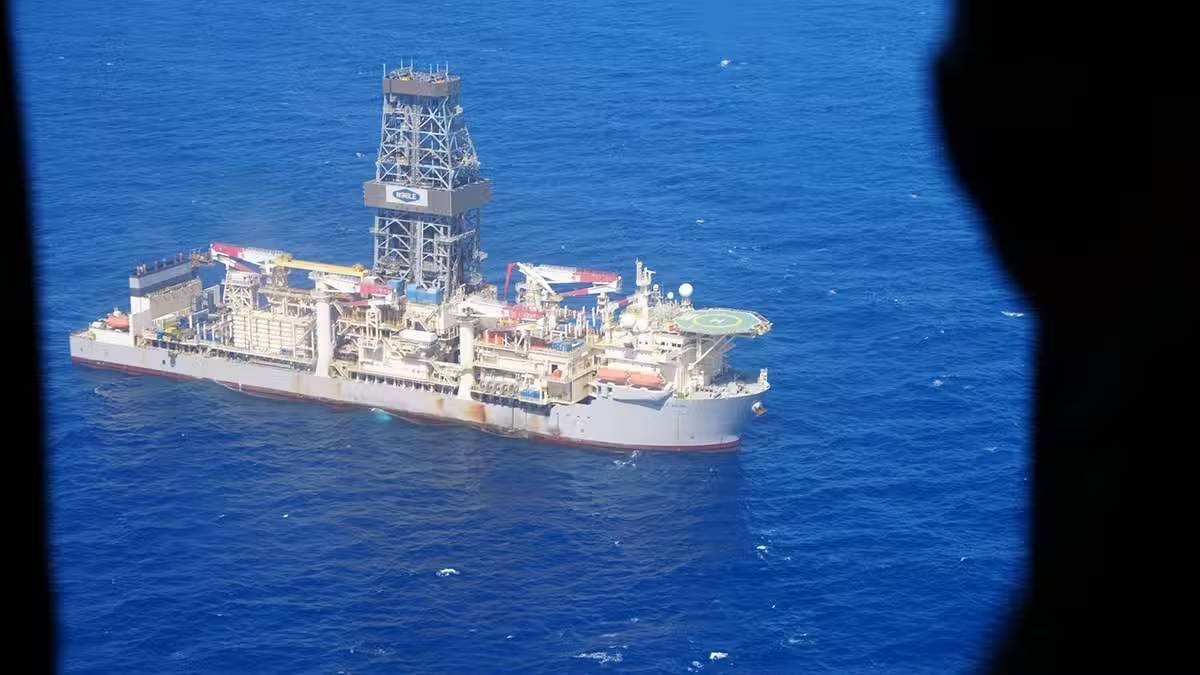
On Friday, Chief of Staff Gen. Romeo Brawner Jr. spoke with troops from the Joint Task Force (JTF) Malampaya, which is based in Palawan’s El Nido municipality, and flew over the gas drilling platform to assess the security readiness of the JTF, which is tasked with safeguarding the gas field.
During his visit, Brawner briefed the JTF personnel on the ongoing maritime and air operations, interagency coordination and current security measures. He commended them for their professionalism and vigilance amid evolving maritime challenges.
The Malampaya gas field is located in the West Philippine Sea, well within the Philippines’ exclusive economic zone. The field lies roughly 80 kilometers from the Palawan mainland, with its nearest point about 55 km from Nacpan Point in El Nido. MAE-1 is just 5 kilometers east of the existing gas drilling platform.
On Wednesday, the Philippine Navy assured the public that existing security measures already cover MAE-1.
Navy spokesperson Capt. Marissa Arlene Martinez said JTF Malampaya has maintained a continuous presence in the area for over a decade, involving naval, air and special operations units.
Proven reserves
The Malampaya gas field was discovered in 1992 by Shell Philippines Exploration BV in a partnership with Occidental Petroleum under Service Contract 38, in the deeper section of the Camago-Malampaya trend.
When it began commercial operations in June 2002, the gas field held proven reserves of approximately 76.5 billion cubic meters (2.7 trillion cubic feet) of natural gas and 85 million barrels of condensate, a high-value liquid fuel, according to the Department of Energy.
Production began in June 2002, following commissioning in October 2001. Through a 504-km submarine pipeline, it supplied fuel to Batangas power plants, which have a combined capacity of 2,700 megawatts.
The Malampaya natural gas field yields 12 million cubic meters (429 million cubic feet) per day at 100-percent production.
In his video announcement of the discovery of the MAE-1 gas field, the President said the estimated volume of gas found could supply electricity to more than 5.7 million households, 9,500 buildings, or nearly 200,000 schools for one year.
Potential for more
But with an initial testing that showed a flow of 60 million cubic feet per day, the well had “the potential to produce even more, confirming it is a high-productivity resource comparable to the original Malampaya wells,” he said.
Mr. Marcos said “this achievement” was made possible through the work of the Service Contract-38 Consortium, led by Prime Energy Resources Development BV, in partnership with UC-38, PNOC Exploration Corp., and Prime Oil and Gas Inc.

Energy officials and industry leaders have warned that the current Malampaya gas reserves were close to depletion.
But with the “first natural gas discovery in Philippine territory in over a decade,” the new well will boost the existing field’s “remaining recoverable volumes” by an estimated 30 percent, according to Prime Energy.
Chinese forces
Unlike Philippine oil exploration and even fishing activities in Recto (Reed) Bank farther west, the Malampaya gas operation, including its drilling platform, has not been directly harassed by Chinese forces. Chinese coast guard ships, however, have recently sailed closer to the gas field.
On June 25, 2024, China Coast Guard’s (CCG) largest vessel, known as the “monster ship” (CCG 5901), was monitored passing near El Nido, Palawan. The vessel was detected approaching the waters off the tourist town with updated tracking two days later showing that it was sailing closer than earlier reckoned.
In February 2025, three CCG vessels were spotted about 65 km off El Nido, Palawan, in what analysts described as a show of force in the West Philippine Sea.
In May, two other CCG ships shadowed a civilian mission vessel bound for Pag‑asa Island, roughly 100 km from El Nido, prompting an escort by Philippine Coast Guard ships BRP Melchora Aquino and BRP Malapascua.
******
Get real-time news updates: inqnews.net/inqviber