





Iran crackdown comes into focus amid news blackout

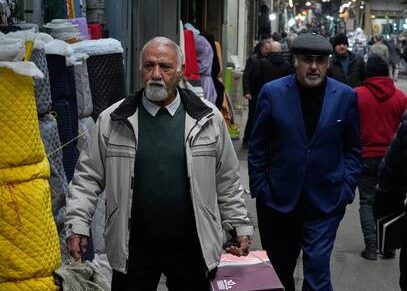
DUBAI, UNITED ARAB EMIRATES—The bloodiest crackdown on dissent since Iran’s 1979 Islamic Revolution is slowly coming into focus, despite authorities cutting off the Islamic Republic from the internet and much of the wider world.
Cities and towns smell of smoke as fire-damaged mosques and government offices line streets. Banks have been torched, their ATMs smashed.
Officials estimate the damage to be at least $125 million, according to an Associated Press (AP) tally of reports by state-run Islamic Republic News Agency from over 20 cities.
The number of dead demonstrators reported by activists continues to swell, as they warn that the government has been engaging in the same tactics it had used for decades, but at an unprecedented scale—firing from rooftops, shooting birdshot into crowds and sending in motorcycle-riding paramilitary Revolutionary Guard volunteers to beat and detain those who can’t escape.
“The vast majority of protesters were peaceful. The video footage shows crowds of people—including children and families—chanting, dancing around bonfires, marching on their streets,” said Raha Bahreini of Amnesty International. “The authorities have opened fire unlawfully.”
Official confirms violence
Iran’s mission to the United Nations did not respond to detailed questions from AP regarding the suppression of protests—which began Dec. 28 initially over the collapse of the rial, Iran’s currency, before it spread across the country.
Tensions exploded some 10 days later, with demonstrations urged by Iran’s exiled crown prince, Reza Pahlavi. As online and phone communications failed, gunfire echoed through Tehran.
Ali Akbar Pourjamshidian, a deputy interior minister speaking on state TV on Wednesday, acknowledged the violence began in earnest on Jan. 8, saying that “More than 400 cities were involved.”
Volunteer arm
By Jan. 9, Revolutionary Guard Gen. Hossein Yekta, previously identified as leading plainclothes units of the force, went on Iranian state TV and warned “mothers and fathers” to keep their children home.
One of the main ways Iran’s theocracy can squash demonstrations is through the Basij, the Guard’s volunteer arm.
Mosques in Iran include facilities for the Basij. Guard Gen. Heydar Baba Ahmadi was quoted in 2024 by semiofficial Mehr news agency as estimating “79 percent of Basij resistance bases are located in mosques and 5 percent in other holy places.”
Videos show Basij holding long guns, batons and pellet guns, as well as police firing shotguns into crowds—something authorities deny despite corpses showing wounds consistent with metal birdshot.

Fatality figures
For two weeks, Iran offered no overall fatality figures. Then on Wednesday, the government said 3,117 were killed, including 2,427 civilians and security forces. That left another 690 dead whom Pourjamshidian identified as “terrorists.”
Those figures conflict with those of the US-based Human Rights Activists News Agency, which put the death toll on Saturday at 5,137, based on Iranian activists verifying fatalities against public records and witness statements.
Satellite photos from Planet Labs PBC analyzed by AP show large numbers of cars daily at the southern reaches of Behesht-e Zahra—the massive cemetery on the outskirts of Tehran—where those killed are being buried.
Mourners there were also reported chanting “Death to Khamenei!”—Iran’s Supreme Leader.
“Hard days have passed and everyone is stunned; a whole country is in mourning, a whole country is holding back tears, a whole country has a lump in its throat,” journalist Elaheh Mohammadi of Tehran’s proreform Ham Mihan wrote online. The newspaper had been shut down by the authorities.
“The city smells of death,” she said.