











Nepotism can buy a title, but it can’t buy talent


Jaden Smith has officially stepped into the role of men’s creative director at Christian Louboutin. At just 27, the actor-musician and occasional rapper has bypassed the usual years of design training, portfolio building, and even foundational pattern-making that typically precede such a position.
In fashion parlance, this is a classic case of a “nepo baby taking the shortcut.” If your last name is Smith, why climb the traditional ladder when you can take an elevator straight to the top? The real question, of course, is whether that elevator actually reaches the pinnacle of craftsmanship.
Other nepo babies have made their mark in fashion and on runways—think Iris Law, Lila Moss, or the Hadid sisters—but taking the helm at Christian Louboutin, a maison celebrated for its meticulous craftsmanship, is an entirely different story.

A debut that divides
To be fair, there’s nothing wrong with having famous parents and taking the chances that come with it—but Smith’s Fall/Winter 2026 debut lands as a blatant insult to designers who’ve spent years mastering pattern-making and honing their craft.
The show was staged in an immersive Paris exhibition space, designed like a stark, industrial set—part gallery, part sci-fi bunker. Smith appeared with his face painted red, embodying a character meant to carry the story behind the collection. According to him, the dress code was “tactical,” reflecting a blend of utility and performance.
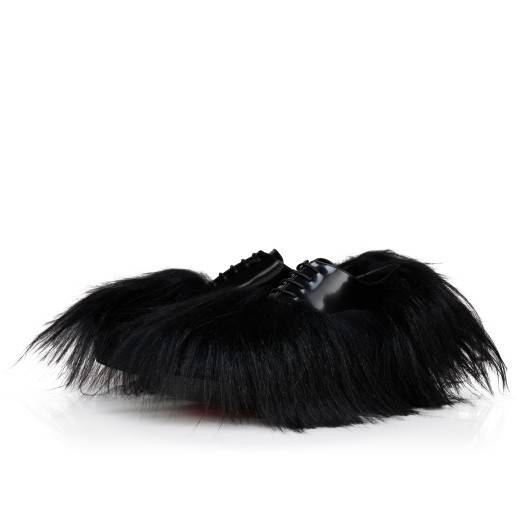
And then came the designs themselves. Conceptually, Smith attempted to anchor his designs in labor history—specifically, the roles of masons, scribes, and doctors. There were silver cowboy boots tall enough to double as ladders, shoes covered in Oxford-red hair that made Chewbacca and Elmo look understated, and handbags labeled “coins” and “keys,” leaving you to wonder if utility is the new haute couture—or just literal labeling for the easily confused. The TCT 1 shoe—borrowed from the logic of a waterproof tactical jacket—looked less like something to walk in and more like something designed to test your faith in gravity.
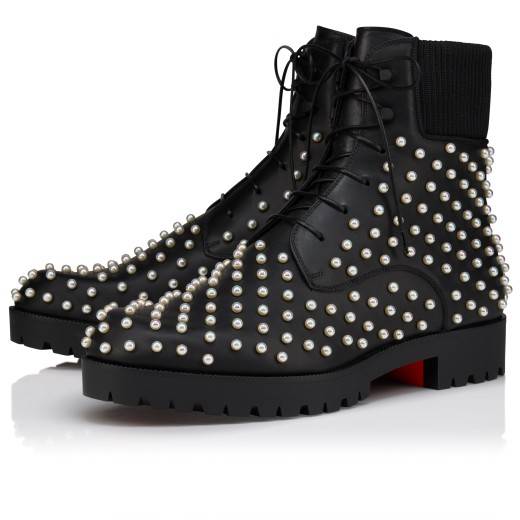
There’s some creativity here, like red paint dripping down leather boots, a clean sneaker in white, black, and red, and studded pearl boots—but that’s about it. And even when a design lands, it’s hard to ignore how much the line leans on the archives of Kris Van Assche and the visual language of designers like Virgil Abloh.

Dada or dud?
Opinions on the collection are divided. Some call it “dadaist” and mythological, while others roll their eyes, wondering if the luxury industry has turned into a talent show for the famous and well-connected.
One fashion-savvy influencer didn’t hold back online, comparing Jaden Smith’s debut to a first-semester student project being sold as high luxury, just because of a famous last name. He also called out the press for labeling the collection as “dadaist,” saying it’s absurd—and I couldn’t agree more. True Dadaism isn’t just “weird” or “odd.” It’s an anti-system. In fashion, “Dadaist” should mean more than clothes that look odd or messy.
A truly Dada move in fashion would mess with the rules of fashion itself: who gets to design, what counts as a garment, how value is assigned, and why something costs what it costs.
Think of moments that actually bent the system—Martin Margiela hiding his face and de-centering the designer’s ego, or Rei Kawakubo sending out silhouettes that broke the idea of “flattering” entirely. Those weren’t just strange; they challenged what fashion was for.
More curator than influencer
Now look at what this collection is actually doing. It’s presented through the classic nepotism pipeline: celebrity designer, heritage storytelling, and editorial praise. The references to labor—masons, scribes, doctors—live mostly at the level of narrative. It does not radically change construction, pattern-making, or how the clothes function on the body.
That’s where the “Golden Veil” critique fits neatly. The influencer’s point, borrowing from Anne Suchert’s idea, is that the language around the collection—“mythological,”“dadaist,”—acts like a fog machine. Big words create the feeling of depth, even if the garments themselves don’t show technical or structural innovation. In that sense, calling it Dada becomes less a description and more a branding strategy.
There’s another mismatch, too. Dada was anonymous, collective, and often anti-author. This collection is deeply tied to a name. So the argument for not calling it Dadaist goes like this: What you’re seeing isn’t a rebellion against fashion’s power structures—it’s a performance within them.

But Jaden Smith functions more as a curator and influencer, leveraging his name and family background to sell the house to a younger audience. As the influencer put it, it’s more about a “name that sells” than a “pattern that connects.”

A desperate swing at culture and relevance
Christian Louboutin himself has justified Smith’s appointment by pointing to his eclectic cultural background, “multidimensional” vision, and, crucially, his gravitational pull on younger luxury consumers. That logic is easy enough to follow. Fashion, after all, survives by adapting, and houses are currently locked in a quiet race to stay culturally legible to a newer generation.
At Dior, Jonathan Anderson remains under intense scrutiny, but he continues to deliver. His Fall/Winter 2026 opening—a tribute to Paul Poiret—transformed the drape of a century-old gown into a modern men’s tank top, a sharp gesture that blurred gender lines and made the archive feel both progressive and relevant.
Meanwhile, at Louis Vuitton, Pharrell Williams’ latest men’s collection is clean, wearable, and one of his strongest yet, steadily dialing back streetwear in favor of a smarter, casual approach. Williams is proving that fashion doesn’t exist in isolation, carefully considering the audience the brand is courting.
Against this backdrop, Christian Louboutin’s pivot toward a celebrity-led creative vision feels less like an anomaly and more like a symptom. And in an era where relevance is measured in cultural reach as much as craftsmanship, the question is no longer whether luxury brands will chase the next generation—it’s how much of their heritage they’re willing to trade for that pursuit.
Oh, how we all wish Jaden Smith had just become an ambassador, but, of course, this only proves how deeply nepotism runs—not just in politics, but in fashion as well—and how it can edge out opportunities that skilled designers have spent years earning.