BARMM parliament okays key poll reforms

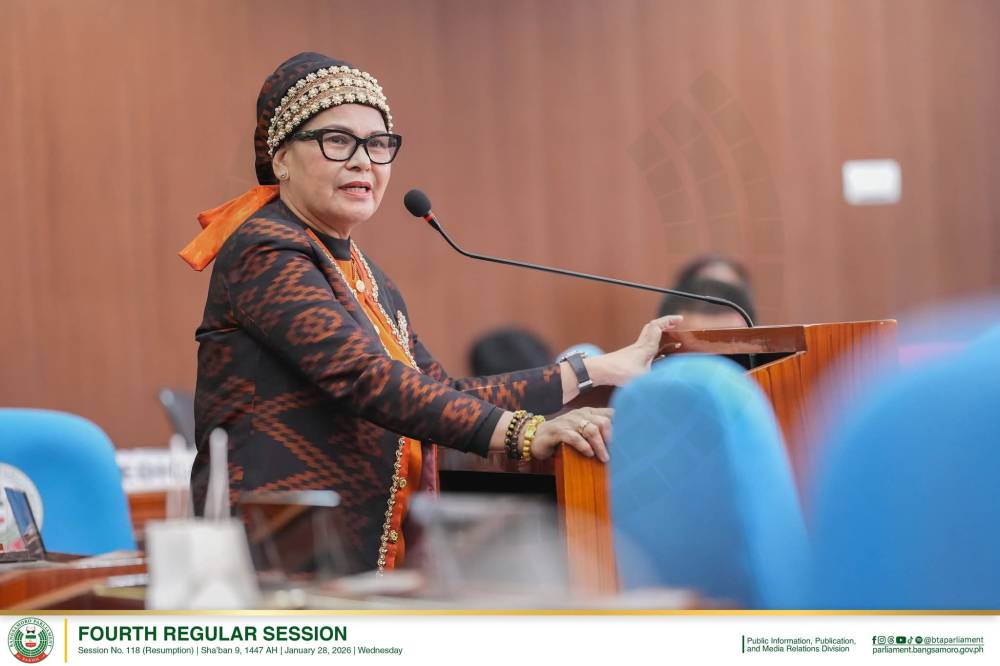
COTABATO CITY—The Bangsamoro parliament approved on Wednesday two significant measures that introduced reforms in the region’s still developing electoral system.
The legislation, Parliament Bill (PB) Nos. 396 and 419, amended several provisions of Bangsamoro Autonomy Act (BAA) No. 35, or the Bangsamoro Electoral Code, which governs the overall conduct of elections in the region that follows a parliamentary setup.
PB 396 removed the inclusion in the region’s official ballot of the “none of the above” or Nota option, alongside the names and photos and/or logos of every candidate.
The option is enshrined in Article VII, Chapter 1, Section 14 of BAA 35, intended to register the abstention of voters, to record their sentiment of not being able to choose from among candidates vying for elective office.
But it also raised legal worries once such option garners the most number of votes during an election.
Commission on Elections (Comelec) Chair George Erwin Garcia earlier said the Electoral Code’s provision for Nota created uncertainty, as it did not specify how seats would be filled if Nota received the majority of votes.
Deputy Speaker Baintan Adil-Ampatuan, main author of PB 396, said the measure sought to address the possible legal complications if Nota is retained as part of the region’s official ballot, erasing worries of unfilled parliamentary seats.
Lower thresholds
The chief feature of PB 419, the second measure firmed up by the parliament on Wednesday, is lowering the membership threshold of regional political parties, from 10,000 members to only 5,000, before they become eligible for registration.
According to the measure’s main authors, among them Deputy Floor Leader Rasol Mitmug Jr., high threshold that was previously instituted “inadvertently silence[d] certain voices and create[d] unnecessary barriers to the vibrant political landscape we envision.”
“It risks relegating smaller, community-rooted parties to the sidelines, denying them a seat at the table of governance,” said the explanatory note of the bill’s authors.
Also, PB 419 lowers the vote threshold required for parties to win seats in parliament, from the previous 4 percent to 2.5 percent of the total valid votes in the party system elections.
Mitmug said the change was intended to give smaller parties a better chance to win seats while ensuring fairness in the distribution.
PB 419 also changed the manner of selecting two representatives of non-Moro indigenous peoples (NMIPs), mandating that this be done through their sectoral assembly. However, all other sectoral representatives—for women, youth, traditional leaders, ulama (Muslim scholars and religious leaders) and settler communities—will be elected through a direct plurality of valid votes.

Mitmug emphasized that PB 419 never touched the provision on requiring 30 percent of party nominees to be women.
The Bangsamoro parliament is composed of 80 seats; 40 to be filled by party representatives, 32 by representatives from parliamentary districts, and eight by sectoral representatives—two each from NMIPs and settler communities, and one each from youth, women, traditional leaders and ulama.
Postponed
PBs 396 and 419 were certified as urgent pieces of legislation by Chief Minister Abdulraof Macacua.
The Comelec, however, announced on Wednesday that the first Bangsamoro parliamentary elections will be postponed for the fourth time due to legal and operational issues.
Garcia said the commission could no longer push through with the Bangsamoro elections on March 30 given the late passage of a law establishing the parliamentary districts in the region.
He said the Comelec would await Congress’ passage of a law that will set a new date for the holding of the elections.