









Let’s move on, says Sara lawyer; but critics undeterred

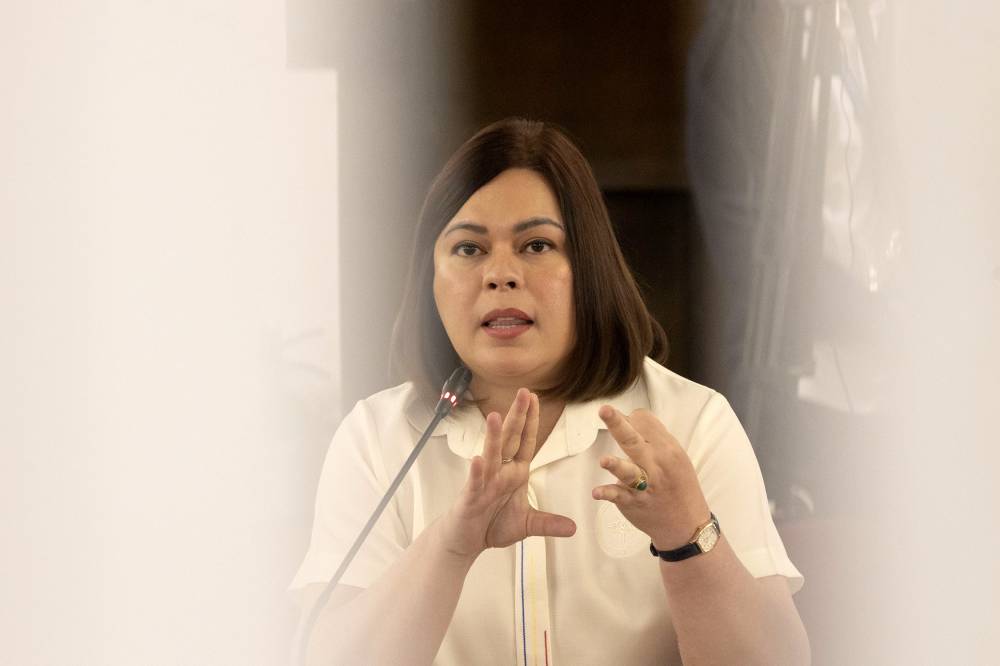
One of the lawyers for Vice President Sara Duterte was thankful to the Supreme Court for upholding its earlier decision declaring her impeachment unconstitutional and said that the country should now move on.
But the court’s decision will not stop some of the complainants from refiling their impeachment case against the Vice President after the one-year ban lapses next week.
“We thank the Honorable Court for a ruling that now definitively lays down clear and authoritative guidance on the constitutional limits and proper treatment of impeachment proceedings,” Michael Poa, who was supposed to have been one of Duterte’s lawyers in her Senate impeachment trial, said in a statement.
“With these issues settled by the court, the matter is now closed,” he added. “We should then move on to address the nation’s other pressing concerns.”
Duterte, showing exasperation, told reporters last December that she expected a new impeachment complaint against her.
“This impeachment is becoming tiresome for the people because we all see that they really have no evidence to back up their complaints,” she said, adding that the move would be intended only for harassment.
Additional hurdles
Bayan president Renato Reyes criticized the decision, saying it created “additional hurdles” for citizens seeking accountability from the country’s highest officials.
“The modes of accountability for top government officials should be in favor of the people, not the impeachable officials,” Reyes said. “Holding the corrupt accountable should be made accessible and realizable, not impossible.”
Senate President Vicente Sotto III said impeachment has become an “impossible dream” for people seeking accountability from officials.
Sotto said, without elaborating, that the Supreme Court ruling was “a clear encroachment on the power of the Legislative branch” under the Constitution.
“Impeachment is now an impossible dream!” he said in a text message to reporters.
Sad day for law students
The Senate chief said Jan. 29 has become a sad day for constitutional law students and professors.
“The Constitution had just been amended unconstitutionally through Supreme Court overreach. It will take decades of retirements to correct this misinterpretation,” Sotto said without citing the supposed amendment.
At the House of Representatives, which overwhelmingly supported Duterte’s impeachment last year, congressmen started weighing how future impeachment proceedings would be affected by the high court’s ruling.
Rep. Jonathan Keith Flores—who was one of the designated members of the House prosecution panel in the aborted impeachment trial—said the new rules on impeachment “must be carefully worded.”
“I fully understand the intent of the Supreme Court on infusing due process into the impeachment process,” he said. “[We] will then work out the precise statutory construction necessary to revise the impeachment rules.”

Bicol Saro Rep. Terry Ridon, who is also a lawyer, said the new ruling “effectively abandoned the most restrictive due process requirements imposed in the original decision.”
More workable standard
He noted that in the July 25, 2025, ruling, the court required that the respondent be given a copy of the draft Articles of Impeachment and be provided with an opportunity to respond.
But in its decision on the motion for reconsideration by the House, the high tribunal laid down “a more workable and constitutionally appropriate standard for the House,” Ridon said.
“It recognizes that impeachment is a political and constitutional process entrusted to the legislature, and that the House must be allowed to evaluate complaints based on the evidence available to Members, consistent with internal rules and the requirements set by the Constitution,” he said.
No more fast-track mode
ACT Teachers Rep. Antonio Tinio, Gabriela Rep. Sarah Elago said the ruling “effectively disables the so-called ‘fast track mode’ of impeachment” that the House leadership attempted to use against the Vice President last year.
They were referring to the second mode of impeachment where the endorsement of at least one-third of the members of the House of Representatives would be enough to transmit the Articles of Impeachment to the Senate for trial.
“With this ruling, the Supreme Court made future impeachment proceedings more difficult,” they said in a statement.