







Luzon fishers on front-line duty to protect West PH Sea

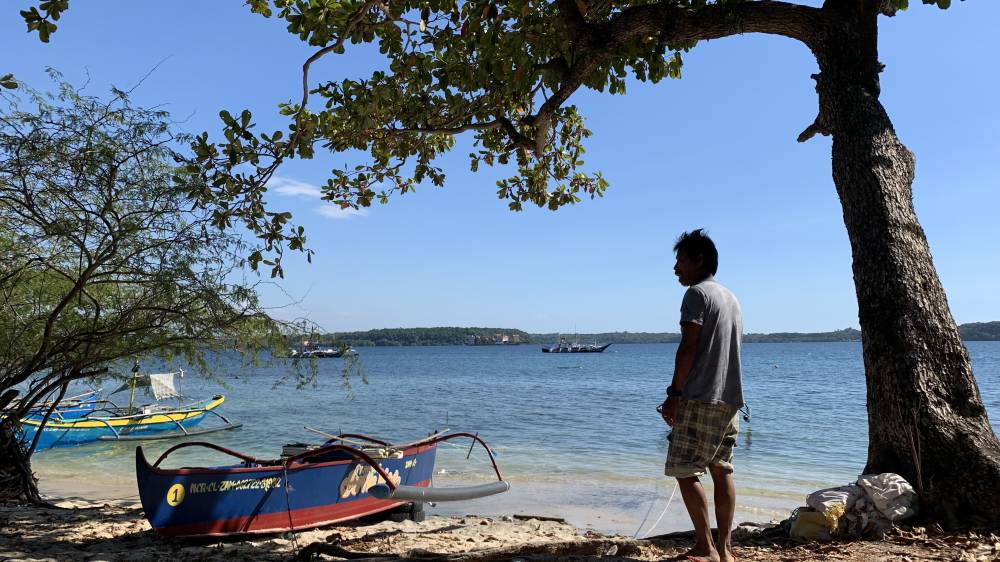
PALAUIG, ZAMBALES—For more than three decades, Ronnie Drio, 56, spends most of his life at sea, navigating the waters of the West Philippine Sea (WPS) not just as a source of livelihood, but as a place he knows intimately—its currents, its seasons and its risks.
On Jan. 28, Drio, a resident of San Salvador Island in Masinloc town, takes on a new role.
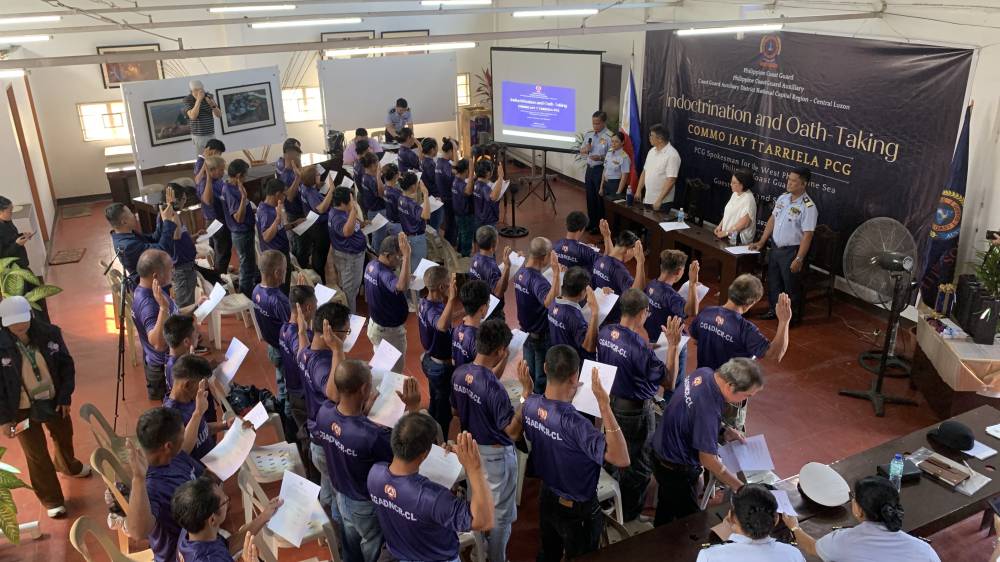
Along with fellow fishers from Zambales and nearby coastal communities in Bataan and Pangasinan, he raises his right hand and takes his oath as a volunteer member of the Philippine Coast Guard Auxiliary (PCGA) during an oath-taking ceremony at the Peoples Development Institute (PDI) Alternative Development Center in Barangay Bulawen here.
“We will continue working together to safeguard and protect our natural resources,” Drio tells the Inquirer moments after taking his oath.
All of the new inductees are members of Bigkis ng Mangingisda, a fishers’ organization supported by the nongovernmental organization PDI, which works to build self-reliant coastal communities through people-led initiatives.
Together, they formally join the 111th Auxiliary Squadron, a unit under the PCGA within the Coast Guard Auxiliary District National Capital Region-Central Luzon.
A long-awaited opportunity
Randy Megu, a fisher from Pangasinan and president of Bigkis ng Mangingisda, says their decision to volunteer reflects a growing sense of responsibility among fishing communities.
“We are happy because we have long waited for the chance to become part of the auxiliary so we can help the Philippine Coast Guard,” Megu shares.
“We are not just members of Bigkis. We are the ones who truly experience and witness what is happening at sea,” he adds, fighting back tears.
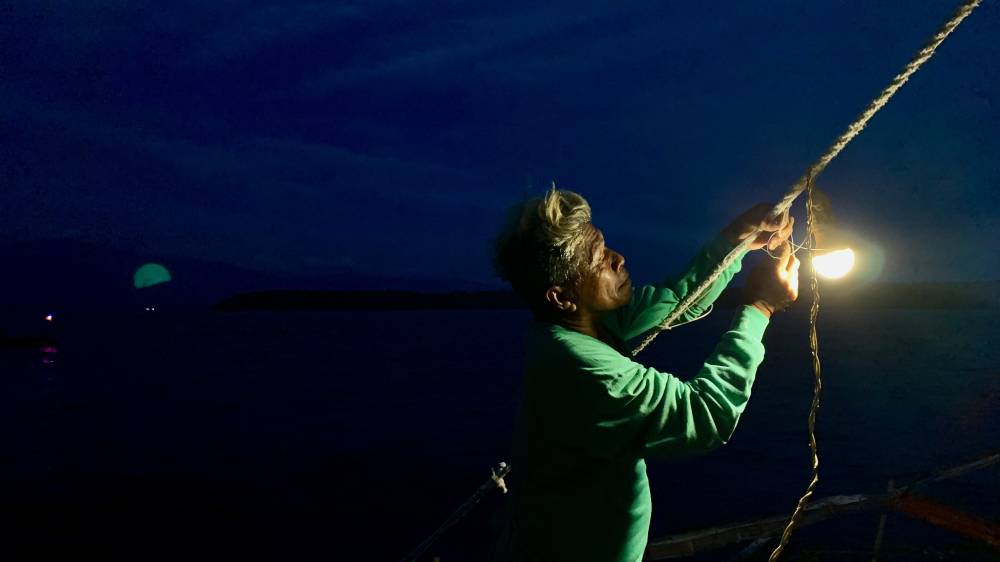
Even before joining the auxiliary, Bigkis members already document incidents and conditions at sea as part of community-based monitoring efforts. These practices are strengthened through training programs supported by PDI, equipping fishers with skills in documentation, safety protocols and coordination with authorities.
Vital role
Cmdre. Jay Tarriela, PCG spokesperson for the WPS and guest of honor during the event, emphasizes the vital role of fishers, saying there are no better volunteers to support the Coast Guard than them.
“Every time you go fishing in our waters, you continually strengthen our rights over our seas in the West Philippine Sea. You symbolize our stand as Filipinos—not the PCG, not the government—because your act of fishing shows ordinary Filipinos why we must stand up for and defend the West Philippine Sea,” Tarriela says.
He clarifies that fishers who join the PCGA are not being put in harm’s way, countering claims from pro-China critics that Filipino fishers are being used as pawns.
As volunteers, their role is limited to promoting safety of life at sea, protecting the marine environment, conducting search and rescue operations, implementing coastal community relations projects, and assisting in youth development, among others.
Tarriela explains that they are not responsible for any Coast Guard operations, are not directed by the national government, and that any information they provide is strictly voluntary. They are under no obligation to report or document incidents if doing so could jeopardize their safety.
Maritime experts note that the fishers’ move reflects a growing role for coastal communities in the governance and protection of the country’s seas, highlighting how civilian participation complements the work of state institutions.
Prof. Jay Batongbacal, director of the University of the Philippines (UP) Institute for Maritime Affairs and Law of the Sea, says the significance of fishers joining the PCGA lies in officially recognizing the role they already play at sea.
“We have many fishermen, while for the longest time the PCG has limited manpower, and even now, despite having more personnel, they cannot always be at sea. The ones consistently present in our waters are the fishermen, which is why it is only fitting that they have a role in the governance of our seas,” Batongbacal states.
“This does not mean they are agents of the state or equivalent to Coast Guard officers. It is a good example of community effort and self-help—communities assisting the government in carrying out its functions of governing, protecting and managing our seas,” he adds.
Prof. Jaime Naval, a maritime expert and assistant professor at UP Department of Political Science, echoes this view, emphasizing that the fishers’ participation is rooted in lived experience.
Beyond the oath
“These are not paid individuals. They are volunteers—the ones directly affected because they are at sea daily, and are often the first to witness developments on the water. Now they step forward to contribute in concrete ways,” Naval notes.
He says it carries particular weight when those on the ground take the initiative to volunteer their services for the country.
“This is not a scheme. It is not propaganda. What we are seeing are affected communities motivated by their own interests to stand up and offer their service—to express not only the position of fishermen, but also of the country itself,” Naval shares.
While Drio, Megu and other Bigkis members say they join to help the PCG, Tarriela reverses the perspective: “We are actually the ones supporting them,” he declares.
Tarriela notes that the initiative recognizes fishers as active partners whose daily presence contributes to the shared responsibility of keeping Philippine seas safe and well-managed.
The oath represents the fishers’ commitment not just to an institution, but to their communities and the waters that sustain their livelihoods.
******
Get real-time news updates: inqnews.net/inqviber