





Impeachment complaints vs Marcos OK in form

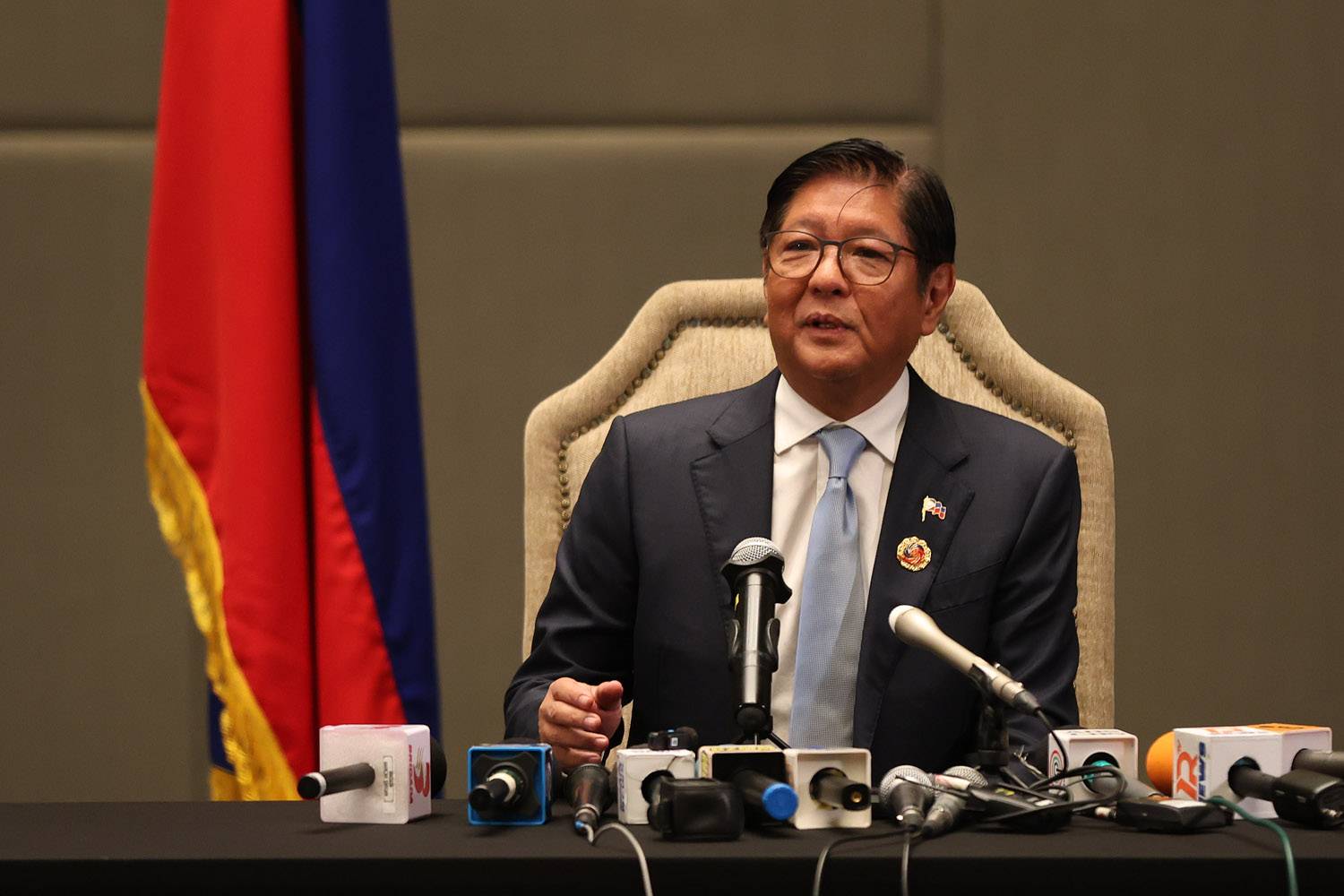
The two impeachment complaints filed so far against President Marcos were declared “sufficient in form” by the House of Representatives panel that began the impeachment proceedings on Monday.
The House committee on justice will next determine the substance of the complaints in today’s hearing.
The committee on Monday also effectively consolidated the complaints, although its chair, Batangas Rep. Gerville Luistro, clarified that their “physical” or formal merging will only take place alongside the determination of probable cause.
The complaints filed, respectively, by lawyer Andre de Jesus and the Makabayan coalition were tackled separately, with Cagayan de Oro Rep. Rufus Rodriguez moving to declare the complaint by De Jesus sufficient in form.
Manila Rep. Bienvenido Abante Jr., however, argued otherwise, prompting Luistro to bring the matter to a vote.
“I did not properly hear the explanation on the sufficiency in form, and that is what I would like to hear, and because of this, I object,” Abante said.
This led to 46 committee members present moving to declare the De Jesus complaint sufficient in form, while Abante voted against it and one lawmaker abstained. The committee has not identified the positions taken by the committee members during the vote.
As for the Makabayan complaint, Rodriguez said his copy was not signed by a notary public. Luistro then clarified that the complaint was checked thoroughly.
This complaint was also put to a vote, with 35 members voting to declare it sufficient in form, nine voting otherwise, and one abstaining.
Timing and merits
De Jesus filed the first impeachment complaint against Mr. Marcos on Jan. 19. This was endorsed by Pusong Pinoy Rep. Jernie Jett Nisay—himself a private contractor and one of eight House lawmakers whom the Independent Commission for Infrastructure (ICI) recommended in November last year for graft and plunder charges.
Topping the six grounds that De Jesus cited for Mr. Marcos’ impeachment are his role in the “kidnapping” of former President Rodrigo Duterte—who was brought to the International Criminal Court (ICC) in March last year to face murder charges in connection with his drug war—and the President’s alleged drug use.
De Jesus also accused Mr. Marcos of failure to veto unprogrammed appropriations in every budget bill on his watch, benefiting from budget insertions and “ghost” flood control projects, creating the ICI to shield corrupt allies, and surrendering Duterte to the ICC after his “kidnapping.”
But critics of De Jesus’ complaint, including Vice President Sara Duterte, have questioned its timing and merits and expressed suspicion that it will serve to bar other complaints before its dismissal.
The Makabayan coalition, for one, said it was also prompted to file its own impeachment complaint against Mr. Marcos, which focused on a “parametric formula” named after the President’s initials—the “BBM” or “Baselined-Balanced-Managed” formula.
According to the activist lawmakers, this computation provided discretionary “allocables” for infrastructure projects in the national budget.
The coalition, which also filed an impeachment complaint against Vice President Duterte (see story on this page), also affirmed previous claims by resigned lawmaker and fugitive Elizaldy Co that Mr. Marcos and other officials got kickbacks from substandard flood control and other infrastructure projects.
Verification of signatures
Besides Rodriguez, Manila Rep. Joel Chua also questioned the authenticity of the signatures on the impeachment complaints.
“We’ve been talking about verifications and oaths, but we did not require the identification of the signatures. I think that is very important because later on, the signatures might be denied,” Chua told the committee.
But Mamamayang Liberal Rep. Leila de Lima said such verification was “unnecessary.”
“There is a presumption of authenticity of signatures unless someone questions it. Only then does it become an issue that would necessitate asking the affiant or signatory to confirm his or her signature,” De Lima said.
Chua, however, maintained that verifying the signatures was critical to determining the complaints’ sufficiency in form, adding that the notary public concerned was not present in the hearing to verify the signatures.
FPJ Panday Bayanihan Rep. Brian Poe-Llamanzares later confirmed in a press conference that “all the requirements are complete, as the chair said earlier,” in determining the sufficiency of the complaints.
“What we saw was merely a placement issue,” Llamanzares said. “But in terms of the contents, the verification and notarization [are] there.”
******
Get real-time news updates: inqnews.net/inqviber