









Alaska’s grizzlies record their lives thru collar cams

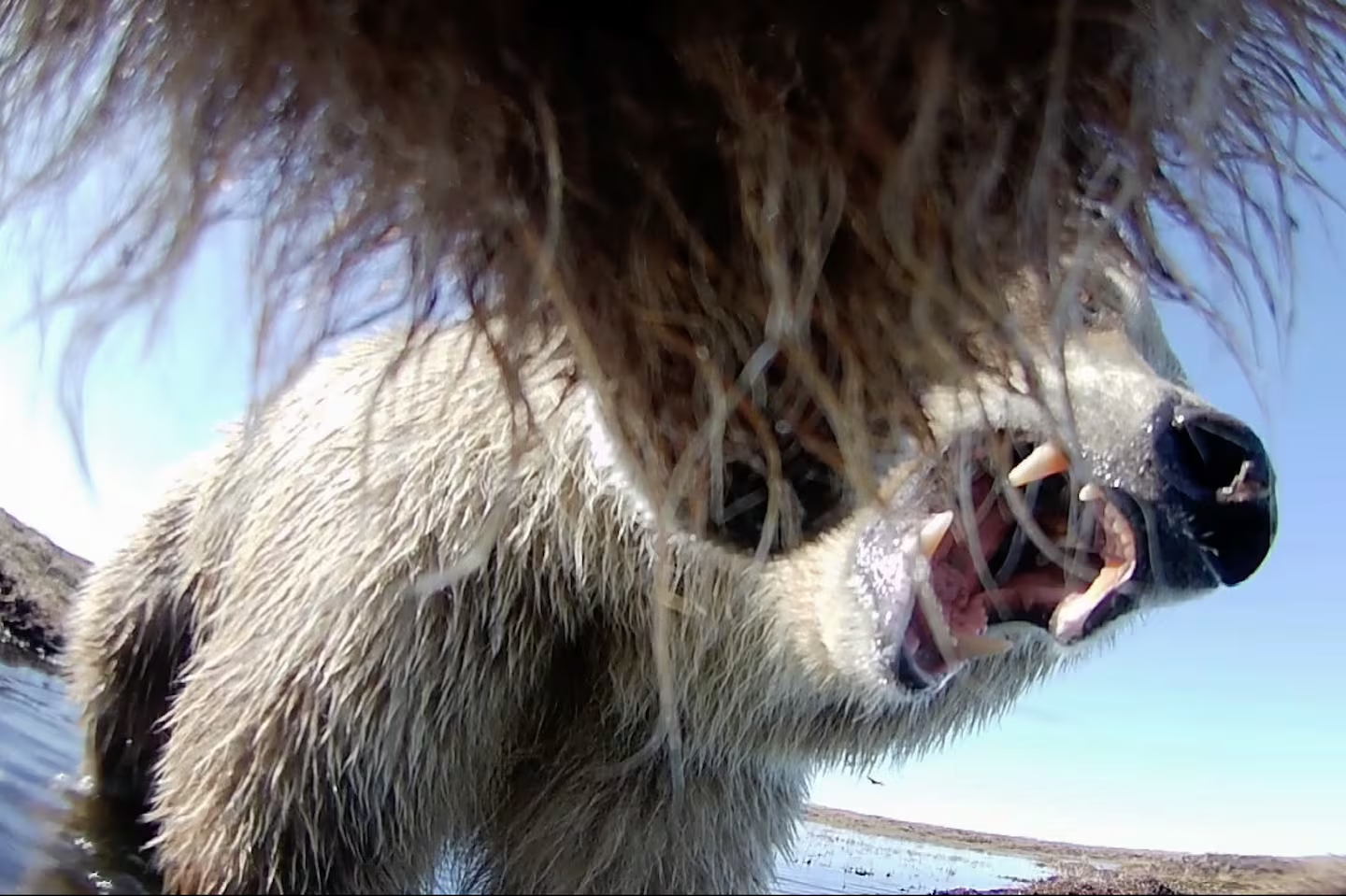
ANCHORAGE, ALASKA—The life of one of the most remote grizzly bear populations in the world is being documented by the animals themselves, with collar cameras that provide a rare glimpse of how they survive on Alaska’s rugged and desolate North Slope.
Twelve of the 200 or so grizzlies that roam the frigid, treeless terrain near the Arctic Ocean have been outfitted with the cameras as part of a research project by Washington State University and the Alaska Department of Fish and Game.
The videos they record—many partially obscured by the undersides of whiskery muzzles—show the bears playing or fighting with companions, gnawing on a caribou, snarfing up berries, napping on a beach, and swimming in a pond looking for fish.
The bears hibernate about eight months of the year.
“They really have a really short window to obtain enough food resources to pack on enough fat to survive that period,” said Washington State doctoral student Ellery Vincent, who is leading the project with state wildlife biologist Jordan Pruszenski.
“We’re interested in looking at kind of a broad scale of how they’re obtaining the food that allows them to survive through the year and what exactly they’re choosing to eat,” Vincent said.
Hunting behavior
Among other things, the state is interested in learning to what extent the bears hunt musk oxen. There are about 300 of the shaggy ice-age survivors on the North Slope, according to Pruszenski, but the population is not flourishing.

Videos from the first year of the project show that after emerging from hibernation, the bears eat the carcasses of caribou or musk ox that have died over the winter. Then they attack caribou calves. As soon as the tundra greens up, the bears shift their menu toward vegetation, especially blueberries and soapberries, also called buffaloberries.
They don’t fatten up the way salmon-eating bears do. Those bears can reach up to 1,000 pounds (454 kilograms). These Arctic grizzlies are small in comparison, reaching up to 350 pounds (159 kg), Vincent said.
To initially fit the bears with the collar cams, the researchers tracked them through the snow by helicopter last May. Pruszenski fired tranquilizer darts from the air, with Vincent keeping track of injection times and helping determine when the bear was safe to approach on the ground.