











His life was a blind item—so he became his own publicist

As entertainment reporters, we often joke that our job is hard, not because the subjects we cover are inherently profound or world-changing, but because we so often have to find a story where there isn’t one at all. That’s why, for better or worse, celebrities undergo media training—for in showbiz, people feel just as entitled to their stories as they are to what they show onscreen.
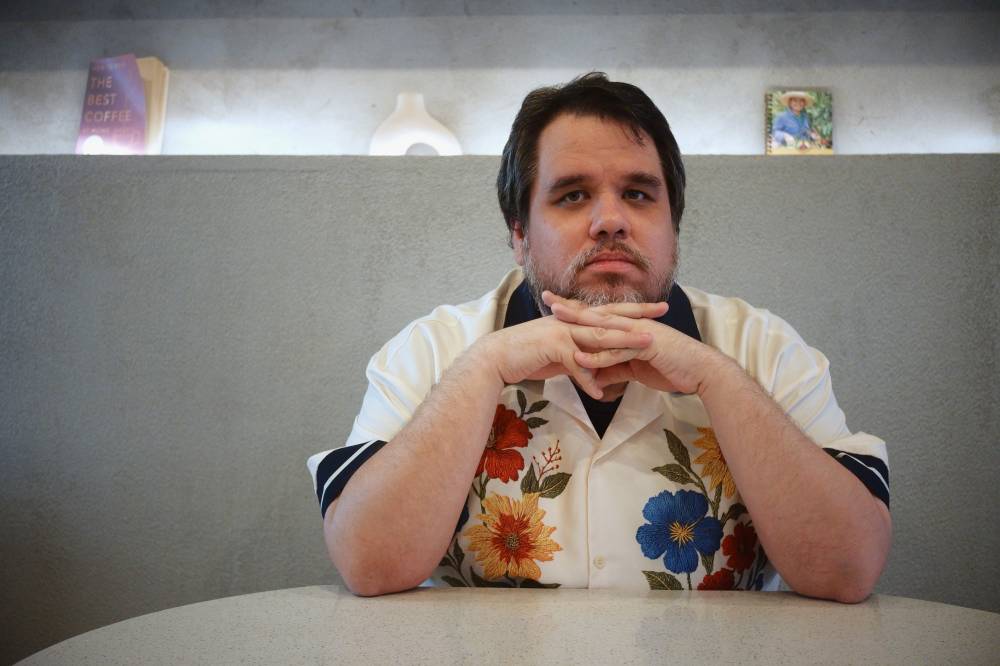
This professional burden is something that award-winning writer Chuck Smith may have unwittingly taken on, even before he got a byline. He wasn’t a celebrity. But growing up thinking—and being thought of—as the child of Delia Dueñas Smith, the controversial starlet better known as the “Softdrink Beauty” Pepsi Paloma (Spoiler alert: he was actually her nephew), he was a curiosity by proxy.
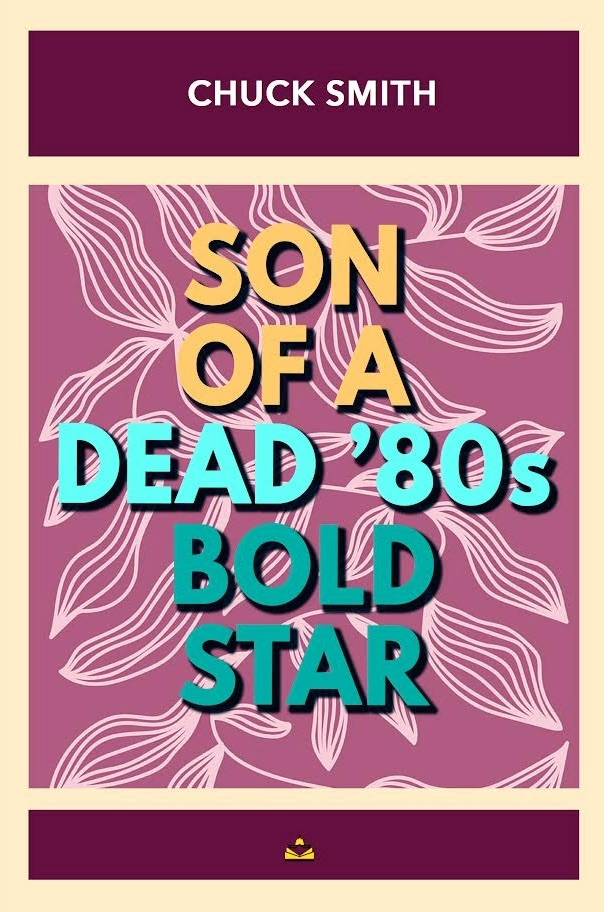
And in his first book, the essay collection “Son of a Dead ‘80s Bold Star,” he offers a glimpse of what it’s like to be his own publicist for a story yet to be pieced together.
Vacuum for gossip
Smith’s mere existence was virtually a license for intrusion and to put him perpetually on the record. Maybe one could even liken his life to a series of press junkets—only in his case, the venues were classrooms, offices, or his own living room.
And, only in his case, he didn’t have the luxury of a studio telling him what to say if a teacher asked, “Anak ka ng pokpok?” or if a job interviewer insouciantly suggested that his lisp might be the result of a failed abortion. Or if a classmate asked him point-blank, “Bakla ka ba?”—a preview of the same invasive questions celebrities face in their careers.
In showbiz, a tragic backstory can be just as compelling as a feel-good one. Silence, however, only fuels intrigue and often leaves a vacuum for gossip. Before long, people are trying to outscoop you on your own story. As such, Smith spent much of his young adulthood trying to make sense of a story he didn’t fully know—filling the gaps of his own identity to satisfy prying eyes.
Because, as he would realize early on, saying “I don’t know” can be a dangerous answer.
“I didn’t want the identity of my father to be a literal blank because that would mean the answer could be anything anyone wanted it to be. And I didn’t always like their answers,” he writes in the essay “Blood Calls to Blood,” where he reflects on his relationship with his adoptive father and the mystery of his biological father—who is, in fact, Paloma’s younger brother.
Unvarnished writing
There are mentions of adoption, child snatching, and, yes, even missing diaries. But in tackling personal and at times dark facets of his life—like the truth of his parentage in his Palanca Award-winning essay “Origin Story,” and mental health and sexual abuse in “Developing Story”—he keeps his writing unvarnished even at moments that might be deemed climactic. He can even be unexpectedly and acerbically self-deprecating.
It’s as if he’s refusing to give the audience any more melodrama than they expect from him—as if saying that this is his reality and no longer your entertainment.
Smith, a former pop culture reporter and editor, handles the material with a certain journalist’s detachment, giving even his most personal essays the sense that he is interviewing and writing about his younger self. And this same sensitivity seeps into his entertainment reportage, treating his celebrity subjects—like Eddie Garcia and Cherie Gil—as people with actual human stories beyond their reputation, and not as mere fodder for clickbait.
Conversely, Smith can be—or chooses to be—playful with relatively lighter, slice-of-life fare, like how he eventually connected the dots on his crafty sixth-grade teacher, Ms. Vee, in “Resurrections,” or his one-sided writing rivalry with a talented school paper colleague in the magical-realism–inflected “Duende.”

By claiming his joy, Smith proves he is a storyteller even when he’s not being the son of a dead ‘80s bold star, and that he can find light and levity in small spaces where Paloma’s shadow momentarily fades.
When the fizz settles
“In the Movies,” perhaps his most imaginative in terms of format, reads almost like a series of seemingly disparate stories presented as literary blind items, if you will. Using initials for names and intentionally holding back key details at first, he illustrates that what makes showbiz writing compelling isn’t so much what you reveal, but what you withhold—and how who performs the act can be more intriguing than the act itself.
Indeed, a blind item is a playground for the audience’s imagination. But people aren’t necessarily looking for the truth—they’re looking for what they want to believe is true. And as the facts start to surface and continue to trickle in, it becomes increasingly clear that Smith’s journey—although spurred by myth—isn’t defined by it.
Now, he has enough of a story to fill a headline. In the end, he gives us a piece of the answer, and while it wasn’t the soap-opera turn one might expect from the son of a dead ‘80s bold star, what settles after the fizz is what makes it all the more powerful.
And at the very least, the blanks that once invited theories and speculations are no longer there for others to fill.