






Sara lawyers expect more impeach raps before term ends

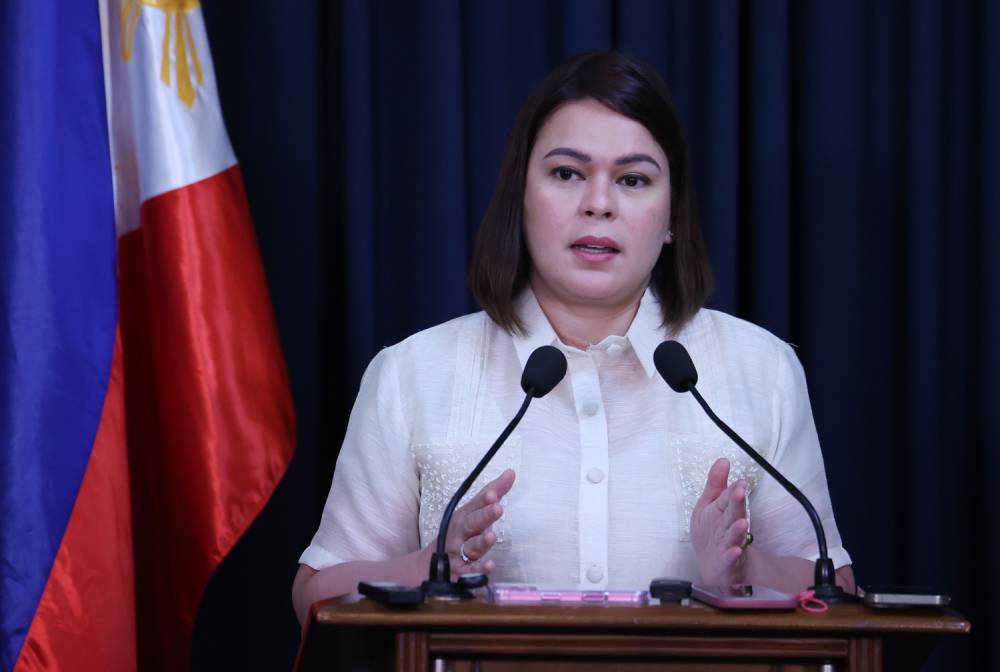
The legal team of Vice President Sara Duterte is anticipating more impeachment complaints to be filed against her before her term ends in 2028.
Two groups on Monday already filed separate impeachment complaints against Duterte, basing their move on the Supreme Court’s Jan. 28 resolution that affirmed its nullification of Duterte’s impeachment in February 2025.
In an interview over dzMM on Tuesday, Michael Poa, one of Duterte’s lawyers, said the Vice President had asked them to prepare for the possibility of more complaints against her for the rest of her term.
“We would like to reserve commenting for now but we are monitoring the developments of the impeachment complaints at the House of Representatives, on how they will act on it,” Poa said. “We cannot disclose our position now.’’
But he agreed that the impeachment trial would be an appropriate venue for the Vice President to explain her office’s use of confidential funds, one of the major bases of the impeachment complaints.
One-year prohibition
“In the impeachment, if this is the right venue, then we may properly explain to everyone,” he said. “Of course, we want to answer everything and that there is no basis for the allegations of anomalies against the Vice President.”
In a briefing on Jan. 29, Supreme Court spokesperson Camille Ting did not give a specific date when the one-year ban on filing will lapse, only that it would end one year “from the transmission of the articles of impeachment” to the Senate.
But lawyer Domingo Cayosa, former president of the Integrated Bar of the Philippines (IBP) and a constitutional law expert, said this could be a personal interpretation of Ting as the spokesperson of the high tribunal.
On Feb. 5, 2025, a total of 215 House members endorsed the fourth impeachment complaint and had it immediately transmitted to the Senate. On the same day, the first three impeachment complaints—filed on Dec. 2, 4 and 19, 2024,—were also archived.
“If you read very carefully the resolution on the MR (motion for reconsideration), there’s nothing there that says ‘Feb. 6,’” Cayosa told the Inquirer in a telephone interview on Tuesday.
He said it was correct for the complainants—the Makabayan coalition for the first complaint and a group led by Tindig Pilipinas coconvener Kiko Aquino Dee for the second—to file them way ahead of the supposed lapsing of the one-year prohibition on Feb. 6 because of the definition of “session” days in a resolution promulgated by the Supreme Court on Jan. 28.
“They said session days should not be interpreted as it is traditionally known by practically all legislators… and branches of government,” stressed Cayosa.
In the ruling, the high court defined session days as calendar days that the House holds plenary sessions, veering away from the practice of counting one session day as a period of days from the opening a session until its adjournment.

Set record straight
“They changed their reasoning [on the issue] … Usually when the reasoning is changed, you have a different result,” he said.
Because of such aspects in the ruling, Cayosa agreed with other experts’ views that there was “judicial overreach” on the matter of impeachment.
“It seems the Supreme Court has inserted itself into the impeachment process… Because that matter really is under the legislative [branch],” he said.
At this point, Cayosa said, the “best solution” on the conflicting dates of the lapsing of the one-year bar rule is for the Supreme Court to heed the request of Batangas Rep. Gerville Luistro, chair of the House committee on justice, to set the record straight.
Luistro on Monday said she had asked the high tribunal to clarify which ruling to follow—the original July 2025 decision or the Jan. 28 resolution—to determine the reckoning period.
“Instead of [the public] being enlightened, it seems everyone was even more confused,” he said. —WITH A REPORT FROM INQUIRER RESEARCH