








Gov’t eyes reforms, partnerships to ensure reliable energy

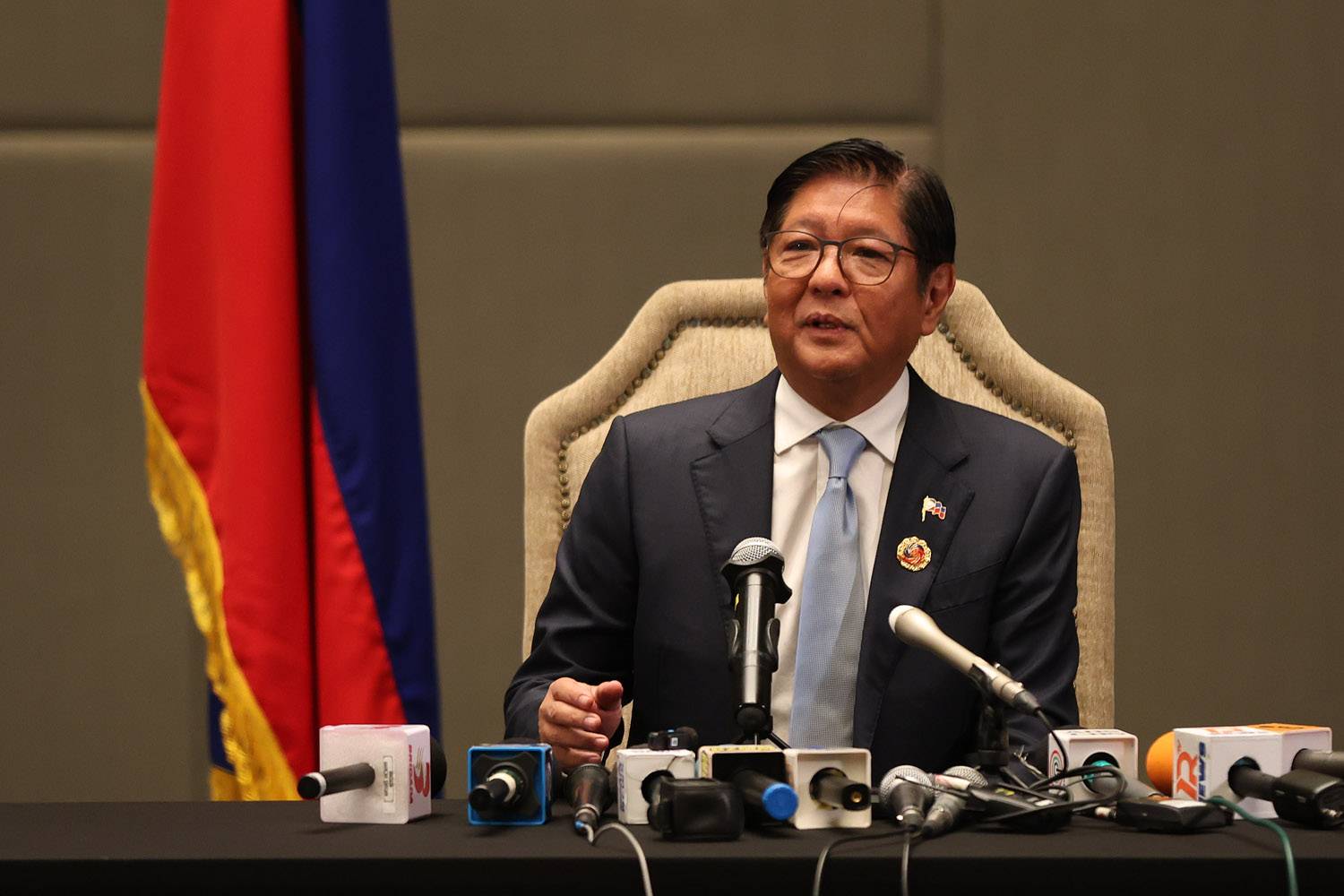
President Marcos said on Monday the government is improving the country’s energy sector to provide reliable and affordable electricity to the public.
“[W]e, in government, continue to strengthen the systems in our energy sector by improving policies, processes, and partnerships to ensure that energy reliability and affordability are sustained in the long-term,” Mr. Marcos added.
He spoke at the turnover of the 797-megawatt Caliraya-Botocan-Kalayaan Hydroelectric Power Plants (CBK HEPP) in Kalayaan, Laguna province, from the government to a private consortium.
“Building on the strength of both the public and private sectors, we encourage collaborations that safeguard the public interest while promoting transparency and accountability,” the President said.
The Thunder Consortium—composed of Aboitiz Renewables Inc., the renewable energy arm of Aboitiz Power Corp., and Japanese firms Sumitomo Corp. and Electric Power Development Co., Ltd.—won the P36.27-billion bidding for CBK HEPP’s privatization in July 2025, conducted by the state-owned Power Sector Assets and Liabilities Management Corp.
The Philippine Competition Commission approved later in November the acquisition of CBK HEPP’s hydroelectric and pumped storage assets.
The CBK HEPP is one of the largest hydropower complexes in Luzon and plays a critical role in the country’s energy system.
The Caliraya power plant, commissioned in 1942, is an impounded water system, while the Botocan plant, built in 1930 and rehabilitated in 2003, operates as a run-of-river system.
The Kalayaan plant, commissioned in 1984, on the other hand, functions as a pumped-storage facility. During periods of low electricity demand, it uses electricity to pump water from the lower reservoir in Laguna de Bay to the upper reservoir in Lake Caliraya.
Supply and demand
The CBK hydropower plants pump water to an upper reservoir using excess power during off-peak hours, and release water to generate electricity when the demand is high, allowing cleaner energy to work reliably at scale.

They form a system designed not just to generate power, but also balance supply and demand across the power system.
According to the President, as CBK facilities operate, this means fewer power interruptions for households, fewer service disruptions for hospitals and schools, as well as time saved and additional productivity and opportunities for workers and businesses.
He also noted that the successful privatization of the CBK HEPP reflected robust investor confidence in the country’s energy sector.
“This privatization reflects investors’ confidence in the direction of our country’s energy sector,” Mr. Marcos said.
“It also demonstrates once again how strategic public-private collaboration transforms investment in essential infrastructure into reliable, everyday services that people can trust,” he added.