





2nd or 4th degree? Ex-SC justices differ on antidynasty bill

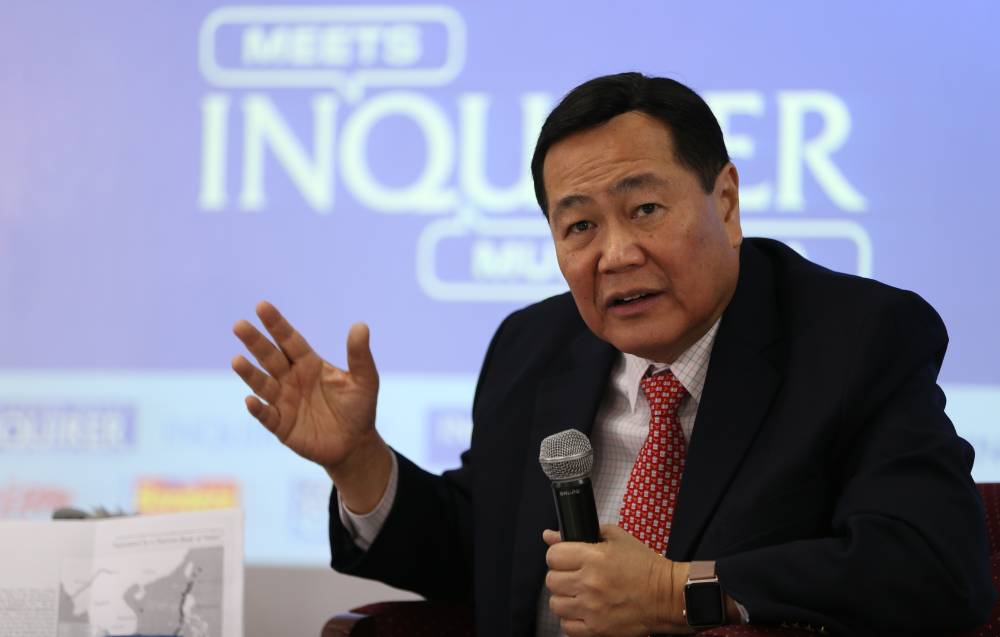
Two former Supreme Court (SC) justices gave different views on proposals to ban political dynasties, with one saying “the ideal law” should prohibit relatives up to the fourth degree of consanguinity and affinity, while another views such a measure as unenforceable and “an overreach.”
At the hearing on Tuesday of the House committee on suffrage and electoral reforms regarding antipolitical dynasty bills, retired Senior Associate Justice Antonio Carpio said that there is enough basis under the 1987 Constitution to ban relatives up to the fourth degree from running for other positions.
“My idea of an ideal anti-political dynasty law that complies with the constitution has the following elements: first, the coverage should be within the fourth degree of consanguinity or affinity,” Carpio told lawmakers when he was asked to speak at the start of the hearing.
According to him, the constitution recognizes that the fourth degree of consanguinity can be a limitation on appointment under the constitution, with the President prohibited from appointing relatives by consanguinity or affinity by fourth civil degree.
Statutory law
Carpio added that his proposal is also supported by “statutory law,” as the Local Government Code prohibits local officials from “appointing relatives by consanguinity or affinity within the fourth civil degree.”
But former Associate Justice Adolfo Azcuna said it would be hard for the Commission on Elections (Comelec) to enforce a law that limits relatives in public office up to the fourth degree.
He added that he came to this conclusion after doing his own research and consulting colleagues and his law students at San Beda University to ensure that antidynasty proposals were in tune with day-to-day realities.
“I humbly submit the findings of my own research, your Honors, on the degree of relationship. It is submitted that two degrees is best suited to dismantle the grip of political dynasties which are mostly in the provincial level and two degrees is doable and easier to implement on the part of the Comelec,” Azcuna said.
Local or national?
“We must not forget that there is an enforcement side to the definition and four degrees might be an overreach and difficult to implement in view of the thousands of candidates involved, and verification of the candidates may be difficult,” he stressed.

According to Azcuna, another point of contention is whether the bill should apply as well to national positions or only to local positions or in the provincial, city, municipal and barangay levels, as the grip of political dynasties “do not appear to be as solid on a national level.”
There are currently at least 22 antidynasty bills filed before the House that are being discussed by the committee on suffrage and electoral reforms.
Tuesday’s discussion marks the second hearing on the topic, with the previous meeting delving on Comelec’s concerns over the proposed legislation, including conflicts regarding possible penalties and potential loopholes.
President Marcos, who also comes from a political dynasty, earlier asked Congress to prioritize the antidynasty bill, along with three other proposals seen to initiate key political reforms.