





Remolona sees signs of confidence rebound after graft shock

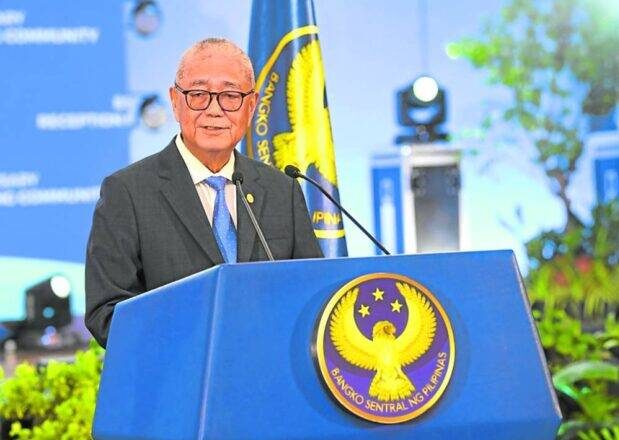
There are early signs that business confidence in the Philippine economy is beginning to recover after being shaken by a high-profile corruption scandal, Bangko Sentral ng Pilipinas (BSP) Governor Eli Remolona Jr. said, though he acknowledged that the rebound has been slower than officials had hoped.
Speaking before members of the Management Association of the Philippines, Remolona cited three indicators that suggest sentiment may be improving: firmer manufacturing activity, easing government bond yields and gains in the local stock market.
He pointed to the latest survey by S&P Global showing that the country’s purchasing managers’ index (PMI)—a measure of manufacturing activity—rose to 50.2 in January, a nine-month high. A PMI reading above 50 signals expansion, indicating that “we’re okay,” Remolona said.
In the bond market, he noted that the benchmark yield for 10-year government securities has fallen to below 6 percent this month, from above that level in August, when investigations into alleged irregularities in flood control projects began to rattle investors.
“The yields have been coming down,” Remolona said. “That’s a sign of confidence.”
Lastly, the central bank chief said the Philippine Stock Exchange index has since recovered above the 6,000 level after falling below that mark in the second half of 2025—when the confidence crisis erupted.
Slower than expected
“So, it looks like it’s beginning to come back, not as fast as we would like, but it’s coming back,” Remolona said. “In our projections, we think that will be back to normal by the second half of 2026.”

Since August 2024, the central bank has reduced its benchmark rate—which guides banks’ lending costs—by 2 percentage points, to 4.5 percent. Remolona has said the easing cycle was nearing its end, though policymakers remain prepared to act if needed to support domestic demand and cushion the fallout from the scandal.
In a separate interview, BSP Deputy Governor Zeno Abenoja said roughly half of the earlier rate cuts had been transmitted to banks’ lending rates, largely benefiting corporate borrowers. Meanwhile, about 60 percent to 70 percent of the reductions had already been reflected in Treasury bill yields.
Looking ahead, Remolona said the central bank would continue to prioritize inflation over growth in its monetary policy decisions. “If we succeed with inflation, it should help growth,” he said.