









Ibig, irog, mahal: Love, Filipino-style

English speakers use the word “love” to express an entire field of deep human connection. Of course, we can use its many synonyms, such as adore, cherish, and admire, but nothing hits quite as deeply as “love.” When we love people, animals, and things, we adore, cherish, and admire them.
They belong to us as much as we belong to them. They are, to us, profoundly valuable.
“Mahal kita”
In Filipino, when we talk about “value,” we use the same word for love: “mahal.” When something is “mamahalin,” it means that something is both expensive and very, very special.
But what is the opposite of “mahal”? It is “mura,” which means “cheap.” But mura is also what we say when we cheapen someone with our words—when we put them down: minumura. When we give value to someone, “minamahal” natin sila.
So much has been said about how the word “kita” is so special in our language, since it is both “I” and “you.” When a person says “I love you,” it implies an “I” that expresses a thing called “love” to a separate, distinct “you.” But when we say “Mahal kita,” the valuation happens together, between both of us.
But let us not get distracted by this, because we also use “kita” in phrases like “Sasaktan kita” and “Pababagsakin kita.” In any case, “kita” just refers to a participation—you cannot hurt me without me allowing you to hurt me, and in the same way, I cannot love you if you do not allow me to love you.
Ibig vs. irog
We also use the words “ibig” and “irog.” The difference is that one is internal, and the other is external. Ibig is a deep desire, not simply a pagnanasa or want, but a longing, a yearning. If I tell you what I truly mean, that is “ibig sabihin.” If we share desires and passions and dreams, you are my friend, or “ka-ibig-an.” “Pag-ibig,” then, is the act of desiring: that is, my desire, my yearning, for you.
Irog is an expression of love, like hugging, kissing, or holding hands. It is a kind of pagsuyo. If you want to say, “Iniirog kita,” then show it!

How to say “I love you,” the Filipino way
But how do you show love? This is where the so-called “love languages” come in: remind me of my value (“words of affirmation”), hold me closely and dearly (“physical touch”), share enriching activities with me (“quality time”), provide for me (“gift-giving”), and treat me well (“acts of service”). This is, basically: Pag-ibig sa isip, sa salita, at sa gawa.
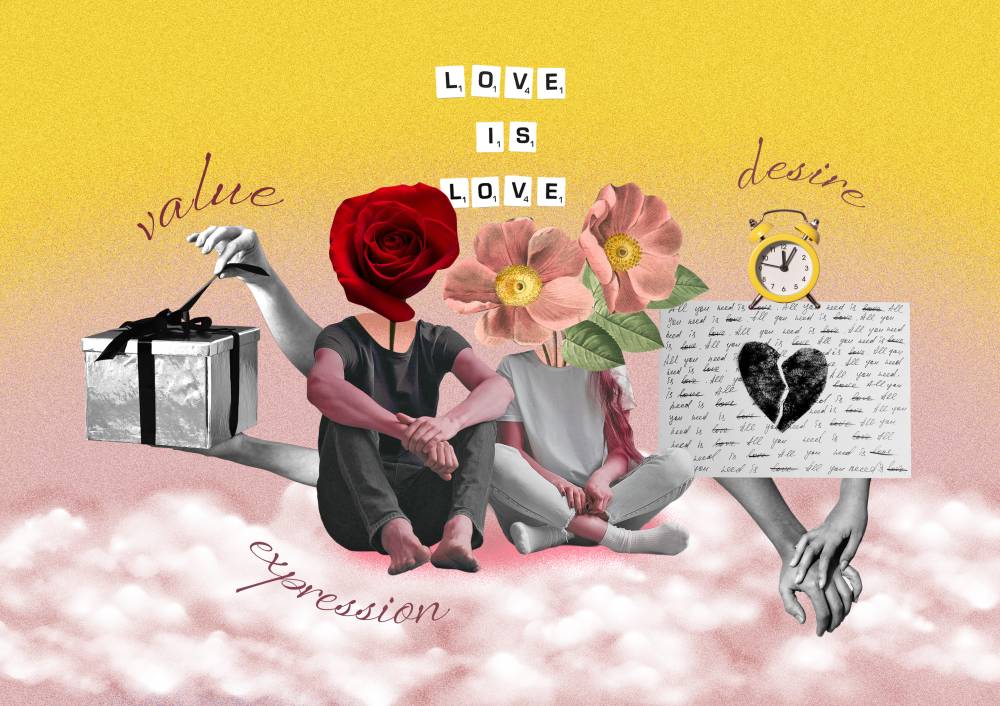
Love, Filipino-style, is about value (mahal), desire (ibig), and expression (irog). Knock on the door of your lover’s heart. Sing to them, even if you cannot hold a tune. It is about honesty, sincerity, and truth.
And, if they like it, maybe they will open the door.