





Budget row leaves Misamis capitol workers in limbo

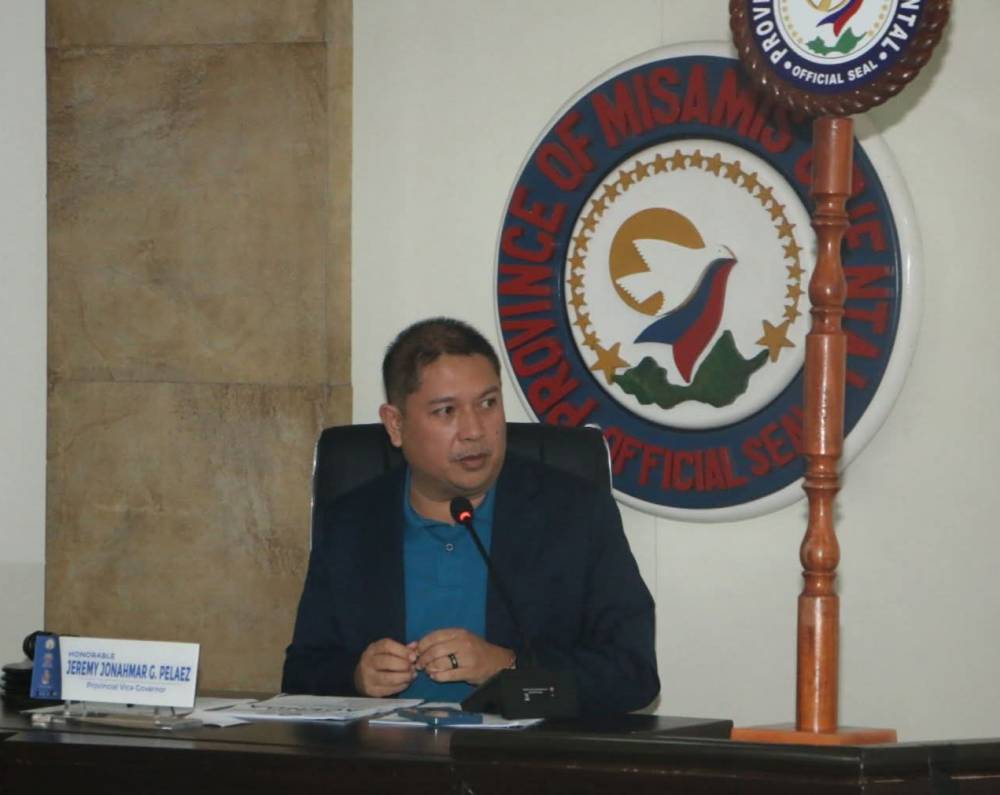
CAGAYAN DE ORO CITY—Employees of the provincial capitol of Misamis Oriental are bearing the brunt of the unresolved squabble between Gov. Juliette Uy and the provincial board, led by Vice Gov. Jeremy Jonahmar Pelaez, over the 2026 budget appropriation.
At the start of the year, the provincial government was forced to operate on a reenacted budget after the provincial board failed to enact a new one for 2026.
This prompted Uy to notify all job order and casual workers of the capitol not to report for work, as she faces a dilemma on how to pay their salaries.
According to Celso Abucejo, Uy’s special assistant, while the governor intended to renew contracts in January, the legislative gridlock has made it legally risky to sign new agreements without an approved 2026 appropriation ordinance.
“It is very difficult to ask people to work when you realize you have no salary to give them,” Abucejo said.
However, about 500 workers have volunteered to continue working without pay, gambling on a retroactive salary if the stalemate is resolved, he added.
As of Friday, more than a month into the year, the provincial board has not yet approved any appropriation ordinance.
Affected are 1,832 workers, including 1,622 on job order contracts and 210 casual employees, Abucejo said.
Leeway
A reenacted budget still allows Uy some leeway to continue their services. However, a job order contract is valid for six months, making an approved appropriation ordinance necessary, Abucejo explained.
Uy has not laid off similar workers employed in eight provincial hospitals to avoid disrupting the delivery of health and medical services.
In other provincial offices, regular employees are reportedly suffering from overwork as they fill in for tasks left by laid-off workers, who comprise the largest portion of the capitol’s workforce.
Several regular employees told the Inquirer that the sudden cutback left them immediately burdened with all pending work.
As of the third quarter of 2025, the provincial government reported 1,464 regular employees, roughly 40 percent of the total workforce when job order and casual workers are included.
The capitol serves about one million residents across 23 towns and two component cities.
Estimates
At the center of the budget deadlock is the estimate of income. For 2026, Uy proposed a P4.4 billion spending program, a 24-percent reduction from the P5.8 billion budget in 2025.

Uy said her spending plan would be funded with P3 billion in national tax allocation (NTA) from the national government, with the remainder from locally generated revenues, including P300 million from the operation of eight provincial hospitals.
Board member Rommel Maslog, chair of the board’s committee on appropriations, criticized Uy’s projections as “unrealistic,” arguing that historically, the provincial government collects only about half of its projected local revenue.
“It’s like counting money you haven’t collected yet,” Maslog said.
According to Abucejo, following Maslog’s reasoning, the committee’s consensus was to slash Uy’s proposed appropriation by 25 percent to P3.3 billion—allocating only P14 million to the Governor’s Office from a proposed budget of P836 million.
Next in line for the steepest cuts are the Provincial Local Environment and Natural Resources Office, reduced from P31 million to P830,000, and the Provincial Information Office, allocated only P120,000, Abucejo disclosed.
Abucejo refuted Maslog’s claims, noting that the NTA for 2026 is set at P3 billion, up from P2.6 billion in 2025, and that the eight hospitals generated P220 million in revenue in 2025 when medical consultations were still free.
He said the administration remains puzzled by the board’s motivations, as the current board members are nearly the same people who approved the P5.8 billion budget in 2025.


Including the private sector in governance