
Pope Leo to faithful: Avoid speaking hurtful words

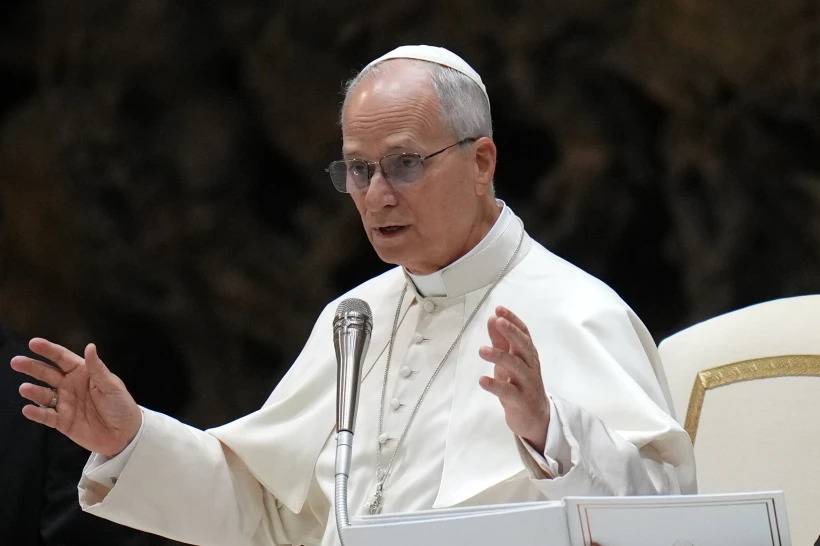
Pope Leo XIV has called on the Catholic faithful to practice a “very practical” but often “unappreciated” form of abstinence for Lent: “fasting” from speaking hurtful words to your neighbor.
Ahead of Ash Wednesday, which marks the beginning of Lent, the Pope invited the faithful to practice “other forms of self-denial” such as refraining from saying harmful words, as a way of showing their “inner commitment to turn away from sin and evil with the help of grace.”
“Let us begin by disarming our language, avoiding harsh words and rash judgment, refraining from slander and speaking ill of those who are not present and cannot defend themselves,” he said in a statement posted on the Vatican’s website.
“Instead, let us strive to measure our words and cultivate kindness and respect in our families, among our friends, at work, on social media, in political debates, in the media and in Christian communities. In this way, words of hatred will give way to words of hope and peace,” he added.
During the 40 days of Lent, Catholics seek repentance and renewal in preparation for Christ’s resurrection at Easter. It consists of constant prayer, reading of God’s word, fasting on Ash Wednesday and Good Friday, abstinence from meat on Fridays, and works of mercy to the poor and marginalized.
‘Path of conversion’
According to Leo, abstaining from food is “essential on the path of conversion,” for the practice makes it easier for people to recognize “what we ‘hunger’ for and what we deem necessary for our sustenance.”
It also “keeps our hunger and thirst for justice alive” while “freeing us from complacency,” teaching people to pray and act responsibly toward others, he said.
“Fasting not only permits us to govern our desire, purifying it and making it freer, but also to expand it, so that it is directed towards God and doing good,” the Pope said.
However, Pope Leo also noted that fasting must be done with faith and humility.
Be good listeners, too
He said the practice of abstinence “must be grounded in communion with the Lord” as “those who are unable to nourish themselves with the word of God do not fast properly.”
Aside from fasting, the Pope also called on the faithful to be good listeners this Lenten season, urging them to be more responsive to the cries of the oppressed. To do this, he noted the importance of listening to the word of the liturgy, which “teaches us to listen to the truth of reality.”
“In the midst of the many voices present in our personal lives and in society, Sacred Scripture helps us to recognize and respond to the cry of those who are anguished and suffering. In order to foster this inner openness to listening, we must allow God to teach us how to listen as he does,” he said.
Leo recounted a tale from the Bible where God spoke to Moses through a burning bush, urging him to save the Israelites from Egypt after they were reduced to slavery. Through the story, “God himself teaches us that listening is one of his defining characteristics,” he said.
The Pope also noted the communal aspect of performing the acts of listening and fasting, saying that “parishes, families, ecclesial groups and religious communities are called to undertake a shared journey during Lent.”

According to him, “listening to the word of God, as well as to the cry of the poor and of the earth, becomes part of our community life, and fasting a foundation for sincere repentance.”
Be attentive to God
The Pope said the process of conversion during the Lenten season does not just involve an individual’s conscience; it also means a change in the quality of a person’s relationships and dialogue.
“It means allowing ourselves to be challenged by reality and recognizing what truly guides our desires—both within our ecclesial communities and as regards humanity’s thirst for justice and reconciliation,” he added.
The Pope asked the faithful to strive to develop greater attentiveness to God and those at the fringes of society during Lent.
For those who will fast during the holy season, the Pope hoped that they would be granted strength that “extends to our use of language, so that hurtful words may diminish and give way to a greater space for the voice of others.”
“Let us strive to make our communities places where the cry of those who suffer finds welcome, and listening opens paths towards liberation, making us ready and eager to contribute to building a civilization of love,” he said.