







From Germany to Japan to Manila: What makes the hamburg steak click

The local food scene is usually driven by trends. These days, matcha drinks—from the basic matcha latte to variations with sea salt cream, ube, and strawberry—have been all the rage.
Coffee shops have been sprouting left and right, too, armed with their own spins and unique takes on the regular cup of joe. Some have experimented with flavor pairings, such as chocnut and lavender, while there are those who place a whole slice of tiramisu over their lattes.
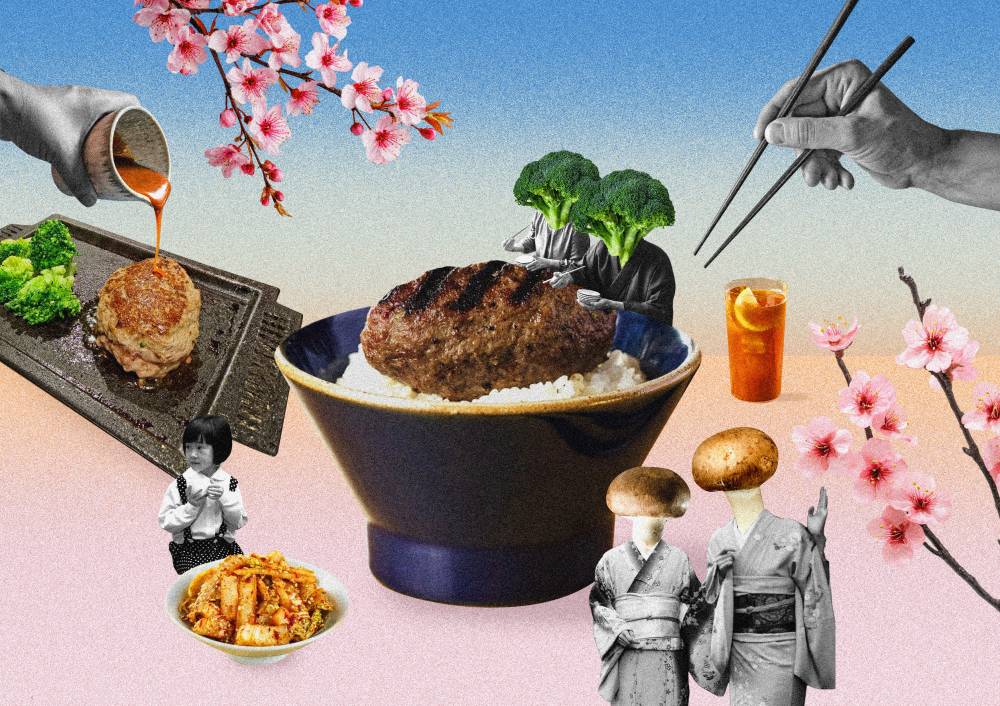
But there’s another trend that’s quietly making itself felt: the hamburg steak. Led by brands straight from Japan, the local food scene is seeing the elevation of the humble patty. And if the long queues, crowded restaurants, and positive reviews are any indication, it’s become a big hit.
So, what exactly is a hamburg steak?
At its heart, the hamburg steak (or the burger steak) is essentially a patty of ground beef—said to be made famous by German migrants in the late 1800s.
But how is it different from a hamburger? If the patty is sandwiched between a bun, it’s a hamburger. A patty becomes a hamburg steak when it’s served with a brown sauce or gravy.
Is it the same as the salisbury steak? Not exactly. The salisbury steak is always served with a gravy, which is not always the case with the hamburg steak. What’s more, the salisbury steak is usually made of ground beef mixed with fillers, such as egg, breadcrumbs, and other seasonings. Hamburg steaks are usually made up of minced beef with light seasoning.
Why it’s remained a Filipino favorite
The hamburg steak—more commonly known as “burger steak”—has long been a favorite of Filipinos. It’s common to find this humble dish served at home. In fact, with just a handful of inexpensive ingredients, it’s possible to make a hamburg steak. It pairs really well with rice, too, which is another staple of the Filipino diet.
The burger steak has become a staple of local fast food joints as well. In fact, when it comes to the fast food burger steak, Jollibee often comes to mind first.
Launched in 1995, Jollibee’s Burger Steak saw many variations through the years, including the Pepper Cream Burger Steak, Bistek Burger Steak, and the much-loved Ultimate Burger Steak, which was discontinued in 2020.
“Jollibee helped make it familiar and easy to understand,” restaurant consultant Cyrus Cruz says of Jollibee’s role in making the burger steak so popular. “It gave us Filipinos a reference point early on.”
The love for all things Japanese
It also helps that the hamburg steak is closely associated with Japanese cuisine, another favorite of Filipinos. Called “hanbaagu” in Japan, the dish was introduced to the country during the Meiji era and is typically served with rice and demi-glace or brown sauce.
Given the boom of all things Japanese in the local food scene as of late, it’s no surprise that the hamburg steak is becoming trendy here in the Philippines.
However, while Cruz acknowledges that the Filipinos’ love for all things Japan has contributed to the hamburg steak’s growing popularity locally, he notes that there are different layers to it and that the fascination “didn’t happen overnight.”
“It’s the result of a decade-long integration. If you look back at Japanese restaurants in the ’90s and early 2000s in the Philippines, they were mostly one-size-fits-all places with huge menus; like sushi, ramen, tempura, teppan, everything in one kitchen,” he explains.
“Over time, Japanese dining became more specialized: tempura-only, sushi-only, yakitori-only, teishoku, kissaten, izakaya, omakase, ranging from fine dining to kiosks,” he adds. “Japanese cuisine now touches almost every socioeconomic class in the Philippines, which makes it both aspirational and accessible. This means we’ve completely accepted this in our culture.”
The restaurants driving the trend
Cruz credits the arrival of three Japanese brands for boosting the appeal of the hamburg steak among Filipino diners.
“Normally, when we see a trend abroad, we try to replicate it locally. That’s always a 50/50 risk—some hit, some miss,” he points out. “What’s different this time is that we didn’t just copy the idea; we had three strong Japanese franchises lead the movement. That’s rare. It’s like having an all-star starting lineup right out of the gate.”
Cruz also highlights the importance of timing. “Three major players arriving in the same year created momentum,” he explains. “It suddenly felt like a category, not just a novelty anymore.”
It also helps that each of the three restaurants offers something that differentiates itself from the others, giving diners more than enough reason to try them all.
Tokyo’s Hamburg Yoshi, one of the three Japanese brands that opened in 2025, not only offers the premium Wagyu Hamburg, but it also has the Beef Tongue Hamburg. Unusual, yes, but this offering surely tickles the fancy of adventurous eaters.

There’s also Hikiniku to Come, which was founded in 2020 in Kichijoji. While there’s only one set that diners can order, the generosity of the meal is more than enough to fill the stomach. Each set is made up of three patties, raw egg, miso soup, daikon, condiments, and the Filipino favorite—unlimited rice.
And then, there’s Niku Niku Oh!! Kome, a brand opened in 2022 by one of Japan’s best-known F&B companies, Monogatari Corporation. Niku Niku Oh!! Kome is popular for its limited-time seasonal sets, such as the Gravy Mushroom Hamburg Steak and Thai Green Curry Hamburg, which allows the brand to innovate and continuously entice diners with something new on the menu.
“If those brands hadn’t come in strong, I don’t think Filipinos would’ve been as open to paying that price point for what, on the surface, could be dismissed as ‘burger steak,’” Cruz points out. “The Japanese context reframed it: better ingredients, clearer craft, and a more premium dining experience.”
Should entrepreneurs hop on the trend?
With the hamburg steak concept steadily becoming a trend in the country, it may get entrepreneurs thinking if this should become their next venture. And with three international brands already available, should entrepreneurs look to bring more to the Philippines?
“International franchises are exciting, but they’re also tough to sustain long-term. Franchise fees, expansion commitments, and strict brand rules can limit flexibility,” Cruz notes. “And the Philippine market is… let’s be honest, super demanding. We’re a little fickle. Our preferences change often. It would make it hard for an international franchise brand to pivot when needed.”
Cruz admits that he’s “very partial to local concepts,” and that this is an idea worth looking into.
“If a restaurateur has the patience and discipline, a locally built brand often has better longevity,” the restaurant consultant explains. “You have more control over costs, which allows for more accessible pricing. You can adjust the menu, respond faster to changing behavior, and localize without waiting for head office approval.”
Cruz emphasizes that, at the end of the day, one thing is true for any brand, regardless of whether it’s local or international.
“For a concept in Manila to survive, it has to be something people can enjoy routinely. Not just once in a while,” he says. “You should be able to go multiple times a month without friction, price-wise, location-wise, and experience-wise. That’s usually what separates a trend from a brand that lasts.”