

US tariff relief must not lead to complacency–analysts

Tariff exemptions for key exports to the United States should not breed complacency, as policy uncertainty could still threaten Philippine economic momentum, analysts said.
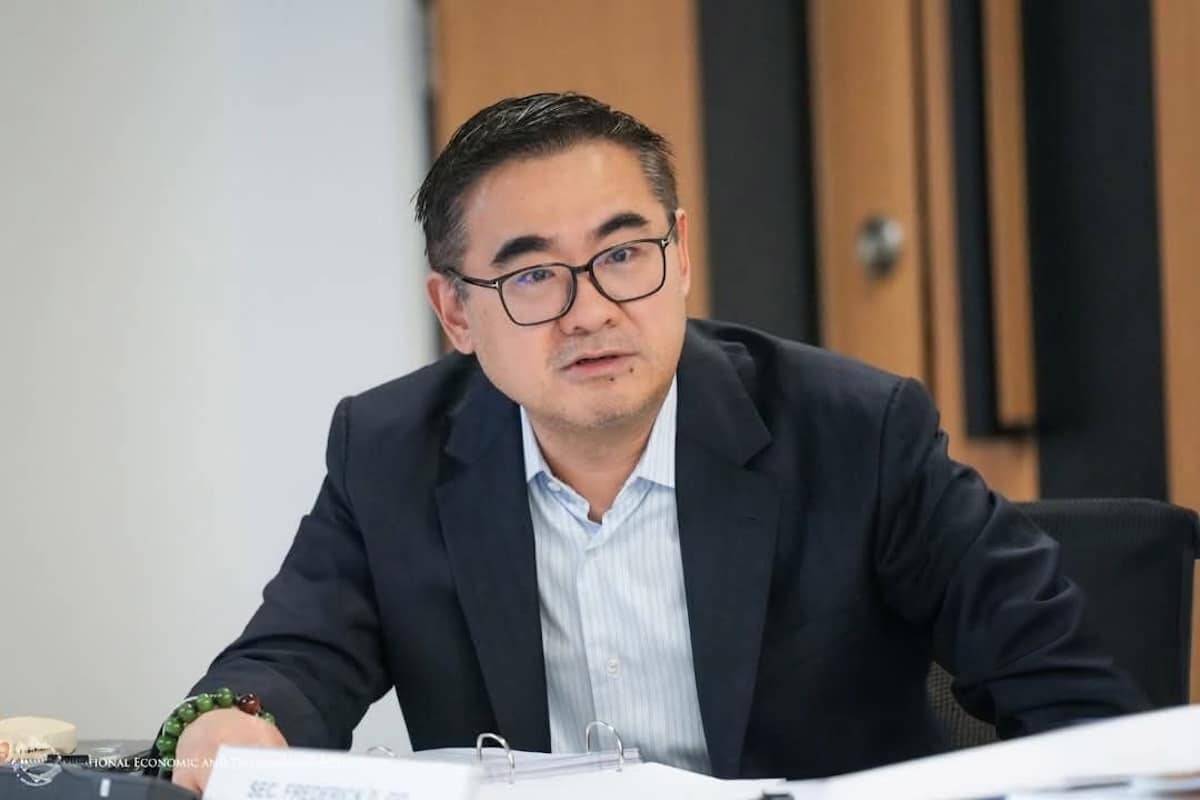
For his part, Finance Secretary Frederick Go assured that the government would continue engaging the US amid new tariff developments.
This comes after US President Donald Trump raised global import tariffs to 15 percent, a day after initially announcing 10 percent.
The flip-flopping was in response to a US Supreme Court ruling that struck down the reciprocal tariffs that Trump had imposed on more than 100 countries last year.
In a statement, Go said the Philippines would continue engaging the US as “they are an important trade and investment partner.” He explained that key exports such as semiconductors and agricultural products were already exempt from tariffs even before the ruling.
The US is the Philippines’ largest export market, with shipments totaling $13.44 billion in 2025, or 15.9 percent of the country’s total exports. Semiconductors, electronics and more than $1 billion in agricultural goods were spared from the 19-percent tariff originally imposed on the Philippines in August.
But some analysts said that these exemptions should not lead to complacency.
“A broad 15-percent global tariff, even if temporary and legally rerouted after the U.S. Supreme Court struck down a prior tranche, raises uncertainty [that] can compress margins for exporters—especially those in U.S.-linked supply chains like electronics and intermediate goods—and can still weaken demand via second-round effects on global growth and investment sentiment,” said John Paolo Rivera, senior research fellow at the Philippine Institute of Development Studies.
For Jonathan Ravelas, senior adviser at Reyes Tacandong & Co., the new levy is not a recovery killer but a momentum risk. The development is seen, especially significant as the Philippines is currently trying to rebound from a disappointing economic growth last year.
“Trump’s tariff flip-flops don’t derail the Philippine recovery, but they make it more difficult and uneven. The real issue isn’t the tariffs themselves—it’s the uncertainty. When U.S. trade policy keeps changing, companies delay investments, slow hiring and hold back expansion, and that spills over to us,” he said.
Ravelas added that the impact is mostly indirect and tempered by strong remittances, domestic consumption and services.
“That’s why policy stability, faster project execution and keeping investor confidence high matter even more this year.”

Meanwhile, Ateneo de Manila University economist Leonardo Lanzona said that as long as there is an opportunity to trade with the US, the arrangement remains mutually beneficial.
“Actually, our exports improved even when tariffs were supposedly higher under Trump. This suggests that tariffs are a minor concern for improving exports,” he said.
As it is, Filipino exports grew 4.6 percent to $7.1 billion in August 2025, the first month under the then-19-percent US tariff regime. This was the slowest pace of expansion in eight months, following an 11.2 percent decline in outbound shipments to the US.
But exports quickly rebounded the following month, surging 15.9 percent year-on-year to $7.25 billion. The US reclaimed its spot as the country’s top export market with $1.1 billion in shipments.
Exports continued to post year-on-year increases in the subsequent months, with the US remaining the highest-value market by the end of 2025.
“What matters more is whether our exports are raising productivity and whether their benefits or spillovers are affecting more of our industries,” Lanzona added.