









Highlights of ICC Confirmation of Charges Hearing

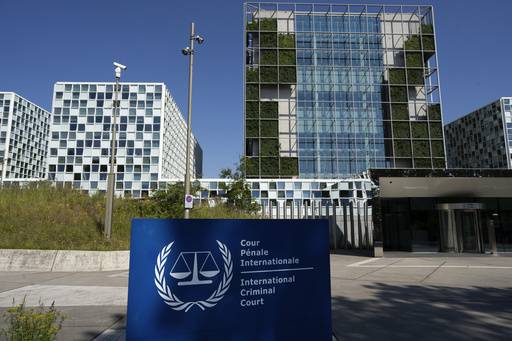
The purpose of the four-day confirmation hearing is to determine whether there are “substantial grounds to believe” that Rodrigo Duterte committed the crimes with which he is charged. If all or part of the charges are confirmed, the chamber will refer the case to trial, where Duterte’s guilt or innocence will be decided.
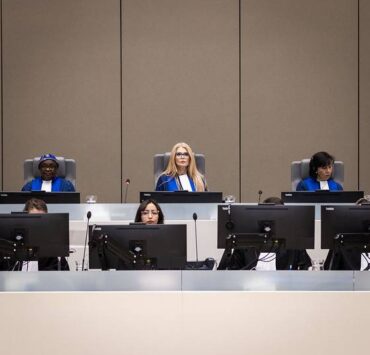
“The Chamber shall not take any decision with regard to the guilt or innocence of Mr. Duterte during this hearing,” Presiding Judge Iulia Antoanella Motoc said on the first day of the confirmation hearing.
The charges:
• Two counts of murder and one count of murder and attempted murder as crimes against humanity committed between 2013 and around June 2016, and between around July 2016 and September 2018 in the Philippines as follows:
– Murder of 19 victims alleged to be criminals, including three children who were killed in or around Davao City between 2013 and around 2016 by members of the Davao Death Squad (DDS) while Duterte was mayor;
– Murder of 14 victims labeled as high-value targets for their alleged criminality who were killed sometime between July 2016 and July 2017 by a network of perpetrators comprising state actors while Duterte was president; and
– Murder and attempted murder of 45 victims comprising 43 murders and two attempted murders of persons alleged to be criminals, including three children who were targeted in barangay clearance operations in locations across the Philippines, between around July 2016 and September 2018 by members of the national network while Duterte was president.
• The prosecution alleges that Duterte is individually criminally responsible for all three of the above counts as follows:
– As an indirect co-perpetrator, at least between Nov. 1, 2011, and March 16, 2019, Duterte and his co-perpetrators shared a common plan to neutralize alleged criminals, including individuals perceived or alleged to be associated with drug use, sale, or production, through violent crimes including murder. Duterte and co-perpetrators implemented this common plan through hierarchically organized structures in Davao City, Davao City police, and the DDS, and then the national network. Within the framework of the common plan, Duterte made essential contributions to the crimes by:
– Designing and disseminating the police to neutralize alleged criminals, both in his roles as mayor and during his presidential campaign and as president, including by endorsing the anti-illegal drugs campaign
– Establishing and overseeing the DDS
– Instructing and authorizing violent acts, including murder, to be committed against alleged criminals, including alleged drug dealers and users
– Providing personnel and other necessary logistic resources such as weapons, including those to be used in the execution of the crimes
– Appointing key personnel to positions that were crucial to the execution of the crimes
– Offering financial incentives to police officers and hit men to kill alleged criminals
– Creating and maintaining a system in which perpetrators knew they would be protected, including promises of immunity and shielding perpetrators from investigation and prosecutions
– Making public statements authorizing, condoning, and encouraging killings of alleged criminals, both as mayor and as president
– Authorizing state actors to take part in the antidrugs campaign
– Publicly naming individuals and holding up charge for lease of alleged criminals, including so-called high-value targets, some of whom were subsequently killed
– In the alternative, Duterte is charged with ordering and or inducing the charged crimes and/or aiding and abetting these crimes
Opening statement of prosecutors:
• Stated that Duterte was at the “very heart” of the common plan to neutralize common criminals in the country
• One of the first things Duterte did when he became mayor of Davao in 1988 was to create the infamous DDS. Duterte personally instructed DDS members that their mission was to kill criminals and suspected criminals, including “drug pushers.” The DDS carried this out from the charged period of 2011 to 2016.
– Duterte’s “criminal intent” was no secret, openly shared with the DDS and his co-perpetrators.
– Reiterating Duterte’s promise to eradicate criminality during his presidential campaign
– Reiterating Duterte’s old statement that he used to go around on a motorcycle looking for trouble so he could kill in Davao (November 2016)
– Evidence shows that Duterte’s Davao office provided some DDS members with a regular salary, and financial rewards were also given to direct perpetrators in the form of cash per head for killing. At a presscon in 2013, Duterte started the shoot-to-kill orders, and rewards were “legitimate tools of government to fight lawlessness.” Surrendering the criminal or their carcass would “double the price.”
– As creator and head of DDS, he had de facto control of the members. When Duterte became president, he became the leader of the country’s police forces, which allowed him to wield direct and de facto control over those executing the common plan. Duterte had the ability to interrupt commissions when he so chose. He successfully suspended police operations on two occasions following public outcries. On both occasions, the number of reported killings dropped significantly, showcasing his control. Duterte was well-aware of his authority over the co-perpetrators.
– An inside witness explicitly said that the police killed “because of the directive of the president.”
– Mention and reference to famous Inquirer “pieta” photo
– Duterte intended and knew the charged crimes were occurring. His intent and knowledge were known by his multiple statements throughout his mayoral and presidential tenure.
– Duterte made statements directly acknowledging the extrajudicial killings.
Opening statement of the legal representative of victims:
• The legal representative of victims convey the views and concerns of the 497 victims authorized to participate in the proceedings.
• Stated that Duterte smeared victims with allegations of other crimes, such as rape and murder. Duterte imposed the inflexible condemnation that if you were a drug personality, you were automatically a dangerous criminal who has engaged in unimaginable atrocities.
• The families of those killed were disgraced by association; even after the murders, the families were subjected to deplorable injustices. Causes of death were falsified. Other families were charged large amounts—including impoverished families—just to retrieve the bodies of their loved ones from funeral parlors that the families suspected of being in cahoots with police officers. Some family members were arrested and imprisoned by police officers on false charges and to prevent them from complaining.
• Evidence would show that the victims were often killed in their houses, walking along the street, and doing all ordinary and plain activities. Confirming the charges would bring justice and honor back to them and their families.
• The trauma caused to communities, especially the impoverished, is also immeasurable. In one instance, after a father was killed inside his house, the entire neighborhood was so traumatized that for almost three months, they abandoned their houses at night and slept in the public market as they did not feel secure in their houses because there would be no witnesses if they were killed. In the public market, the presence of many victims, they thought, would deter killings.
• In one operation, the police killed three men—two brothers and one friend—in the early morning. The police declared that the three fought back, but the neighbors saw otherwise. The whole neighborhood was horrified at the treatment of the fatalities. The bullet-ridden body of one of the three men was brought out from the second floor window and dropped to the ground because the police could not bring the body out through the doorway. When he hit the ground, the neighbors recoiled at hearing the body emit a cry of “Aray”; the man was still alive and was left to bleed to death.
• The police organization was transformed into a killing machine by Duterte. The PNP and drug enforcement agencies have not made any initiative to purify the minds of their officers.
• The trial would be a tremendous opportunity to educate the officers. The charges may help the country recover.
• The victims beseech the chamber to remember that Duterte’s regime in Davao and nationwide resulted in as many as 30,000 victims of killings, more than 300,000 victims of arbitrary imprisonment, and unaccounted numbers of victims of torture, sexual assault, and other forms of crimes against humanity. For many families in the Philippines, the charges brought for confirmation represent only a fraction of the reality of what the victims endured.
Defense’s opening statements:
• Claims that Duterte spoke “sincerely and truthfully,” unlike his successor in Malacañang (President Marcos).

• Alleged dishonesty from the current Philippine government in not assisting the ICC, due to the eventuality of Duterte’s “unlawful” arrest
• Refers to a transcript of a telephone call between four unnamed parties. One was boasting about how he was acting as the “silent partner” of Mr. Marcos, managing a scheme to funnel witnesses to the ICC while guaranteeing Mr. Marcos’ “plausible deniability.” Alleges that Mr. Marcos attempted to “neutralize” Duterte and his legacy.
• Geopolitical context: the scourge of illegal narcotics is not unique to the Philippines. The death rate from narcotics-related crime allegedly increased after Duterte left.
• Defense alleges that journalists and the media sensationalized the crimes.
– The speeches are being “cherry-picked” for the prosecution.
• Refers to Duterte’s quote condemning “abuse of authority” in the police force, etc. as exonerating evidence
– Another 10 out of the 20 speeches from the prosecution contain exonerating evidence. A total of 45 speeches that support self-defense, 50 percent more speeches in support of the defense.
– Says that the prosecution must show substantial grounds to believe that Duterte desired and foresaw that people would be killed as a result of his incendiary language.
– Duterte’s language was aimed at those poisoning society, intending to instill fear in their hearts; this intent is allegedly not criminal.
Statement of the prosecution’s submission on the merits:
• The statement claimed that the defense would point to many instances of Duterte building plausible deniability that his officials must only shoot to kill in self-defense. Those references appear all over Duterte’s speeches. The references are not cherry-picked, but acknowledged. However, it was stated that the evidence would overwhelmingly show that the references to following the law, etc., are nonsense. He created a death squad, and, according to the statement, was not interested in due process; it was to give his lawyers something to say, but his message was clear and followed by the perpetrators.
• Disregard every speech by Duterte and there is still substantial grounds and evidence.
– There are countless victims who have experienced harm, but the charges were focused on 49 victims so the trial may be expeditious. The charged murders are emblematic of Duterte’s regime.
– This stage of the proceedings is not the time for the chamber to determine the credibility of witnesses.
• Duterte embraced criminality from the beginning of his career. The prosecution claimed that he taught police officers to plant evidence, a “necessary evil.” He is willing to do whatever he considers is the “necessary evil.” Duterte confirmed later in 2024 that this planting of evidence was “part of strategy.”
• Duterte intended and bragged about his criminality right up to his arrest.
• Duterte chose not to face the court, and there was no other reason for him not to be present.
• As mayor of Davao City, Duterte promised to crack down on crime. He created liquidation squads and death squads made of officials and hit men, and the system became known as the “Davao model.”
• Duterte did not commit his crimes alone. Cited Bato dela Rosa, Vicente Danao, Bong Go, Dante Gierran, Vitaliano Aguirre II as co-perpetrators, to be discussed later.
• The structure of the DDS (mayoral period): Duterte -> other co-perpetrators -> DDS handlers -> DDS members (police and non-police hit men). Duterte’s permission was required for DDS members to carry out their jobs.
• Duterte repeatedly promised to kill people if elected president, and did exactly as he said he would.
• Within 60 calendar days after the hearing concludes, the judges will issue a written decision on whether to proceed. They may confirm some or all of the charges and commit the case to trial before a Trial Chamber; decline to confirm the charges and halt proceedings; or adjourn the hearing and request additional evidence or amendments.