


Caribbean leaders gather for key summit

Caribbean leaders met on Tuesday in St. Kitts and Nevis to debate pressing issues, including the region’s relationship with the US government, which has continued to strike suspected drug boats in the area, killing local fishermen.
US Secretary of State Marco Rubio is expected to meet with Caribbean leaders on Wednesday as part of the four-day regional summit.
The meeting comes as Caricom, a 15-member regional trade bloc, complains about tough US policy decisions imposed on the region in the past year. They include that nations accept third-country deportees, reject Cuban medical missions, chill relations with China, and consider allowing US military hardware in the Caribbean.
Caricom also has complained about the suspension of US immigrant visa processing for Dominica and Antigua and Barbuda, and about pressure to cut back on passport and citizenship by investment programs.
Evolving interests
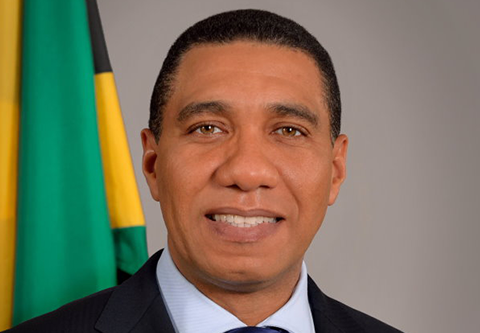
During Tuesday’s opening ceremony, Jamaican Prime Minister and outgoing Caricom Chair Andrew Holness noted that evolving geopolitical interests can challenge the sanctity of borders in the Caribbean.
“Every member of Caricom has the right to decide how best to defend its territory and maritime domain,” he said.
Caribbean leaders are meeting at a time that the administration of US President Donald Trump also has tightened an embargo on Cuba, which has implemented fuel-saving measures after oil shipments from Venezuela and Mexico were halted.
“We must address the situation in Cuba with clarity and courage,” Holness said. “Cuba is our Caribbean neighbor. Its doctors and teachers have served across our region.”
He said Cubans are facing “severe economic hardship, energy shortages, and growing humanitarian strain,” adding that suffering serves no one.
“It must be clear that a prolonged crisis in Cuba will not remain confined to Cuba,” Holness warned. “It will affect migration, security, and economic stability across the Caribbean basin.”
He noted that Jamaica “stands firmly for democracy,” and that “sustainable prosperity requires openness to ideas, to enterprise, to investment, to the will of the people.”
Bahamian Foreign Minister Fred Mitchell told The Associated Press (AP) on Tuesday ahead of the summit that he doesn’t know if individual topics will come up with Rubio, but said he expects a full discussion on the nature of the relationship with the power to the north.
Mark Kirton, a retired international relations professor formerly with the University of the West Indies, said the summit is “crucial for Caribbean unity … to let Mr. Rubio know that we are speaking with one voice.”
Coordinated responses
At a recent meeting of eastern Caribbean nations, Godwin Friday, prime minister of St. Vincent and the Grenadines, said the region needs to stick to coordinated responses on key issues like security and deportees from the United States headed to the Caribbean.
“We have been approached with respect to that. We have been presented with a memorandum of understanding for us to review,” he recently told local, state-owned NBC Radio. “Caricom and the Organization of Eastern Caribbean states were put together for a purpose, and we must use that in a way for us to seek to have common approaches.”
The US Department of State has not said which officials Rubio would meet with on Wednesday, but noted he intends to discuss ways to promote regional security and stability, trade and economic growth in group and bilateral meetings.

Caribbean leaders also are expected to talk about other issues including security, reparations, climate change, and financing, and a single market economy.
Drug cartels
Rubio’s scheduled visit comes more than a month after the United States attacked Venezuela and arrested its then leader, Nicolás Maduro, who pleaded not guilty to charges of working with drug cartels to facilitate the shipment of thousands of tons of cocaine into the United States.
The United States also has killed at least 151 people in strikes that began in early September and target suspected “narco-terrorists” in small boats. Many of the victims are from the Caribbean.
The United States has not provided evidence that the targeted boats are ferrying drugs, and families of those killed in the Caribbean have decried the attacks.
Kamla Persad-Bissessar, Trinidad and Tobago’s prime minister, has previously praised the attacks. Tuesday was no exception as she thanked Trump, Rubio, and the US military “for standing firm against narcotrafficking” and for their cooperation in national security matters.
Cuba’s situation also is expected to dominate talks at Caricom’s summit.
On Monday, Cuba’s UN Resident Coordinator Francisco Pichón told AP that the US oil embargo is preventing aid from reaching those still struggling to recover from Hurricane “Melissa,” which struck eastern Cuba in late October as a Category 3 storm.