


Gulf countries fret over Iran strikes

The Trump administration is confronting mounting discontent from allies in the Persian Gulf who have complained they were not given adequate time to prepare for the torrent of Iranian drones and missiles bombarding their countries in retaliation for strikes launched by the United States and Israel.
Officials from two Gulf countries said their governments were disappointed in the way the United States has handled the war, particularly the initial attack on Iran last Saturday. They said their countries were not given advance notice of the US-Israeli attack and complained the United States had ignored their warnings that the war would have devastating consequences for the entire region.
One of the officials said that Gulf countries were frustrated and even angry that the US military has not defended them enough. He said there is belief in the region that the operation has focused on defending Israel and American troops, while leaving Gulf countries to protect themselves and said that his country’s stock of interceptors was “rapidly depleting.”
Like others in this story, the Gulf officials spoke on condition of anonymity because they were discussing a confidential diplomatic matter.
The governments of Saudi Arabia, Kuwait and Bahrain, did not respond to requests for comment.
Muted reactions
Official reactions by the Gulf Arab countries have been muted, but public figures with close ties to their governments have been openly critical of the United States, suggesting that Israeli Prime Minister Benjamin Netanyahu dragged President Donald Trump into a needless war.
“This is Netanyahu’s war,” Prince Turki al-Faisal, the former Saudi intelligence chief, told CNN on Wednesday. “He somehow convinced the president (Trump) to support his views.”
Pentagon officials conceded this week in closed-door briefings with lawmakers they are struggling to stop waves of drones launched by Iran, leaving some US targets in the Gulf region, including troops, vulnerable.
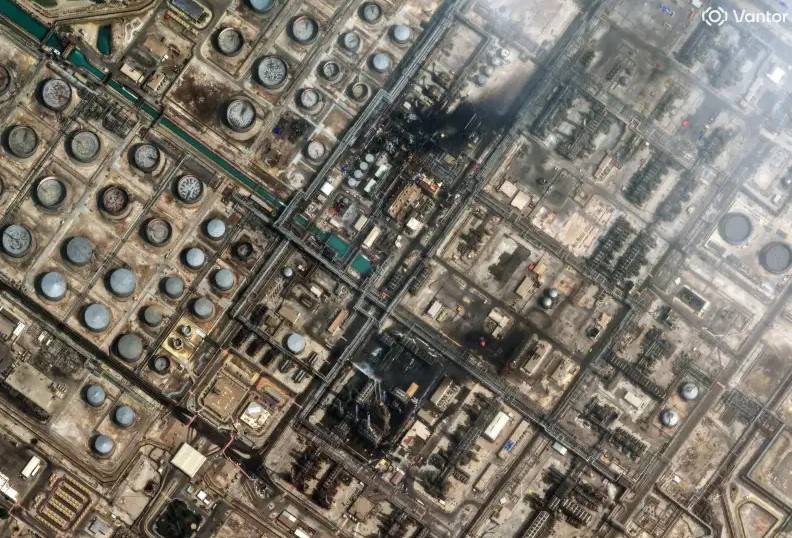
The Gulf countries have emerged as valuable targets for Iran, well within the range of Iran’s short-range missiles and filled with targets, including American troops, high-profile business and tourist locations, and energy facilities, disrupting the world’s flow of oil.
Since the start of the war, Iran has fired at least 380 missiles and over 1,480 drones targeting the five Arab Gulf countries, according to an Associated Press (AP) tally based on official statements. At least 13 people have been killed in those countries, according to local officials.
Waves of drones
In briefings for members of Congress on Tuesday, US Defense Secretary Pete Hegseth and Gen. Dan Caine, chair of the Joint Chiefs of Staff, told lawmakers that the United States will not be able to intercept many of the incoming unmanned aerial vehicles (UAVs), especially the Shaheds, according to three people familiar with the briefings.
In one of the briefings, Caine and Hegseth did not offer any details when pressed by lawmakers why the United States did not seem prepared for Iran to launch waves of drones at US targets in the region, according to one of the people.
The United States and its allies in the Middle East on Thursday even sought help from Ukraine, which has expertise in countering Iran’s Shahed drones, according to Ukrainian President Volodymyr Zelenskyy.

When asked about Zelenskyy’s comments, Trump told Reuters on Thursday, “Certainly, I’ll take, you know, any assistance from any country.”
Bader Mousa Al-Saif, a Kuwait-based analyst with Chatham House, said the United States appeared to have underestimated the risk to its Gulf Arab allies, believing American troops and Israel would be the primary targets of Iranian retaliation. The lack of a plan to protect the Gulf countries “speaks to US short-sightedness,” he said.
Michael Ratney, a former US ambassador to Saudi Arabia, said that while the Gulf countries have an interest in seeing Iran weakened, they also have key concerns about the ongoing war—including the economic damage and instability it is causing and its open-ended nature.
“What comes next? The countries of the Gulf will have to bear the brunt of whatever that is,” Ratney said.
******
Get real-time news updates: inqnews.net/inqviber