





Four-day work week starts in some gov’t offices

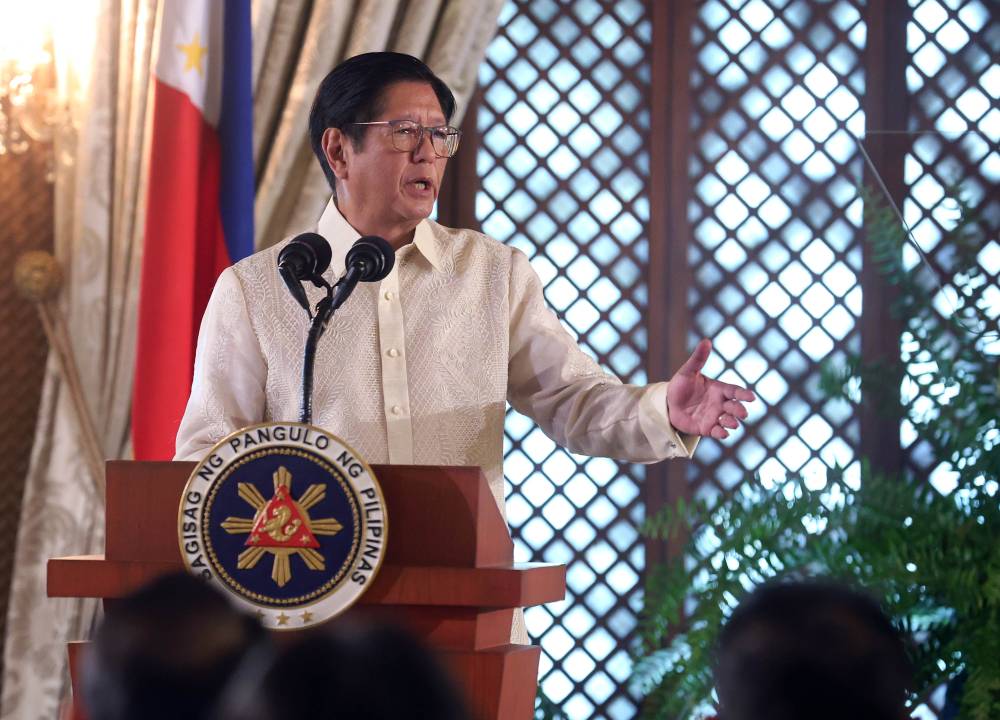
President Marcos on Friday announced the implementation of a four-day work week in offices of the executive branch starting March 9, amid rising fuel costs linked to tensions in the Middle East.
The President said the temporary measure was part of the government’s efforts to conserve energy and reduce fuel consumption as global oil price surges following the escalation of conflict in the oil-producing region that started last week when Israel, backed by the United States, attacked Iran.
“For the government’s part, starting Monday, March 9, we will temporarily implement a four-day work week in some offices of the executive branch. This will not include those providing emergency or essential services, such as the police, firefighters, and offices that provide front-line services to the public,” Mr. Marcos, speaking in Filipino, said in his message.
“In addition, I am directing all government agencies to conserve and reduce electricity consumption and petroleum expenses by 10 to 20 percent,” he added.
Mr. Marcos also temporarily prohibited unnecessary government travel and activities, such as meetings that can be conducted within offices.
The four-day onsite work arrangement under the Memorandum Circular No. 114 likewise aligns with the Civil Service Commission Memorandum Circular No. 6 (s. 2022), as amended by CSC Memorandum Circular No. 1 (s. 2025).
The arrangement will remain in effect “until lifted or sooner revoked by the President.”
“For this purpose, all agencies are hereby directed to formulate their respective internal guidelines to ensure proper monitoring and documentation, including verification of attendance, and performance standards and monitoring mechanisms, in accordance with existing CSC laws, rules and regulations,” the circular reads.
Some government agencies have already begun implementing similar measures.
Starting March 13, the Department of Trade and Industry will shift its Makati City offices to a remote work arrangement “in view of the current situation in the Middle East and its projected impact on global fuel prices.”
For private sector workers, alternative work arrangements are allowed under Republic Act No. 11165, or the Telecommuting Act, passed in 2018.
Caution
But the country’s largest business group called for caution in applying the four-day work week scheme to the private sector.
In a statement, the Philippine Chamber of Commerce and Industry (PCCI) said that while it is open to the proposal, such a policy must be calibrated to suit the needs of individual industries.
“We are not against the implementation of flexible work arrangements but there should be proper consultation with various stakeholders and supported with data to ensure that industries with specific operational requirements will not be adversely affected,” said PCCI president Ferdinand Ferrer.

Sen. Sherwin Gatchalian earlier proposed compressing the five-day work week into four days or expanding work-from-home arrangements to help ease the burden of rising oil prices on the public.
The PCCI, however, said that imposing a blanket four-day work week could do more harm than good for certain sectors.
“For manufacturing, we have been operating on limited resources and further reducing the number of work days could affect our commitments,” Ferrer said.
Any measures aimed at reducing workdays must be “evidence-based and sector-sensitive,” the PCCI said, adding that it was willing to engage with lawmakers and labor groups to further review the policy.
The government had previously resorted to reduction of work days to cope with the oil crisis.
During the Gulf War in 1990, the Department of Labor and Employment implemented a four-day work week for the specific purpose of averting further damage to the economy as brought about by the oil crisis at that time. —WITH A REPORT FROM INQUIRER RESEARCH