










The grace of conversion

March 8, 2026 – Third Sunday of Lent
Readings: Exodus 17:3-7; Psalm 95, R. If today you hear his voice, harden not your hearts.; Romans 5:1-2, 5-8; Gospel – John 4:5-15, 19b-26, 39a, 40-42
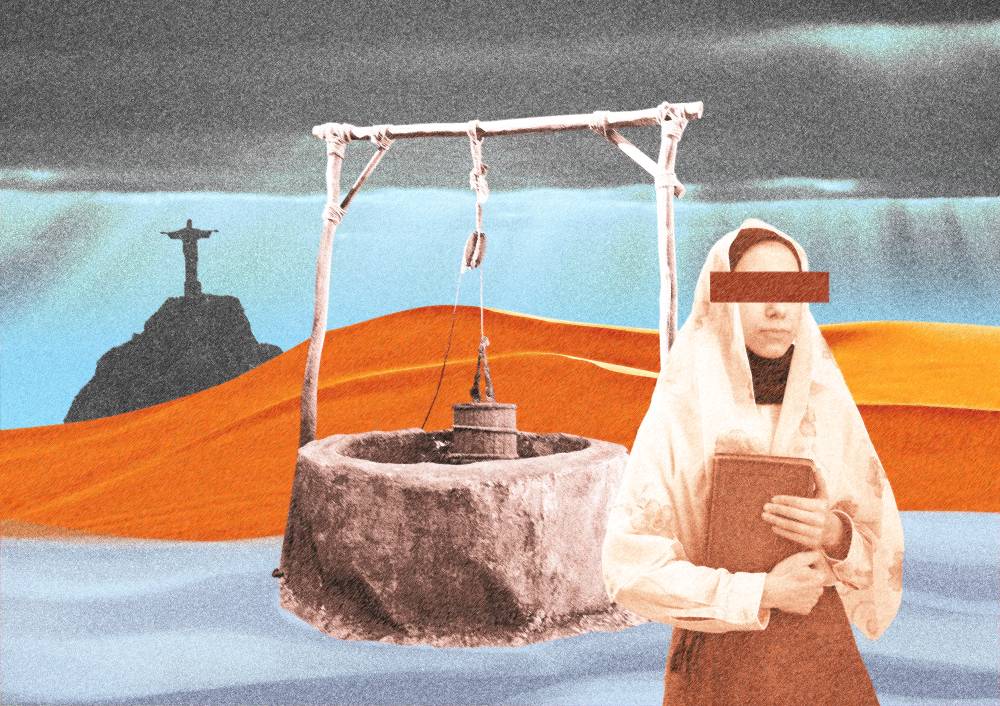
According to scripture commentators, this story of the Samaritan woman and Jesus at the well is one of three or five heavily theological passages in John. But as we sift through the details and meaning, we see some of the most basic elements of our faith.
One is the universality of the church. Two is the common ground that unites us. Then three is the grace of conversion.
The Samaritans and the Jews were at odds with each other. The split resulted from a series of differences—political, religious, and ethnic.
The Jews saw them as ethnically impure as they intermarried with foreigners and heretical because of a rival temple the Samaritans built in Mount Gerzim. Politically there was the division between the northern and southern kingdoms.
Jesus and the Samaritan woman meeting and carrying a conversion is symbolic of Jesus reaching out to “others” and this pre-figuring the universality of the church.
He brought down all barriers, including gender, when he spoke to the woman and asked her for a drink. The woman herself was surprised by this, since Jews who drank water that came from a Samaritan would be rendered unclean.
Amid her wondering, Jesus pointed out personal details about the woman. This made her realize that this man she was talking to was a prophet and later she professed her belief in him as the Messiah.
This Samaritan woman was united with Jesus the Messiah. This strikes me as a concrete manifestation of what Jesus proclaimed as his mission to go and reunite the lost house of Israel.
This became for the one holy, catholic and apostolic church, a church that crossed boundaries and brought down barriers.
The place where the woman and Jesus met we can consider as common ground, literally and symbolically.
It was a well given by Jacob, which both the Jews and Samaritans acknowledged. It was also a place that responded to a shared human need: to draw water to quench their thirst.
This was common ground, a shared heritage in Jacob and a shared humanity that needed water to drink. Within the common ground, dialogue was possible and did take place.
The Preface for today’s Mass put it very succinctly, “For when he asked the Samaritan woman for water to drink, he had already created the gift of faith within her and so ardently did he thirst for her faith, that he kindled in her the fire of divine love.”
It was this dialogue—made possible by a common ground—that led to the conversion of the woman. Her conversion in turn led to the conversion of many in the Samaritan town.

“Many more began to believe in him because of his word, and they said to the woman, ‘We no longer believe because of your word; for we have heard for ourselves, and we know that this is truly the savior of the world.’”
This Sunday’s Gospel is so apt to our situation where there is so much division. And even with groups supposedly one, there is so much fragmentation.
Much to learn from this Gospel. We need to go back to the roots of our aspirations, dreams and hopes. Perhaps in doing so we will discover there are more elements we share than divide us.
As Archbishop Desmond Tutu and the Dalai Lama pointed out, it is when we discover our shared humanity that we attain humility. It is this humility that will make us see our need for one another, to live as one as brothers and sisters because we hunger and thirst for the same things at our core, fundamental things.
What began as a search for a purely physical need to quench one’s thirst, the encounter between the Samaritan woman and Jesus transformed it to a deep moment of grace.
The grace of conversion created a world where the differences were transformed into a return to the one thing two “opposing” factions had longed for.
In encountering Jesus, their waiting and search for the Messiah united them to all men and women of goodwill.
This is a grace available to us. We too must return to our shared aspiration, dreams and hopes, as a people, as a church and as one human family.