










Enough of flawed urban structures

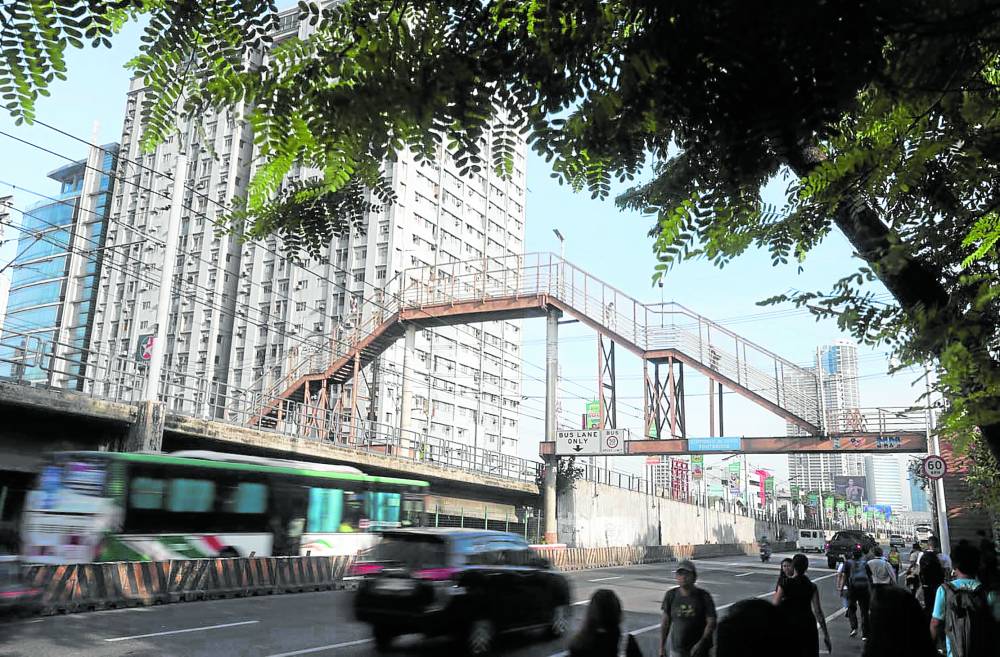
It is the final days for “Mt. Kamuning,” the much-derided footbridge in Quezon City that has become some sort of an icon of flawed urban structures.
President Marcos inspected this week the newly completed P87.3-million Kamuning Footbridge and Busway Station that will replace the 7-year-old structure built in 2018 during the Duterte administration, which gained infamy and notoriety for being unsafe and extremely inconvenient to use.
The old footbridge cost P10 million to build and was contracted to a company owned by the late former Metropolitan Manila Development Authority (MMDA) chair Bayani Fernando. It quickly became the subject of mockery, with some likening it to climbing Mount Everest because of its steep ascent and height of 9 meters (about 29 feet), thus its name Mt. Kamuning.
It has also been cited as an example of hostile infrastructure that, instead of providing easier navigation, ended up as risky, especially for senior citizens, pregnant women, and persons with disabilities (PWDs). It boggles the mind how the MMDA defended it at the time as a “safe option” for pedestrians crossing major thoroughfares, when smart engineering could have offered better and safer alternatives.
A daily reality
Climbing steep footbridges or playing tag with cars on busy thoroughfares are a daily reality for pedestrians who are forced to make do with poorly planned infrastructure.
Roadside warning signs telling the public not to cross (“Bawal tumawid, nakakamatay”) are ubiquitous and meant to prevent jaywalking and to encourage the use of designated crossings and footbridges. That many pedestrians still risk their lives in crossing a busy road may not only be attributed to their lack of regard for safety and the law, but could also be symptomatic of the lack of accessible facilities nearby.
An example of a flawed structure is the BGC-Ortigas Bridge (Kalayaan Bridge), which was built to link the two major business districts. It has been deemed dangerous because it lacks adequate sidewalks where pedestrians can walk safely without being too close to fast-moving vehicles. It does serve its purpose for motorists, reducing the travel time between Bonifacio Global City and Ortigas to about 10 minutes, although it has also become another source of vehicle congestion and bottlenecks. Nonetheless, this only further proves that most infrastructure in the Philippines is indeed car-centric.
Dodgy and low-quality
Epifanio delos Santos Avenue or Edsa, the metro’s main thoroughfare, is another example of an unfriendly highway, where the sidewalks are either narrow or nonexistent. The law requires pedestrian sidewalks to be at least 1.2 meters or 4 feet wide, but even the bare minimum is seldom followed.
For many Filipinos, flawed, unsafe, and hostile infrastructure is not only part of their lived reality but also a reminder of how taxes are wasted on projects where kickbacks for unscrupulous officials and contractors are prioritized over public welfare. As the flood control projects scandal has shown, anywhere from 25 percent up to 70 percent of the billions of funds are lost to corruption, and what remains of the budget would have to be stretched to buy the materials. This often results in dodgy and low-quality outputs that could lead to accidents, like the collapse of the Cabagan-Santa Maria Bridge in Isabela last year due to design flaws and overloading. That bridge was originally allocated P1.8 billion, but was reduced to P1 billion.
The old Kamuning footbridge, on the other hand, used metal as a material because, per the MMDA, it was easier to construct and cheaper. It would shake whenever pedestrians climbed the steep stairs or vehicles passed below.
Efficient transport network
But the completion of the new, more durable Kamuning footbridge, as the President himself said, is a testament that improvements are doable. “Ito naman ay kaya naman palang gawin. Hindi naman ganoon kahirap at basta’t desidido tayo na ayusin natin ang commuter experience (This is something that can be done. It’s not that difficult, and as long as we are determined to improve the commuter experience),” Mr. Marcos said.

The new footbridge and busway station, part of the Edsa busway modernization, also features an elevator and a wheelchair lift, making it inclusive for seniors and PWDs.
Nothing less than this commitment to safe and functional infrastructure should be expected in the ongoing construction of the Metro Manila Subway, MRT-7, North-South Commuter Railway, LRT-1 Cavite Extension, and the MRT-4 linking up to Bulacan in the north and to Cavite in the south. After all, structures meant for pedestrian use are an integral part of an efficient transport network. This includes modern transport hubs, walkable sidewalks, pedestrian underpasses, and elevated walkways or footbridges.
The Mt. Kamuning atrocity is a stark reminder of how the government has failed the public. Its demolition should also signal the end of the era of dysfunctional and life-threatening urban structures in the country.
******
Get real-time news updates: inqnews.net/inqviber