





From student leader to ESG guru

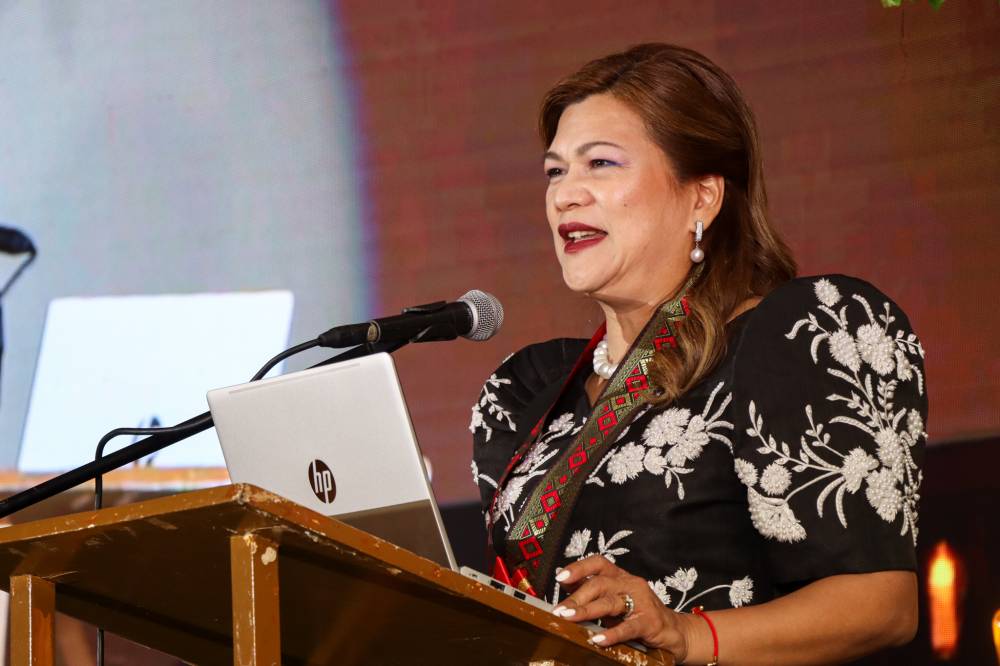
In the high-pressure world of the stock market—where fortunes rise and fall within minutes—Jo Ann Bueno-Eala earned an unusual nickname.
“The woman with balls,” capital market colleagues called her. It was not meant as a slight. It was an acknowledgment.
At a time when stock trading floors were dominated by men and billions of pesos in retirement funds were at stake, Eala was one of the few women willing to stand at the center of that volatility—buying, selling and making decisions that could move vast sums of money.
Years later, that same resolve guided her into a different kind of challenge. As vice president and head of sustainability office at the Bank of the Philippine Islands (BPI), Eala now works to ensure that the oldest bank in Southeast Asia devotes much-needed resources for environmental protection, climate resilience and inclusive growth.
To date, BPI has built a sustainability portfolio topping P1 trillion and earned numerous awards for it.
For Eala, sustainability is more than a job. It’s an advocacy as much as a business proposition.
“Don’t tell my bosses, but it’s something I’d do for free,” she says.
From quiet student to activist voice
Long before embracing sustainability, Eala’s story began somewhere far removed from financial markets: a shy girl who barely spoke.
An introvert in her younger years, she was someone who knew the answers in class but refused to raise her hand unless called.
That changed unexpectedly when she found herself drawn into a theater club during her school days.
“I was crying because I didn’t want to proceed with the audition,” she recalls. Yet theater became the turning point that pushed her to speak up and find her voice.
Soon, she was no longer the silent student.
As a student leader at the University of the Philippines (UP) Manila during the turbulent years surrounding the assassination of Benigno Aquino Jr., Eala became active in campus movements and alliances of student organizations.
“It was a situation that made speaking out almost inevitable,” she says, recalling how political realities at the time shaped her generation’s activism.
She led coalitions, organized fellow students and spoke out on issues of inequality and social justice. She authored a number of chants that still resonate to this day: “Edukasyon, edukasyon, karapatan ng mamamayan! (Education is every citizen’s right.)”
Those early experiences with advocacy planted the seeds of leadership that later defined her career.
The leap into finance
After graduating with a degree in economics at UP—where she finished among the top of her class and received leadership and service awards—Eala entered the world of finance.
She began with economic and stock market research, developing skills in forecasting stock prices and analyzing market behavior at Pryce Securities.
Her expertise soon made her stand out. In 1991, she became the first Filipino sent abroad to study technical analysis—a discipline used to forecast stock movements—and eventually moved from analyst to trader, and then to fund manager.
By the early 1990s, she was managing investments worth billions of pesos, including retirement funds. The work demanded stamina and nerves of steel.
“The stock market can go up or down very quickly,” she says. “You would see people having heart attacks.”
The stakes were immense. A single move could mean hundreds of millions of pesos gained—or lost.
A woman in a man’s game
The finance industry of the 1990s was largely male-dominated, particularly in high-risk areas like trading and fund management.
Eala did not just enter that space—she thrived in it.
The reputation of being “the woman with balls” referred to her willingness to make tough decisions in volatile markets.
But the courage she displayed in finance, she believes, had been shaped long before she stepped onto the trading floor.
“As a student activist, you can be as abrasive as you want,” she says. “But in corporate life, you have to learn how to communicate differently.”
That meant unlearning certain habits—sharpening her language, refining how she spoke with clients and colleagues, and navigating the culture of large financial institutions.
What remained constant, however, was her conviction.
The same courage that once drove her to lead student alliances guided her through financial crises, volatile markets and the responsibility of managing other people’s money.
In 1996, she joined Far East Bank and was absorbed by BPI in 2000 following the merger of these two banks.
Discipline beyond the trading floor
Eala’s dedication to her work was legendary among colleagues.
She once joked that she rarely fell ill during trading hours—only after the markets closed. Even during deeply personal moments, the gravity of her responsibilities remained in her mind.
“Billions of people’s retirement money were in my hands,” she says.
The discipline and focus required in fund management were immense, especially before the age of modern technology.
Research meant manual analysis. Data were written on boards using chalk. Computers ran on large floppy disks.
Yet Eala persisted, eventually becoming a founding member of the Fund Managers Association of the Philippines in 1997.
From markets to sustainability
Over the years, Eala’s career evolved alongside the financial sector. At BPI, she had held roles in asset management, trust, corporate banking and corporate planning before eventually leading the bank’s sustainability initiatives.
Today, as head of BPI’s sustainability office, she oversees the development and implementation of environmental, social and governance (ESG) strategies. She previously led the bank’s Sustainable Development Finance program, which supports projects in renewable energy, climate resilience, green buildings and sustainable agriculture.
Under these initiatives, BPI has built a portfolio of green and social loans supporting the United Nations Sustainable Development Goals.

Those efforts haven’t gone unnoticed.
In 2025 alone, BPI bagged 28 awards for sustainability (up from 24 awards in 2024), including the 1st Inquirer ESG awards, as well as gold awards at the Asia ESG Positive Impact Awards at the Asia ESG Summit in Malaysia.
In February this year, BPI landed on TIME magazine’s 2026 Asia-Pacific’s Best Companies list, the highest ranked among Philippine companies because sustainability was one of the three criteria.
Eala now spends much of her time teaching sustainability within the bank and beyond, helping ensure that ESG principles are embedded in financial decision-making.
Sharing her expertise in sustainability is something she would like to continue once she bows out of banking, says Eala, who just recently turned 60 and is nearing her retirement.
“From the streets to the boardroom, the mission remains the same, building a better Philippines one community at a time,” she says.
A message for women
Looking back, Eala sees women bringing unique strengths to leadership.
Women, she says, often excel at multitasking and attention to detail—skills that are invaluable in complex industries like finance. But beyond technical capability, she believes women also bring something equally important: empathy.
“The ability to speak is the same for men and women. But I think it’s the heart—the empathy, the understanding of what others are feeling. I think women have a softer heart. So, that advantage or the many strengths of women should make them thrive even more,” she says.
That empathy, she stresses, is particularly visible in fields like sustainability, where many women now play leading roles.
Courage learned and cultivated
For Jo Ann Eala, courage was never something she was simply born with. It was learned — learned on theater stages where a timid student first found her voice, learned in protest rallies where conviction mattered more than fear, and later, learned again on trading floors and boardrooms where decisions carried the weight of billions.
Step by step, she cultivated the courage to speak, to decide and to lead.
Her journey—from a quiet student who once refused to raise her hand in class to a leader in finance and sustainability—mirrors the quiet but determined rise of women in spaces that once left them out.
And as we mark International Women’s Day’s, Eala’s story offers a reminder that leadership does not always begin with certainty or confidence.
Sometimes, it begins with hesitation—with a reluctant audition.
And sometimes, with a woman who discovers—voice trembling at first—that courage can be learned.
And once learned, it can move markets, institutions and the lives of others.
******
Get real-time news updates: inqnews.net/inqviber