








Checking private wharves still a deep challenge for Customs

Billions of pesos worth of smuggled goods are intercepted in major ports across the country each year, with customs authorities stepping up efforts to curb illegal shipments.
But while the nation’s eyes are on the main access points, other entrances, like private wharves, largely remain under the radar.
These wharves—some tucked away in resorts—have emerged as a potential weak point in the Philippines’ antismuggling campaign. The Bureau of Customs (BOC) has acknowledged that such facilities can be difficult to monitor due to their hidden locations and less regulated nature.
By the agency’s count, about 232 private wharves operate across the country. While the agency has legal jurisdiction to regulate them under the Customs Modernization and Tariff Act (CMTA), BOC Commissioner Ariel Nepomuceno said the reality is complicated: If the wharves are not engaged in commercial activity, monitoring becomes difficult, especially when owners are wealthy and influential.
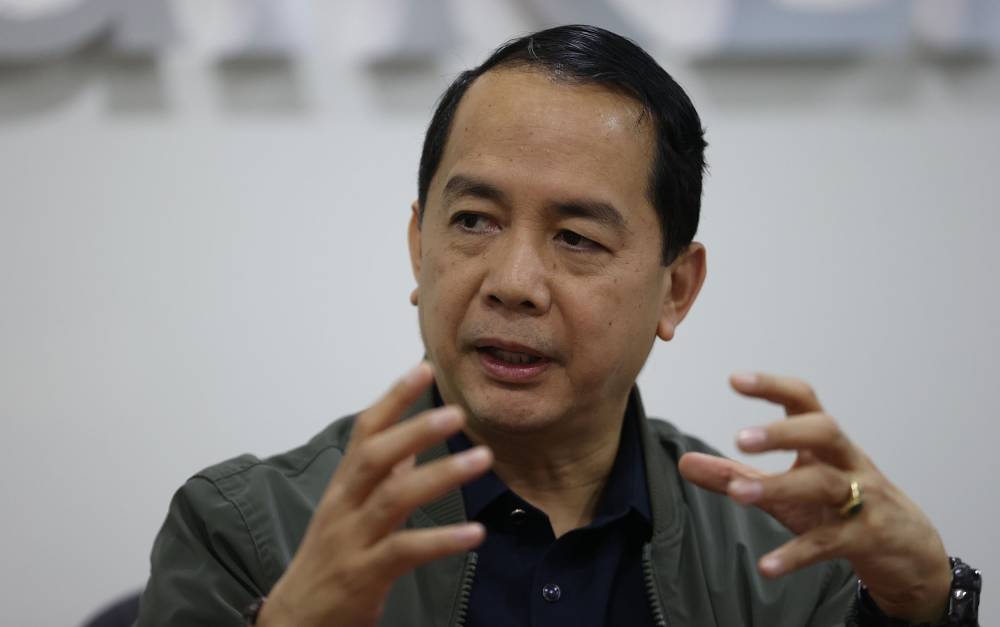
“The honest answer is, we don’t have the manpower to do that (monitoring),” he told the Inquirer during a roundtable discussion.
“This is something we have to catch up with. It’s one of our country’s vulnerabilities, the private wharves,” he added, noting that the agency has measures in place to strengthen BOC’s position.
Because some private wharves do not handle containerized shipments, Nepomuceno noted, it is possible that smaller items, such as cigarettes, illegal drugs and petroleum, could be coursed through them undetected.
Recently, in Zamboanga, a district collector reportedly linked over 100 private wharves to local politicians, making efforts to curb smuggling of rice and cigarettes nearly impossible.
Satellite imagery
To date, no formal customs operations have been conducted in private wharves, unlike in traditional ports. There is also no data yet from the BOC on the value of smuggled goods that may have passed through private wharves, or how many of these facilities are owned by politicians.
As a response, Nepomuceno said the BOC is stepping up its intelligence capabilities, including subscribing to satellite imagery services. If implemented, satellites can detect suspicious activity in private wharves.
“I’m also building our intelligence capability. We will subscribe to a satellite. It’s not cheap, but our budget can do it,” Nepomuceno said.
Currently, the BOC has an existing internal vessel monitoring capability and access to other satellite-based monitoring systems to observe and apprehend sea vessels in the agency’s jurisdiction, if necessary.
Nepomuceno also assured the public that the BOC would act swiftly if intelligence indicates irregularities at private wharves.
“I can assure everyone, once there is a report or information that something is going on in a private wharf, I’m sure that I can use my Letter of Authority (LOA). I don’t need a search warrant for that,” he said.

Main hurdle
Under BOC regulations, a LOA can be issued when derogatory information suggests that imported goods—which are likely smuggled, regulated, prohibited or restricted—are being offered for sale or stored in facilities that are not principally used as dwellings.
The BOC confirmed that the agency may require proof of proper payment of duties and taxes from wharves used as storage facilities for suspected smuggled goods. Operators have a 15-day constructive custody before their wharves will be subject to precasing, case evaluation and issuance of mission orders.
Looking ahead, the BOC plans to include in its 2027 budget proposal measures aimed at reorganizing its “outdated” organizational structure and staffing pattern.
The changes aim to strengthen the agency’s antismuggling capabilities, including developing its own maritime assets.
“We need to have our own sea vessels. We need to have maritime capability,” Nepomuceno said.
He added that relying solely on the Coast Guard and the Philippine National Police Maritime Group is insufficient to cover all vulnerable areas.
Even as the BOC rolls out digitalization reforms—from the Customs Processing System to tighter accreditation and preshipment surveys to curb smuggling—the country’s geography remains a stubborn hurdle, with over 7,000 islands offering countless potential entry points for smugglers. Adding to the challenge is that some are armed with just enough operational leeway to evade scrutiny.