








AI and school assignments

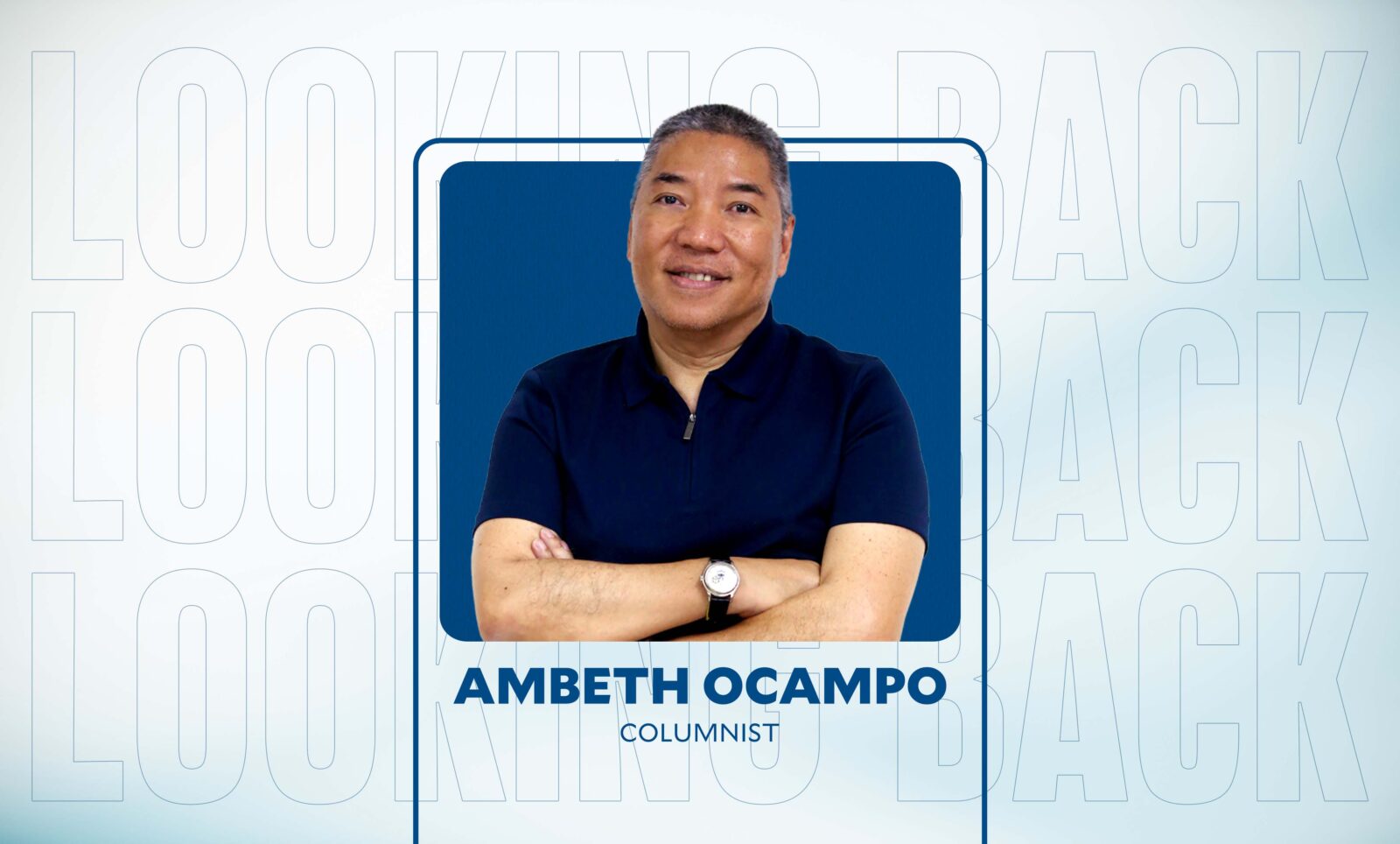
Artificial intelligence, or AI, is a technological tidal wave that only fools will resist at their peril. At a discussion two years ago, many professors wanted to ban or at least limit the use of AI in writing assignments, more so for theses and dissertations. I was the only one who saw AI as a tool rather than an enemy. I did not see AI as a threat. I saw AI as an excuse to rethink college-level assessments. Number crunching can be done by a calculator for someone who knows the process of solving a problem. Tests that require rote memory of facts have been made obsolete by Google. Spelling and grammar checks can clean a draft. Then came the AI-generated essays and book reviews.
At the time of that discussion years ago, I believed that AI was only as good as a person’s search history. I knew that my search history on Philippine history was wider and deeper than that of a freshman student, more so because I could access material in languages other than English without the need for Google Translate. What I did not consider was that AI was learning faster than a human brain because it had everything online to dig up. All AI needed was the proper prompts and follow-up questions.
When I first experimented with the free version of ChatGPT, I asked it for “an obituary for Ambeth Ocampo.” The reply was quick and surprisingly accurate; an outline of my life was given, together with an assessment of the pros and cons of my work. To please me, AI began to hallucinate when the trail of documentation ran cold. I was said to have a wife named Teresa and two children under the radar that I cared about deeply. It also said that while on a research trip in the mountains of Bukidnon, I came across an unlisted orchid whose botanical classification now carries my name! When I stumbled upon Gemini on Google, I gave it the same prompt, Give me an obituary for Ambeth Ocampo. I was floored by the reply, “Ambeth Ocampo is still alive; would you want me to help you with something else?”
Student papers are more polished these days. In the past, they merited high grades; today, I spend so much time figuring out if AI wrote or assisted with the assignment. With unreliable plagiarism and AI detectors, things have turned full circle. I rejoiced when I came across badly written papers, thinking these were definitely original!
I now ban gadgets during class time, except for one person chosen to be the day’s notetaker. I am now back to pen and paper tests, harder to read because students claim they are not taught cursive in K-12. Over the past year, I have assigned students to transcribe and translate 19th-century notarial documents in old Tagalog. Last night, I discovered that AI can transcribe and translate from Spanish historical documents. Transcription needs improvement, and AI has yet to learn old Tagalog orthography. AI will soon get there.
Another non-AI-friendly assignment is something I learned from my undergraduate Philippine history course under Helen Tubangui. Freshman students have to browse the 55 volumes of primary source documents on the Philippines (dating from 1492 to 1898) compiled by Emma Helen Blair and James Alexander Robertson in the early 1900s. Their research topic is drawn from the index, found in Volumes 54 to 55, based on the first letter of their surnames. So far, AI has not been able to help out, but it will soon learn to do this once it has accessed a scanned copy of the texts with optical character recognition. I am sure that even if two students choose the same topic and use the same sources, their essays will never be the same because they relate differently to the material. Only a handful have flunked because they used the internet or AI to write papers that had to be drawn, at least 90 percent, from the primary source documents.
To complicate matters, I asked that they write on topics that would teach me something new. Kyle Ong did not disappoint. He wrote about a Chinese ship captain named “Omoncon,” who was hot on the pursuit of the pirate Limahong in 1575. What gave the story a twist was that Omoncon or “Omocon” was contracted by the Spanish to capture Limahong.
Caitlin Ann Nolasco chose an episode from the events in Manila chronicled in the years 1635 to 1636. It concerned Francisco de Nava, an artilleryman who maintained an “illicit communication” with a slave girl employed by Doña María de Francia. Francisco stabbed the slave girl in the street, and the murder took on bigger dimensions because Doña María was the wife of the governor general’s nephew.
Janina Manto wrote about Juan de Messa, an ex-Jesuit, who had an affair with Doña Catalina Zambrano, who happened to be the wife of Governor General Alonso Fajardo de Tenza. In 1621, the governor caught the lovers in his home and killed them. He had the house demolished and scattered salt on the earth so nothing would grow there. It is one of many tragic stories of Intramuros.
All three students taught their old professor something new and learned the value of curiosity in lifelong learning. Without AI, students found a moment in the past that resonates in the present.

—————-
Comments are welcome at ambeth.ocampo@inquirer.net
******
Get real-time news updates: inqnews.net/inqviber

Safeguarding a free and open Indo-Pacific