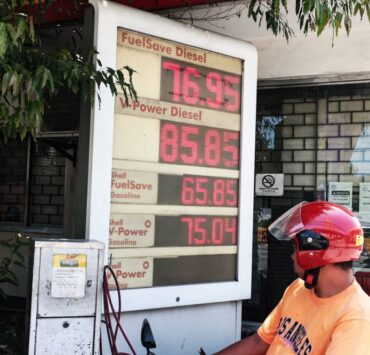








It’s all about coping now for public transport drivers

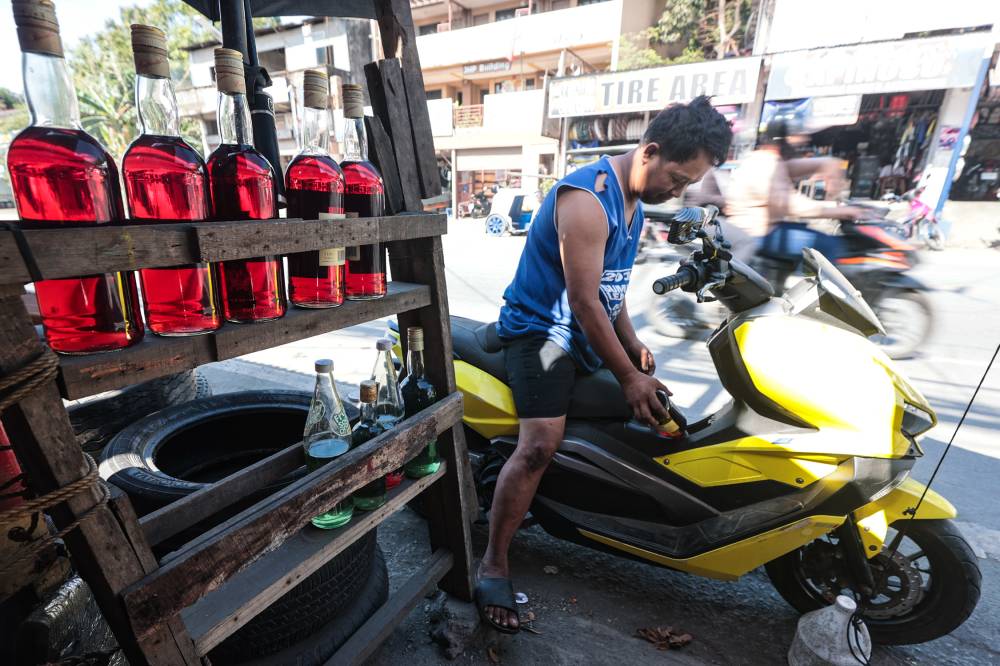
For jeepney driver Ryan Mendoza, the latest fuel price increase means spending nearly double for his diesel requirements—P1,000 a day as of Tuesday—and a smaller take-home pay for the family.
Before the adjustment, P600 to P700 would suffice. “But now there’s an additional P300 [for fuel] that should otherwise go to putting food on the table,” he said.
Mendoza and his fellow breadwinners in the public transport sector are bearing the brunt of this “painful” experience at the pump, as the country’s economy absorbs the top-to-bottom impact of the escalating Middle East conflict.
Local diesel prices are going up by as much as P24.25 per liter, according to Energy Secretary Sharon Garin. Shell Pilipinas is expected to implement the largest increase, starting with P14.55 per liter on Tuesday, followed by P7.30 on Wednesday and P2.40 on Thursday.
Mendoza needs to support his wife and two children aged 9 and 4. Aside from fuel expenses, he also pays P700 a day for his jeepney “boundary” (daily rental fee). The family rents a house that automatically takes P10,000 a month from his earnings.
Under the current fare structure, jeepney drivers charge a minimum fare of P13 per passenger, with a P2 discount for students.
A corresponding fare hike may be in order, but “we cannot raise ours just like that; it takes time and needs to go through the LTFRB (Land Transportation Franchising and Regulatory Board),” he said.
For immediate relief, he and his fellow drivers plying the Sampaloc, Manila, area plan to ask their respective jeepney owners to temporarily reduce their daily boundary.
“Just a cut of P100 is already a big deal for our families,” he said.
Longer hours ahead
Noel, a 43-year-old tricycle driver, said the fuel price increase immediately impacted his family’s daily budget for food.
There’s a temptation to increase his fares, but he thought of his student passengers. “So I guess I just have to work longer hours now,” he said.
It’s also the coping mechanism for Brian Balubar, a driver in the ride-hailing service, who said he’ll try to log in more than his usual eight hours on the road.

“Working harder is really the only way now so we can meet our daily needs at home,” he said.
Food delivery rider Jes Magsanay thinks of different approach: In order to reduce fuel consumption, he’ll just try to limit his trips and be more selective in accepting bookings.
“Avoid long, complicated routes and stay within the hot spot area for bookings,” he said, summing up his new “strategy.”
******
Get real-time news updates: inqnews.net/inqviber