




Next oil crunch impact: prices, cargo, air travel

A war almost half a world away has begun to exert pressure on Filipinos at the gas station and beyond.
After the joint American-Israeli attack on Iran on Feb. 28, global markets almost immediately reflected the shock. In the Philippines, the peso plunged to a record low of 59.5 to the US dollar, while stock markets tumbled on Monday, as the world entered the second week of the Middle East war with little sign of de-escalation.
At the heart of the spillover effects are oil and gas—strategic resources abundant in the war-torn region. Roughly a fifth of the world’s oil supply passes through the narrow Strait of Hormuz, a critical maritime chokepoint that Iran effectively controls.
But industry leaders who spoke with the Inquirer warned that a global fuel crunch would not stop at gasoline stations.
“Supply of fuel alone affects all industries. A lack of it renders our industry and citizenry immobile,” said Steven Cua, president of Philippine Amalgamated Supermarkets Association, an umbrella group of grocery retailers.
Cua said the Philippines’ position as a heavily import-dependent economy could prove to be its Achilles’ heel.
A weaker peso immediately raises the cost of imports, from crude oil to industrial inputs. Many manufacturers also rely on imported raw materials and intermediate goods before converting them into finished products, meaning higher costs could eventually trickle down to consumers.
Import vulnerability
“The Philippines being so dependent on imported raw materials, intermediate goods and finished products will certainly suffer under geopolitical conflicts like the one unfolding before us,” Cua told the Inquirer.
Transportation and logistics are among the first areas where Filipinos may feel the impact.
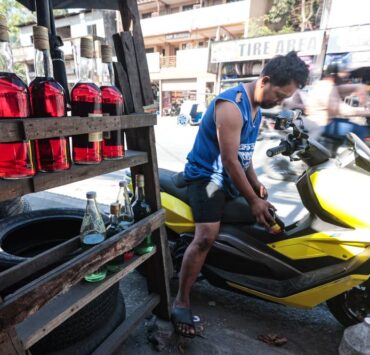
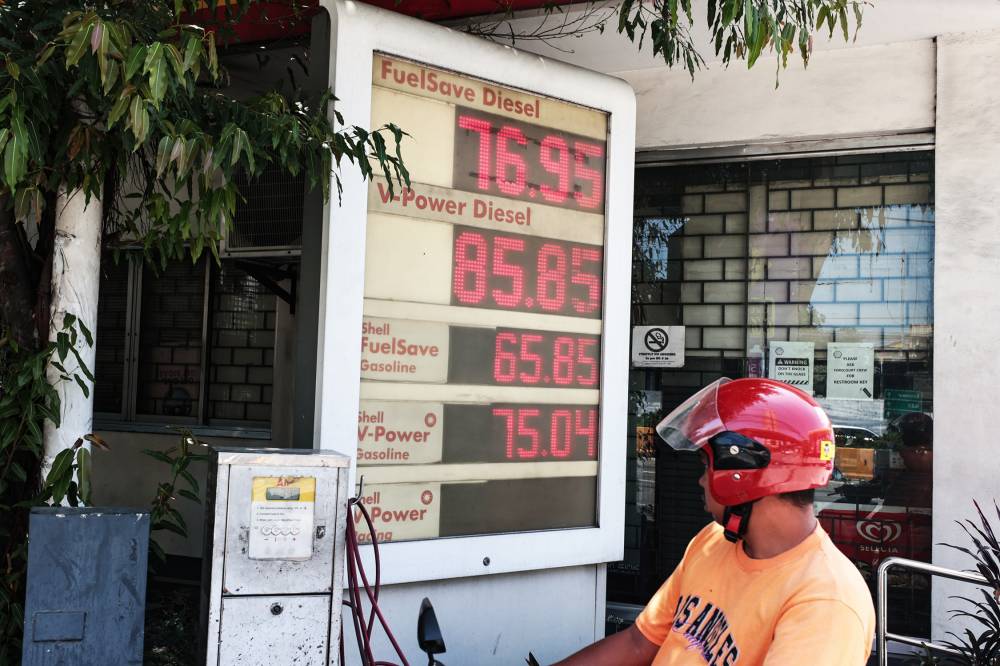
Recent fuel price adjustments have been among the steepest in years. Diesel prices rose between P17.50 and P24.25 per liter, with oil companies staggering increases across two to seven tranches. Gasoline prices climbed between P7 and P13 per liter starting Tuesday.
Kerosene, widely used for cooking, heating and aviation fuel blending, rose even more sharply, increasing between P32 and P38.50 per liter.
For an archipelagic country that relies heavily on trucks, ships and airplanes to move goods, higher fuel prices quickly translate into higher logistics costs.
Ma. Flordeliza Leong, vice president of the Philippine Exporters Confederation Inc., said the country’s exporters and importers are already beginning to see pressure building in global shipping.
“We are already seeing forwarders and shipping lines increase freight-related surcharges in anticipation of higher bunker fuel costs and war-risk insurance premiums,” said Leong, who also leads the United Portusers Confederation of the Philippines Inc.
For exporters, higher freight costs weaken competitiveness in foreign markets. For importers, they raise the landed cost of raw materials, food products and finished goods entering the country.
Subsequently, the impact of the oil crunch are rippling through domestic transport.
Ferry operator FastCat recently announced fare increases after reporting that fuel costs had surged by 40 percent. Another shipping company, Starlite Ferries, said it would implement a 25-percent increase in passenger fares and cargo rates effective March 10.
The Land Transportation Franchising and Regulatory Board has said a provisional fare increase for public transport is likely, given the spike in fuel prices. The increase could be implemented “across the board, if necessary,” it said.
Steeper airfares
Although the impact has yet to be fully felt, the aviation sector may soon face similar pressure.
“In recent days, we have seen the cost of jet fuel rise sharply by over 90 percent, and this will have a significant impact on the cost of flying and consequently pressure on airfares,” said Jose Enrique Perez de Tagle, executive director of Air Carriers Association of the Philippines.
In an announcement before the Iran war began, the Civil Aeronautics Board kept fuel surcharges for March at level 4—equivalent to P117 to P342 for domestic flights and P385.70 to P2,867.82 for international flights, depending on distance.
Still, the conflict has already disrupted air travel.
According to the Civil Aviation Authority of the Philippines, at least 114 flights were canceled between Feb. 28 and March 5 as airlines adjusted routes and operations. These included flights to major Middle Eastern hubs such as Dubai, Riyadh, Doha, Abu Dhabi and Bahrain.
The disruption carries broader implications for the Philippines because millions of Filipino workers are based in the region. As of 2025, more than 1.113 million land-based overseas Filipino workers were stationed across the Middle East, according to the Department of Migrant Workers.
‘Multipronged approach’
“Our airlines are very concerned about the impact of the war on the global economy and the welfare of our fellow Filipinos in the Middle East and around the world,” Perez de Tagle said.
While the Philippines has little control over geopolitical events in the Middle East, industry leaders said decisive action is needed to cushion the spillover effects.
“We need a multipronged approach to cut across this challenging period,” Cua said.
“Government must provide subsidies to public transport system, step up guidelines to streamline operations in public and private entities to avoid gas-guzzling traffic, minimize mobility and electricity usage, optimize work hours and days, consider temporary tax relief on fuel,” he added.
Trade Secretary Cristina Roque said her department is coordinating with manufacturers to keep prices stable for as long as possible despite rising costs.

Cua, who sits on the National Price Coordinating Council, said the council would meet on March 13 as grocers weigh whether to raise prices or absorb higher costs.
“Everyone that has responsibility in taking the risk of adjusting prices of goods are in a quandary as to when to adjust prices and by how much,” he said. “Do we really need to adjust prices? For all you know, and we hope, the conflict may be resolved anytime soon.”
Stronger government support may also be needed to keep supply chains running smoothly.
“These may include waiver of excise tax on fuel, close monitoring of freight and logistics surcharges to ensure transparency, reducing domestic logistics and port charges where possible, accelerating customs and cargo clearance to lower supply chain costs, and strengthening support programs for exporters,” Leong said.
Beyond government action, Cua said public cooperation will also be necessary.
“[The public] must cooperate with such moves by the government,” he said. “Sacrifice and balance is key individually as well as collectively. Industry associations may initiate moves to enjoin the public in adjusting their lifestyle or priorities.”
Avoid panic buying
Meanwhile, Malacañang has allayed fears about the broader impact of the Middle East crisis to the country’s supply of fuel and basic goods, saying there’s no reason for the public to resort to panic buying and hoard supplies of food and other necessities.
“While this situation is not occurring by choice and is not what the government wants, the continuing tension in the Middle East means our countrymen must prepare for possible impacts. However, there is no need for panic buying because supply remains complete and sufficient, especially for our fuel and basic commodities,” Palace press officer Claire Castro said in a briefing in New York on Tuesday (Manila time).
She cited the report of the Department of Trade and Industry that there is no movement in the prices of basic necessities and prime commodities, such as canned goods, milk, coffee, bread, soap and condiments.
In a statement on Tuesday, Philippine Chamber of Commerce and Industry president Ferdinand Ferrer said his group supports giving President Marcos special authority to implement policies that could cushion the impact of rising fuel costs. This could include suspending excise on fuel, currently pegged at P6 per liter for diesel and P10 per liter for gasoline.
“Our request to government is to absorb temporarily the fuel price increases,” Ferrer said.
“We support whatever means—whether reducing excise tax, VAT, or tapping other funding sources—because we are in a crisis,” he added. —WITH A REPORT FROM DEXTER CABALZA
******
Get real-time news updates: inqnews.net/inqviber