





Israeli envoy vows help in OFW repatriation if conflict worsens

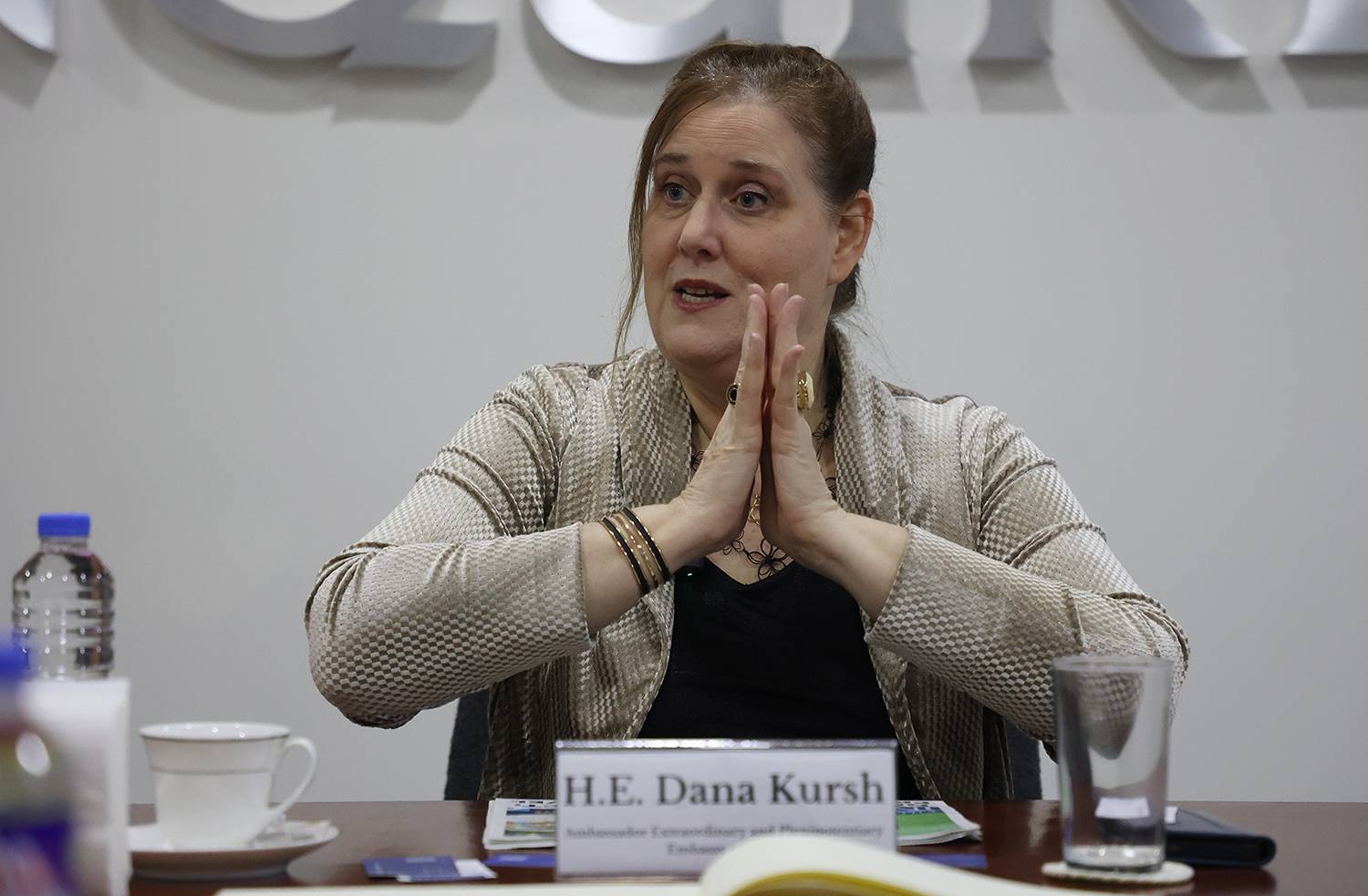
Israel’s ambassador to the Philippines, Dana Kursh, has given assurances that her government would look after overseas Filipino workers (OFWs) should its conflict with Iran force them to return home.
“If, God forbid, things escalate and people want to be repatriated, they can do so at their outpost, and I can guarantee that the Israeli government will do it at the outpost,” Kursh said in an interview during a visit to the Inquirer office in Makati City on Wednesday.
Kursh again expressed Israel’s condolences to the family of Mary Ann De Vera, the first Filipino casualty of the latest flare-up triggered by the joint American-Israeli strikes on Iran that began on Feb. 28.
De Vera, a 32-year-old caregiver, died on the first day of the bombing after being hit by shrapnel while helping her elderly ward get into a shelter in Tel Aviv.
“It’s devastating that it happens, and there is nothing that can bring her back. Not to her immediate family, to her parents, or to her husband,” Kursh said.
“But Israel and I are committing to continue being in connection with the family. And to go to Pangasinan (province) to visit them,” said the diplomat, adding that a “package of care’’ would be sent to the family.
“And God willing, her remains will come as soon as possible when… the sky will be open to send her back home,” she said.
“The level of concern of the OFWs, of course, will be higher. But at the end of the day, no one wants to cause harm—neither Israel nor, I’m sure, the Americans,” she stressed.
Israeli officials are coordinating with Philippine Ambassador Aileen Mendoza and the Department of Migrant Workers (DMW) and the Overseas Workers Welfare Administration (Owwa) regarding the situation of about 30,000 OFWs in Israel, most of them caregivers.
As of Wednesday, the Department of Foreign Affairs said there were now 327 Filipinos with pending requests to be repatriated from the Middle East. The majority were from Dubai (199), followed by Abu Dhabi (68), Lebanon (40), Doha (30), Iran (9), Manama (4), Israel (3), Jordan (2), and Baghdad (2).
Three threats
Kursh acknowledged the conflict’s growing international impact in terms of endangered lives and disrupted economies.
“But we think that there is a bigger threat,’’ she said.
People must remember that Iran openly declares its intentions to “wipe Israel off the map,” she added.

“A nuclear bomb in the hands of Iran means that the entire Middle East is gone. So we have to bear that in our minds,” she said, citing the first of three “threats’’ that the US-Israeli operation sought to eliminate.
The goal, she said, is to prevent the “fanatical Iranian regime” from developing nuclear capabilities “that they are advancing not for peace purposes but for war purposes.”
Kursh identified Iran’s development of ballistic missiles as the second threat, saying the Islamic republic have been manufacturing them exponentially while being able to hide the factories deeper underground.
‘Removed from the picture’
The third or final threat comes from the very regime that has ruled Iran for the last 47 years, she said.
It has been “inflicting a lot of harm on (its) people” while also ‘’diverting oil revenues’’ to fund terrorist organizations as ‘’proxies’’ targeting Israel, such as Hamas and Hezbollah.
“The aim is to have a stable and peaceful Middle East and a peaceful and stable world. The Iranian fanatical regime must be removed from the picture. That’s the understanding,” she said.