Anatomy of a wild plate

Most Francophile travelers traversing the Luberon make a pilgrimage to Gordes. It is easy to see why; often cited as one of the most beautiful villages in the world, Gordes’ stone walls seem to grow directly out of the limestone cliffs.
Yet an unexpected reward is found by following those cliffs downward to the quieter, mineral-rich village of Les Taillades.
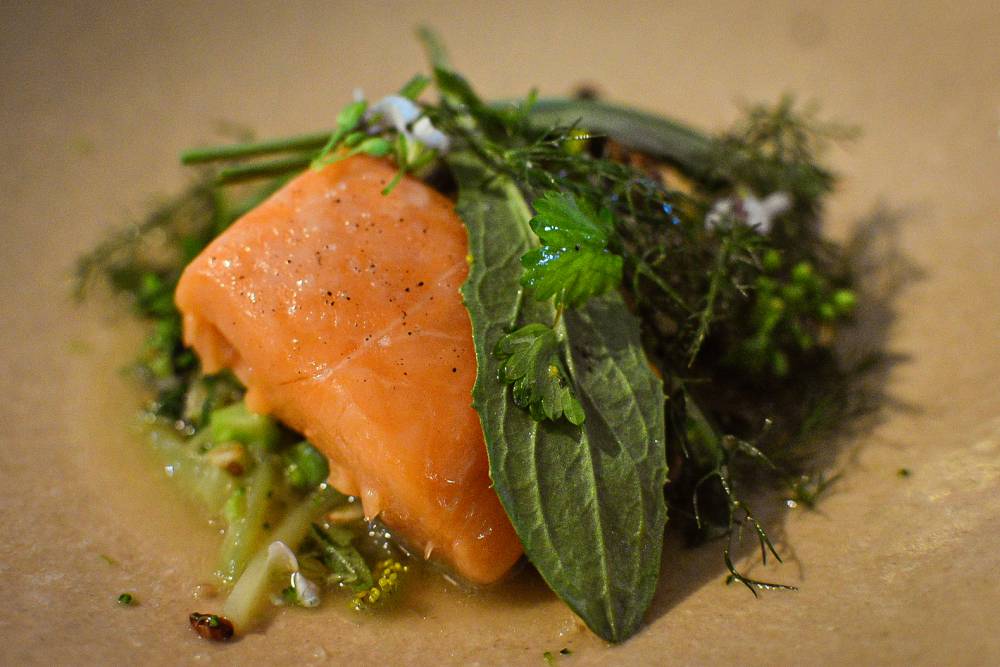
It is here, at L’Atelier l’Art des Mets, that the rustic and cinematic Luberon landscape takes on a new form. Away from the frantic energy of tourist crowds, chef Romain Dumas offers what can only be described as an education in the wild side of the Luberon. His mastery of wild herbs isn’t about a heavy-handed punch of flavor; instead, it is a nuanced, botanical support that brings the surrounding terrain to life on the plate.
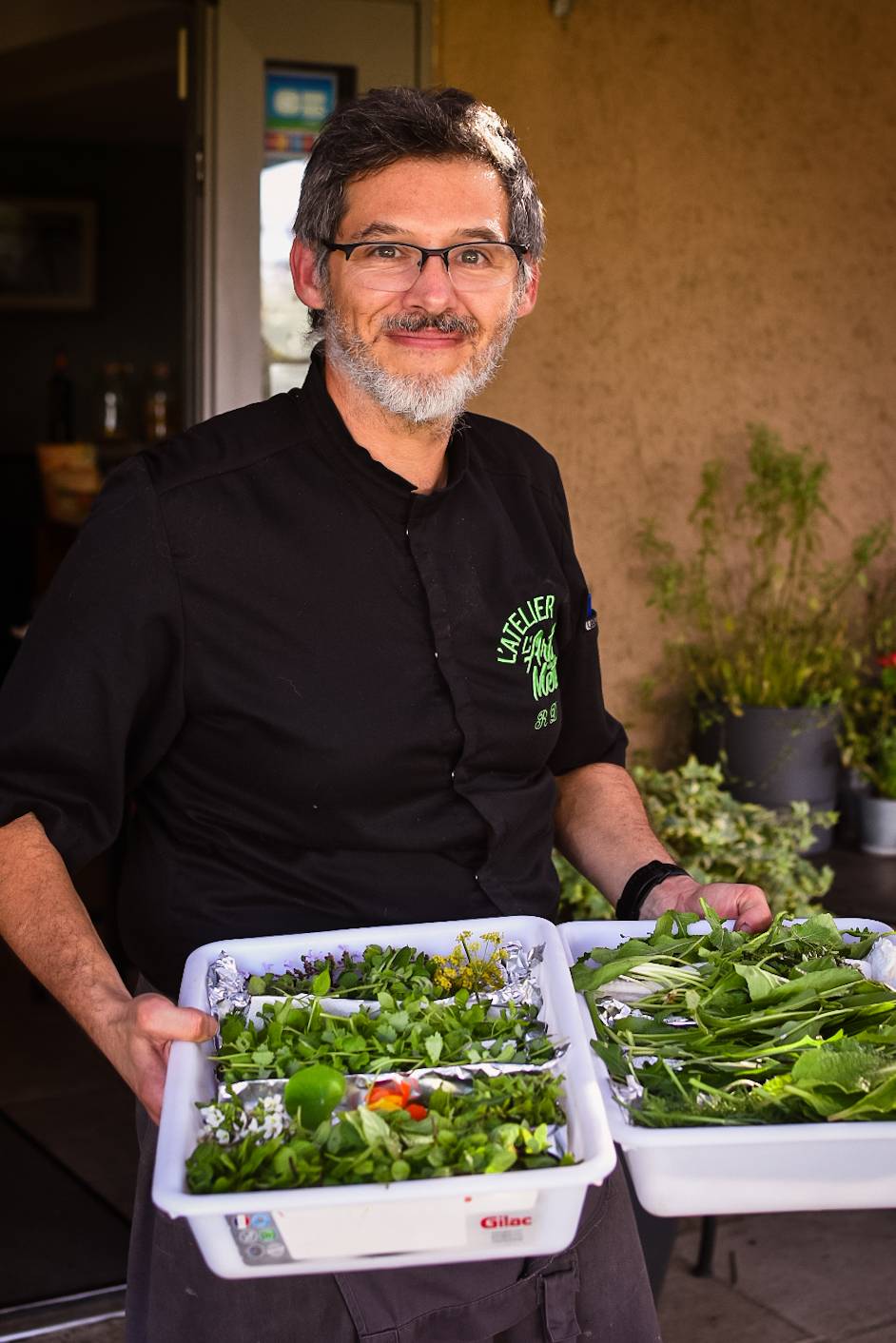
Bringing botanicals to the table
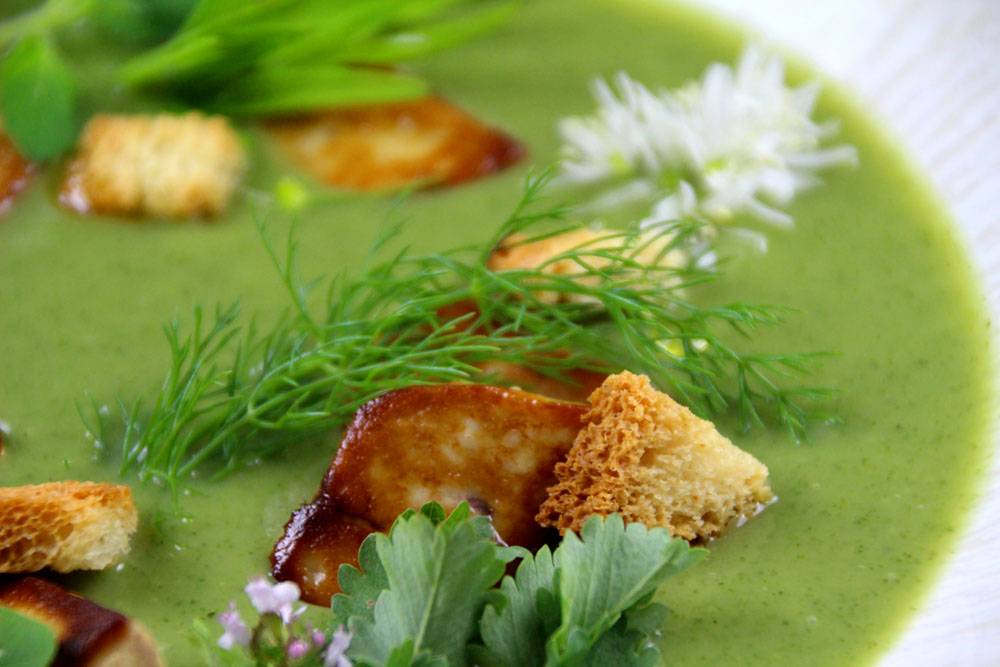
The dish that perhaps best captures this botanical philosophy is his Nettle Soup with Seared Foie Gras Nuggets and Wild Herbs. It is a masterclass in contrast: the “noble” and luxurious richness of the foie gras meets the rustic, vegetal intensity of the nettle. In this anatomy, the wild herb is not merely a garnish but a structural counterpoint.
As Dumas describes it, the dish creates a bold dialogue where foraged strength is balanced by a refined hand, offering the diner a true immersion into the diversity of the Luberon’s wild landscape—albeit distilled through the surgical precision of French culinary techniques.
This extends even to the final course, where the wild finds its way into the sweet. The herb-accented desserts are interesting to say the least—challenging our traditional expectations of sugar with the nuanced, savory undertones of the Luberon hills. It is a reminder that while Gordes captures the iconic silhouette of Provence, it is here in Les Taillades that one encounters the quiet, wild pulse of the land.
Intrigued by this seamless blend of the refined and the untamed, I asked Dumas to expound on the philosophy at the core of his practice as a chef. What follows is a conversation about the “wild,” the “noble,” and the education of the contemporary palate.
You use the term “wild” to describe your cooking. Beyond the use of foraged ingredients, what does the notion of wildness represent for you?
For us, the word “wild” is synonymous with mastery and revelation. It means taming raw power and intensity—those of an herb or an unfamiliar plant.
It is a work of great precision: We channel this force so that it can subtly season our dishes. The goal is to rediscover forgotten flavors, tastes our guests may no longer recognize, and to reconnect them with the purest form of nature, right at the heart of the plate.
When you forage in the hills around Taillades, what guides you most: flavor profile, instinct, memory of the terrain, or something else entirely?
It is indeed an essential combination of all these elements, each feeding into the other.
- Flavor and intention: My starting point is always the season. I search for the plant that will elevate the dishes planned for the menu—the precise ingredient missing from the day’s recipe.
- Memory and expertise: My steps are guided by an in-depth knowledge of the soils and geography of the Luberon. I rely on memory—knowing the exact locations of annual and perennial plants—to optimize my foraging.
- Instinct and discovery: I always leave room for serendipity. I enjoy exploring new terrain and making unexpected discoveries, which then enrich my repertoire and the evolution of my cuisine.
Do you remember a moment when a wild herb or plant fundamentally changed your vision of a dish?
Absolutely. The revelation came from one of my signature plants: Calamintha nepeta. I already appreciated its mentholated character, but through deeper exploration, I realized it brought an unexpected complexity that transformed how I used it. When eaten raw, the herb reveals peppery, sharp notes. When infused, it releases an intense aromatic freshness. In this duality, I saw a way not merely to season a dish, but to sign it.
Today, I use it particularly in desserts. Calamintha nepeta provides the final touch—a true “breath of oxygen” that elevates the end of the meal.
How do you reconcile instinct and technique when working with wild ingredients that vary so greatly with season and terrain?
I chose to integrate wild plants only after my culinary technique was already firmly established. The real challenge is not recognizing the plant, but knowing how to work with it despite its variability. The technique provides the toolbox that allows me to stabilize or enhance its intensity.
To achieve this, we use a wide range of methods: maceration, infusion, decoction, raw preparation, dehydration… After many trials, instinct ultimately validates the technique, and the right balance for the dish emerges.
In the niche of foraged wild herbs that your restaurant has helped bring into the spotlight, how do you encourage innovation without losing the very essence of these ingredients?
Our innovation is rooted in one fundamental principle: respect for the ingredient’s integrity. Preserving the aromatic DNA of the wild plant is essential. Precision lies in finding the perfect balance between the main ingredient and the foraged herb, so that each enhances the other. Innovation is not about masking flavor, but about creating a new symbiosis on the plate.
It is through this exactness in dosage and pairing that we reveal nature’s hidden treasures to our guests—without ever betraying their original taste.

In a world increasingly drawn to novelty, how do you ensure that your foraging practices remain sustainable and respectful of the local ecosystem?
It is a very delicate path we have chosen, and one that sits at the core of our philosophy. For nearly nine years, we have continually questioned and refined our practices, moving toward a fully eco-responsible approach.
The key is respect for place and for life cycles. My foraging mentor taught me not only how to identify plants, but above all how to respect the land and practice sustainable harvesting. Every act of foraging is a trade-off: If you harvest an almond blossom for immediate use, that is one less almond later in the season.
We must always be aware of this impact on the ecosystem and drastically limit our harvests to ensure the renewal of species.
How do you see the future of French gastronomy, and what role could wild-ingredient cuisine play in it?
I see the future of French gastronomy moving toward a cuisine that is increasingly healthy, light, and adaptable. Classical foundations remain, but there is a clear reduction in fats and sugar, along with a growing need to accommodate specific dietary requirements (gluten-free, lactose-free, and so on).
This is where cuisine based on wild ingredients becomes essential. It offers the best way to reconcile pleasure, health, and ecological awareness.
A striking example is comfrey, a wild plant with large leaves and an iodine-like flavor. By breading and frying two overlapping leaves, you achieve a texture and taste that surprisingly resemble fish. This “poor man’s sole” shows that with edible wild plants, there are remarkable alternatives for reducing animal protein consumption—without ever compromising flavor or nutritional value.
That is where the innovation of tomorrow truly lies.