








SC: Being ‘drunk, hurt’ no excuse for text abuse

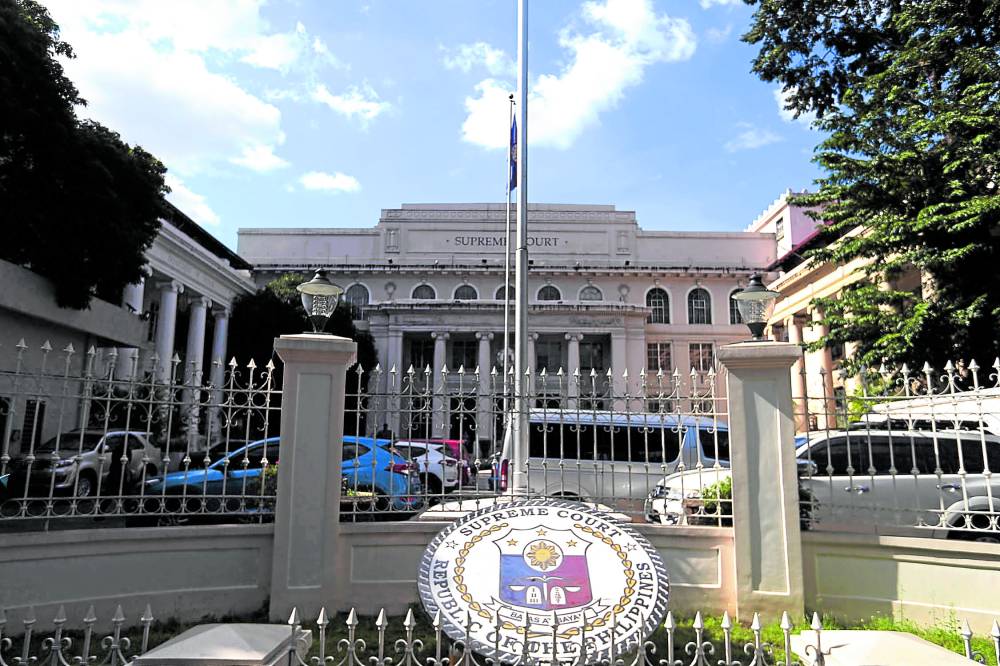
The Supreme Court has affirmed the conviction of a man who sent a barrage of “humiliating and threatening” text messages to his former partner, saying it is considered psychological distress under Republic Act No. 9262, or the Anti-Violence Against Women and their Children Act.
The decision, promulgated on Jan. 19, and penned by Associate Justice Ricardo Rosario, stated that emotional pain or intoxication does not grant a person the right to harass a wife, partner, or former lover.
The accused met the woman in 2009, when they entered into a clandestine relationship as both were married to others.
The pair managed a sugarcane plantation while the accused helped pay for the woman’s home.
In 2011, the accused discovered that the woman had started seeing another man. The two eventually broke up.
However, between February and August 2012, the accused began sending derogatory name-calling text messages, death threats against the woman and her mother, threats to burn the belongings of her new partner, and threats to expose their intimate photographs.
During the trial, the accused admitted to sending the messages, claiming he was “hurt” and “drunk” when he sent them.
The woman said that because of the text messages, she “experienced mental anguish, sleepless nights, and besmirched reputation.” She also believed that she became a laughing stock among her neighbors.
Credible testimony
The lower court ruled in the woman’s favor, prompting the accused to appeal to the Court of Appeals (CA).
At the appellate court, he argued that there was no proof that his messages caused mental anguish to his former partner because there was no psychological or medical report.
He added that the excerpts from the messages presented in court were handwritten and that the mobile phone involved was not admitted into evidence.
At the same time, he admitted that he indeed sent messages to his former partner because he was hurt, angry and drunk.

The Supreme Court affirmed the CA ruling, saying the accused himself admitted sending hurtful messages to the woman.
“Under Rule 129, Section 4 of the Rules of Court, a judicial admission cannot be contradicted unless made through palpable mistake or not actually made—neither of which [the accused] demonstrated,” the high tribunal said.
Regarding the absence of an expert’s testimony, the high court reinforced its ruling in Araza v. People, stating that “the victim’s credible testimony alone, without expert psychological evaluation, suffices to prove substantial emotional or psychological distress.”
He was penalized with up to eight years and one day in prison, a P400,000 fine, and moral damages.
He was also required to undergo mandatory psychological counseling.