









‘It’s adrenaline’: Ukraine amputee veterans climb for recovery

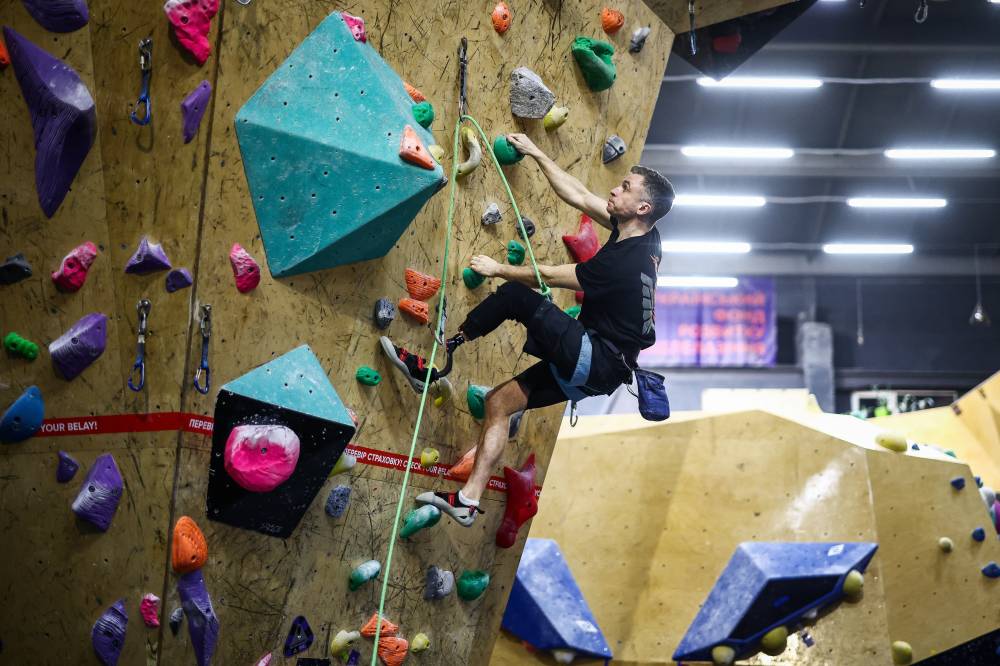
KYIV, UKRAINE—Energetic pop music blasted from speakers at a modern climbing gym in Kyiv as Ukrainian veterans stood at the foot of the wall doing burpees and crab walks, resistance bands looped around their prosthetic legs.
The men were wounded at the front fighting off the Russian invasion, which has now dragged into its fifth year and is seeing casualties mount every day.
Tens of thousands of wounded veterans are readjusting to civilian life, finding solace in the host of activities and communities popping up to cater to their growing numbers.
“It’s scary, it’s interesting, it’s adrenaline, it’s an unusual kind of physical exertion,” Oleg Khmylevskyi, a muscular 38-year-old who lost his right leg at the front, told AFP.
The men adjusted their harnesses before setting off to tackle the overhangs, latching on to colorful holds as they worked their way up.
According to the National Health Service of Ukraine, by early 2025, about 95,000 amputations had been performed since the invasion began.
Ukraine does not routinely disclose its total number of wounded soldiers, arguing that Russia would benefit from such information. In late 2024, President Volodymyr Zelenskyy put the number at 370,000.
Ex-soldiers with missing limbs are often seen in the streets of Kyiv in military fatigues and on crutches.
‘Fear and adrenaline’
According to a December survey by the Rating Group pollster, more than three-quarters of veterans said they feared a lack of understanding among society and a similar number worried about the lack of inclusive spaces.
With his shaved head, neatly trimmed beard and piercing gaze, Khmylevskyi recounted how he drove to Kyiv to join the fight with a friend in the first days of the invasion.
“The two of us had, almost like in a movie … two helmets, two bulletproof vests and a samurai sword,” he said, chuckling.
Khmylevskyi is an entrepreneur—but three in four veterans said finding a job was a problem they worried about after being discharged from the army.
Six months into the war, he stepped on a mine in a forest in the eastern Lugansk region.
He embarked on a day-long trek from the closest Ukrainian position, refusing strong painkillers so he could check and readjust the tourniquets—tight bandages that stop massive bleeding.
He credits the ordeal with saving his knee and avoiding a full leg amputation.
Climbing now gives him a dose of “pleasant fear and adrenaline,” he told AFP.

That mix can help veterans with their recovery, said Oleksandr Pedan, a Ukrainian TV host and activist who founded a club called “Second Wind” to get veterans hiking, rafting and climbing.
“Military veterans after combat also need adrenaline, and heights give you adrenaline,” Pedan told AFP.
Climbing helped them feel “alive, energetic, athletic” again and has “turned out to be an extremely powerful tool for rehabilitation and reintegration.”
‘The jackpot’
Ukraine has been rolling out “veteran hubs” with coworking areas, event space, children’s corners and gyms to cater to the hundreds of thousands coming back from the front.
His prosthetic leg lying next to him as he waited his turn to climb the wall, Roman Govrylyak recounted how he lost his left leg after a mine explosion in 2023.
“The first thing I said—I remember this very clearly—was, ‘But how am I going to ski?’”
The 35-year-old now goes hiking and fishing with other wounded veterans from the club, calling it a “great circle” of camaraderie.