










Evelyn Cacha: Environmental advocate’s long fight to protect Mindoro

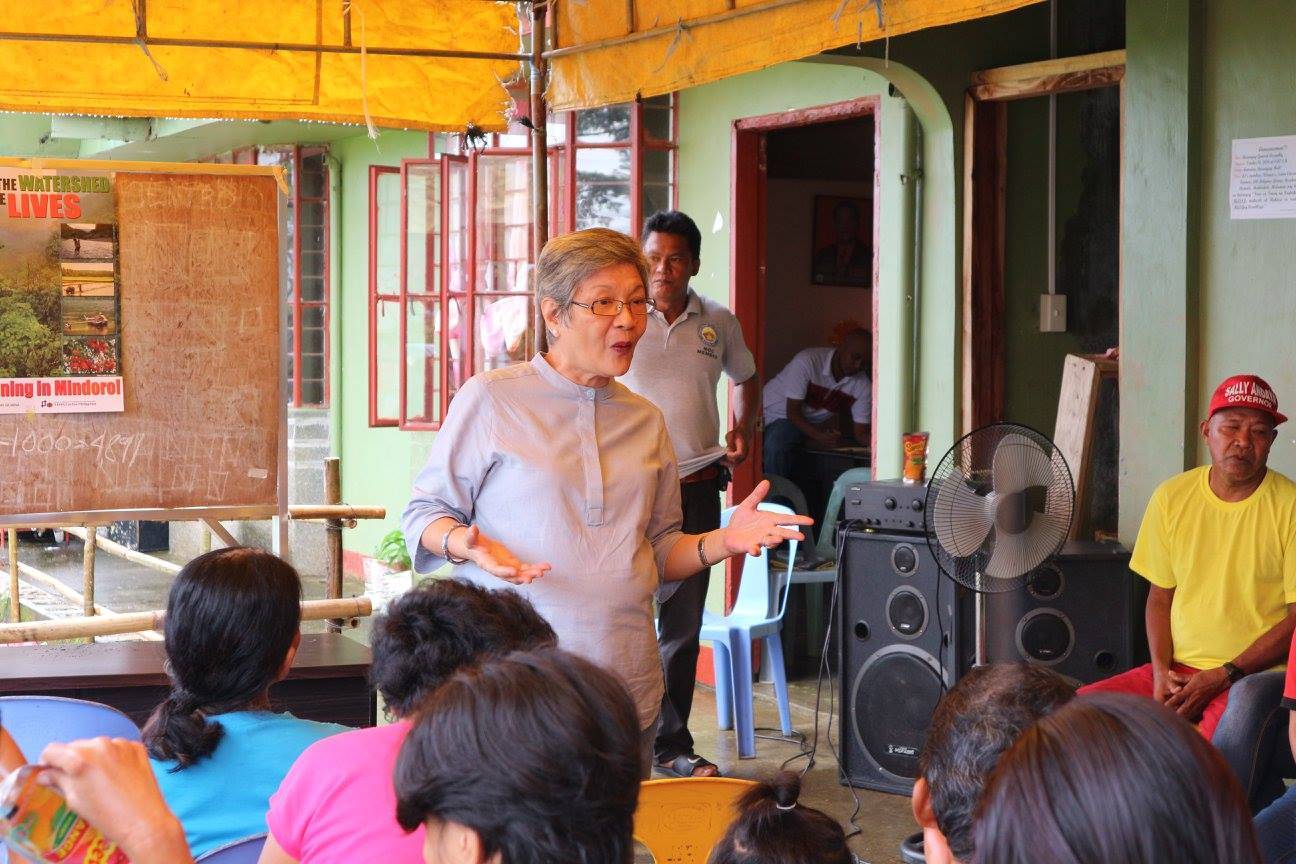
CITY OF CALAPAN—At 79, Mindoro environmental advocate Evelyn Cacha reflects on a life she once described as scattered and restless—like a “grasshopper” leaping from one pursuit to another.
In hindsight, however, those leaps eventually led her to become one of the island’s most steadfast defenders of the environment.
Recognized as one of the “Eight Filipina Environmentalists,” Cacha is best known for opposing large-scale mining in Mindoro and promoting sustainable living.
She served as chair of Alyansa Laban sa Mina (Alamin), a local alliance that has long resisted mining projects believed to threaten the island’s forests, water sources, and communities.
But the road to environmental activism was far from straightforward.
Cacha completed her primary and secondary education at Holy Infant Academy in Calapan before pursuing higher studies at the University of the Philippines, where her political awareness began to take shape amid the social movements of the 1960s and 1970s.
Reflecting on her life as she approaches 80, she said the effort to explain her journey still feels unfinished.
“This is my attempt to give a coherent account of practically a life’s work,” she told the Inquirer in response to questions about her past. “Even now, it is still a confused jumble of what I was striving to do.
‘Grasshopper’ nature
In her younger years, Cacha moved through a variety of professions—from food merchandising and nutrition-related work in the United States to market research—experiences she later jokingly attributed to her “grasshopper” nature.
“I remember a suitor 50 years ago who said I was the quintessential female Hamlet… forever faced with the question ‘to be or not to be,’” she recalled. “A roommate once said I was like a grasshopper, leaping from one unrelated job to another.”
Looking back, she believes those seemingly unrelated experiences prepared her for the work she would eventually undertake.
“Unrelated as they are, I can make things work,” she said. “I simply assess things and what needs to be done… and then I go to work.”
Cacha also pursued training in clinical nutrition, including studies at Howard University in Washington, and professional work with the American Dietetic Association. These experiences later shaped her view that environmental protection, food systems, and human health are deeply interconnected.
She often speaks of “katamtaman”—the Filipino value of moderation—as a guiding principle in both personal and ecological life.
Grassroots struggle
“Not everything that tastes good needs to be consumed,” she said, framing restraint as both a moral and practical choice for the well-being of people and the planet.
Cacha’s environmental activism began when she returned to Mindoro and joined community efforts to prevent destructive logging. That experience eventually evolved into broader campaigns against mining operations that activists feared would endanger watersheds, farmlands, and indigenous territories.
She later emerged as a key figure in Alamin’s advocacy, though she insists she never considered herself a leader.
“Even as I was referred to as chairperson of Alyansa Laban sa Mina, I was not consciously aware that I was being a ‘leader,’” she said. “I was a member of a team of volunteers.”
Many members of the alliance had deeper academic credentials or long experience in social development, she noted, and she often saw herself as an apprentice learning from them.
“I like to think of myself as a teamwork person who loves working with people,” she said. “Their efforts and enthusiasm motivated me to do more.”
Under Alamin’s leadership, the antimining campaign mobilized a wide range of stakeholders—provincial leaders, barangay officials, indigenous communities, faith-based groups, and grassroots organizations.
For Cacha, inclusivity was central to the movement.
“The advocacy derived its meaning and relevance from the people—the women, the farmers, and the fisherfolk,” she said. “To them I dedicated my efforts, my passion for work, and the skills and talents I could muster.”
The struggle, however, carried heavy personal costs.
Cacha spent long hours studying the technical and legal aspects of mining policies, consulting experts and reviewing international standards—often amid skepticism from different sectors.
“Taking up the cudgels for the environment is perceived as an agenda of the Left,” she said. “I was constantly aware of the unpopularity of the issue.”
At times, even members of her own family disagreed with her advocacy.

Most significant work
“Ang dami ko kayang inaway dahil sa issue (I fought with many over this issue)—including my own family,” she admitted. “May bigat din dalhin sa dibdib (It was difficult to bear).”
Yet those conflicts ultimately strengthened her resolve.
“Looking back on it now, I think it strengthened my stand … maintaining in my heart the reasons why.”
As she reflected on what defined her life’s work, Cacha said: “I held many different jobs through the eight decades of my life. But I believe my advocacy work for caring for the environment—specifically the antimining work was the most significant.”
“It took the biggest part of my life in terms of the time I spent on it, and I invested heavily in it,” she added.
Beyond antimining campaigns, Cacha has also worked with communities to strengthen cooperatives, protect groundwater sources, and promote sustainable practices.
As she approaches her eighth decade, she continues urging younger generations to take responsibility for the natural world.
“To care for the environment,” she said, “because it supports life as we know it.”
For those who know Cacha best, her lifelong advocacy for the environment, ethical business practices, and community welfare comes as little surprise.
Her older sister, Dr. Elsie Cacha Castrence, an 84-year-old pediatrician, has witnessed her pursuits over the decades.
“Anything she did was done with great passion, careful research, and study,” Elsie said.
Elsie is the eldest among six siblings. Evelyn is the third child in the family of five daughters—Eleanor (deceased), Elvira, and Editha—and one son, Edgardo (also deceased), the youngest.
According to Elsie, their parents strongly shaped the siblings’ civic consciousness.